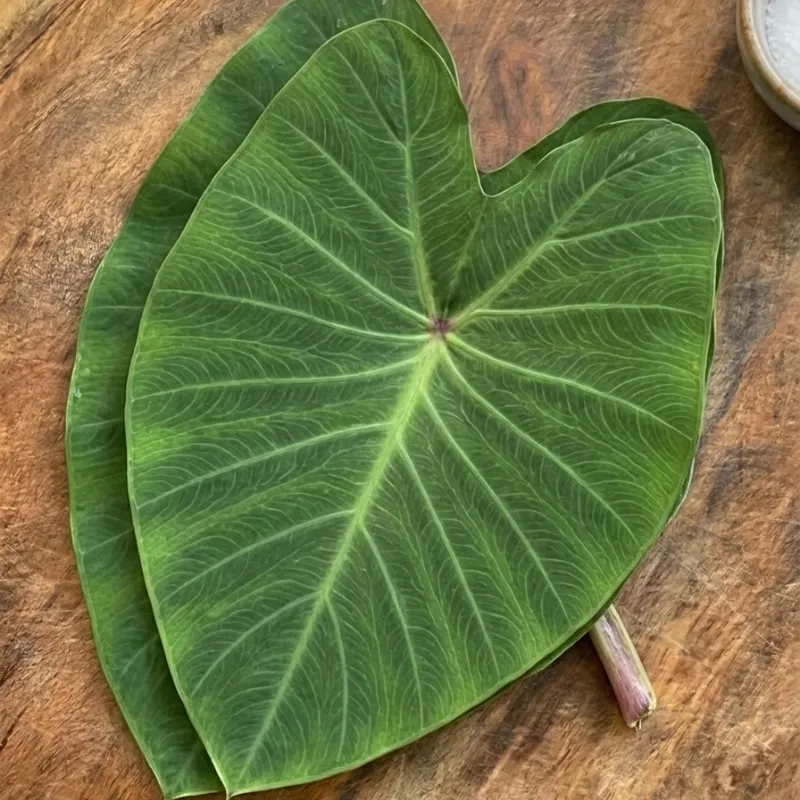
Colocasia leaves (taro leaves)
अरबी के पत्ते · ಕೆಸುವಿನ ಎಲೆ · अळूची पाने · ചേമ്പില
Fresh Produce
Smeared with a spiced rice paste, rolled and steamed — patrode in Malnad and coastal Karnataka, alu vadi in Maharashtra, patra in Gujarat. The leaf is the dish, not a wrapper to be discarded.
What to know
Raw colocasia leaf is acrid and will scratch the throat. Tamarind in the paste is what neutralises it, along with thorough steaming — this is why every traditional recipe puts tamarind in and why none of them undercook it. If the raw leaf makes your fingers itch, that is the same compound; the cooked dish should not.
- Choosing it
- Young to medium leaves, unblemished, with the stalk still firm. Very large old leaves are tougher and markedly more acrid. Ask the seller which variety it is — the eating kinds are grown for it, and the ornamental ones are not food.
- Storing it
- Wrapped in a damp cloth in the fridge, two or three days. They wilt fast and a limp leaf tears when you roll it.
- By eye
- A patrode roll takes 5–6 medium leaves stacked
- If you cannot get it
- Not interchangeable with colocasia, which is the corm of the same plant and behaves like a potato. Outside India, look in Indian, Bangladeshi or Caribbean grocers.
Measures
- 1 piece ≈ 25 g
Cups here are the Indian 200 ml cup, not the 240 ml US cup — a common reason a recipe does not work. Weigh where you can; the grams are the figure we cook to.
Recipes using colocasia leaves
None published yet.