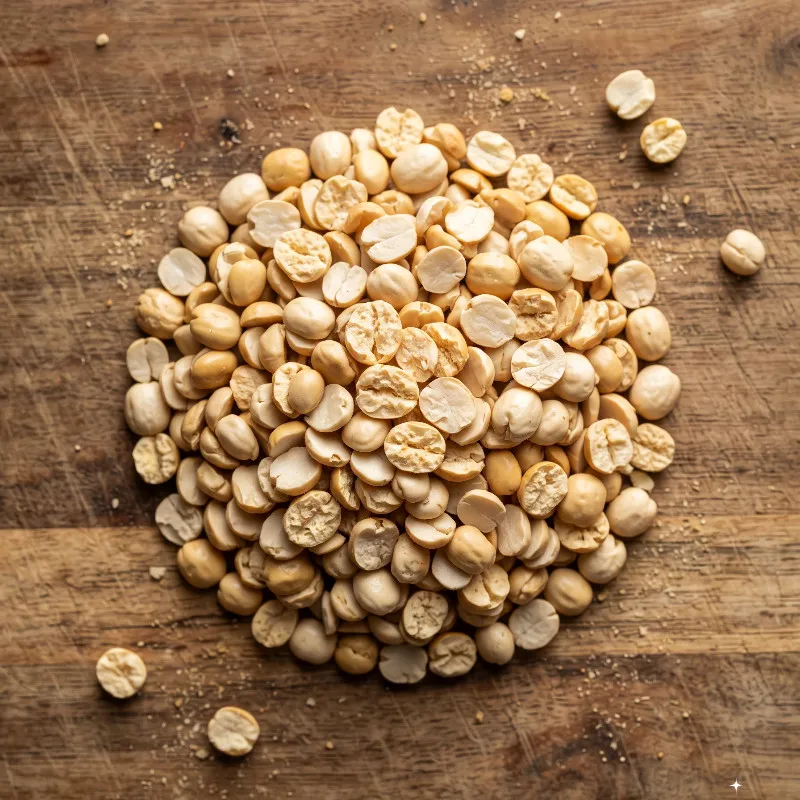
Roasted gram (pottukadalai / putani)
भुना चना · பொட்டுக்கடலை · ಹುರಿಗಡಲೆ · పుట్నాలు · പൊട്ടുകടല
Dals & Pulses
Ground dry into chutney, where it thickens and rounds out coconut without being tasted. Also the body of Karnataka-style chutney podis and a snack eaten by the handful.
What to know
Already roasted and already edible — it goes into the mixer dry and needs no soaking or cooking. This is what separates it from chana dal, which is raw and would leave a chutney tasting green and starchy.
- Choosing it
- Should be pale, dry and snap cleanly between the teeth. Soft or bendy means it has taken up moisture and it will make a gummy chutney.
- Storing it
- Airtight. It goes stale and slightly rancid faster than raw dal does, so buy small quantities.
- If you cannot get it
- Sold as pottukadalai, putani, hurigadale or simply roasted gram. Not the same as chana dal, and not the same as sattu, which is the flour made from it.Try: cashew
Measures
- 1 cup ≈ 130 g
- 1 tbsp ≈ 10 g
Cups here are the Indian 200 ml cup, not the 240 ml US cup — a common reason a recipe does not work. Weigh where you can; the grams are the figure we cook to.
Recipes using roasted gram
None published yet.