Adhirasam
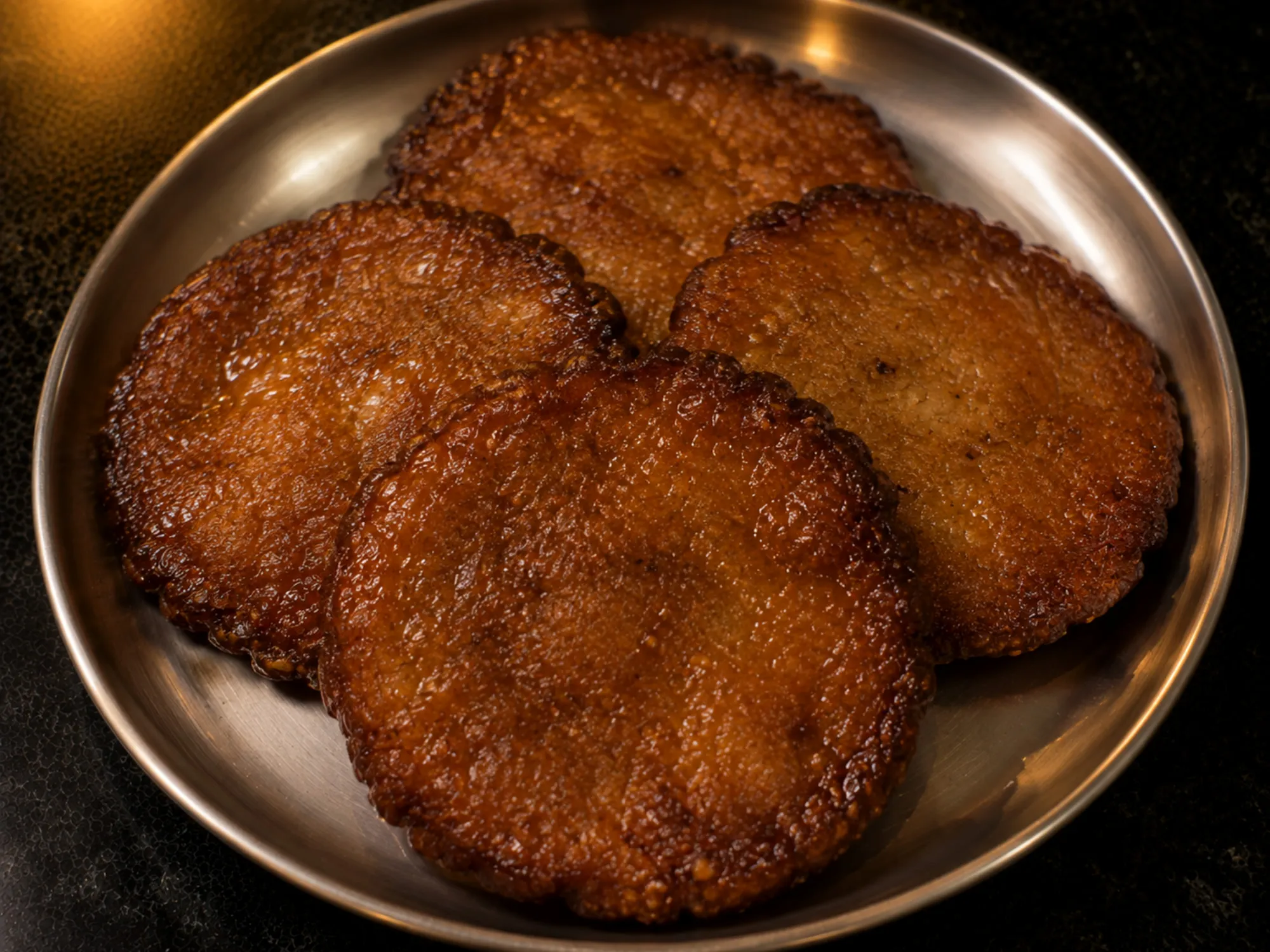
Ground raw rice and jaggery syrup taken to the soft-ball stage, rested for days, then fried dark — the syrup is where it is won or lost.
Drafted — not yet cooked in our kitchen
- Hands on
- 20 min
- Total
- 9 hr 50 min
- Serves
- 6
- Difficulty
- hard
Two ingredients, three days, and one moment that decides everything: the jaggery syrup has to come off the flame at the soft-ball stage, and the only way to know is the cold water test. Everything before it is preparation and everything after it is patience.
Step by step, with timers and flame levels. Your screen stays awake.
Ingredients
Tap what you already have.
Method
Rinse the rice and soak it. Long enough to grind, no longer — rice left all day starts to sour and the dough goes slack.
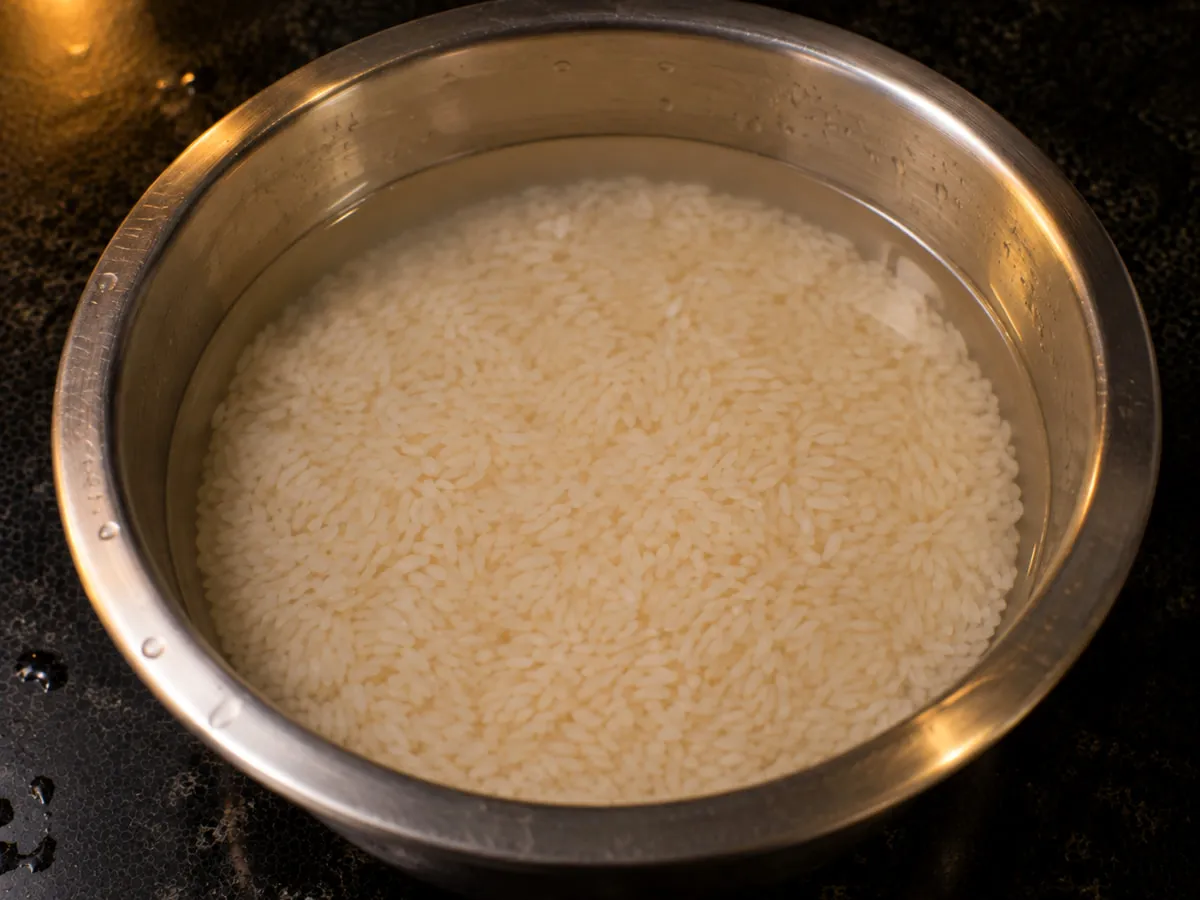
Look for: A grain should break cleanly under a fingernail with no chalky centre, but still feel like rice rather than paste.
60–120 min · bowl
Drain the rice and spread it on a cloth in the shade to dry. Not in the sun, and not until it is bone dry — this is the step the whole recipe turns on.
Look for: The surface looks dry but the grain is still cool and faintly damp when you press a handful together. Dried right through, the flour will not take the syrup and the adhirasam comes out hard.
30–60 min
Grind the rice to a fine flour and sieve it. Whatever stays in the sieve goes back into the mixer.
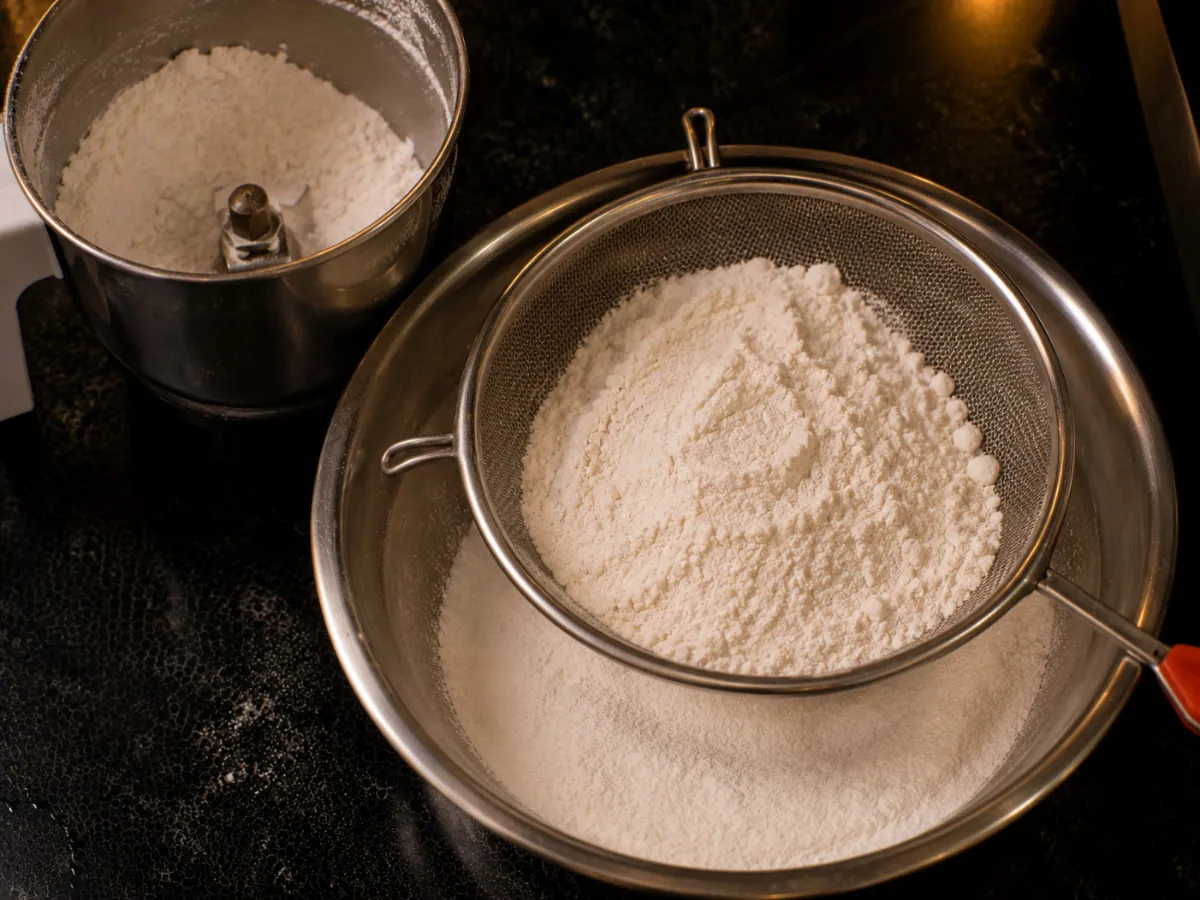
Look for: Soft and powdery between the fingers with no grit. Grit in the flour reads as sand in the finished adhirasam and cannot be fixed later.
5–8 min · mixer-grinder
Melt the jaggery with the water, strain out the grit, and return it to the pan to cook down. From here on, watch it — the window between the right stage and too far is short.
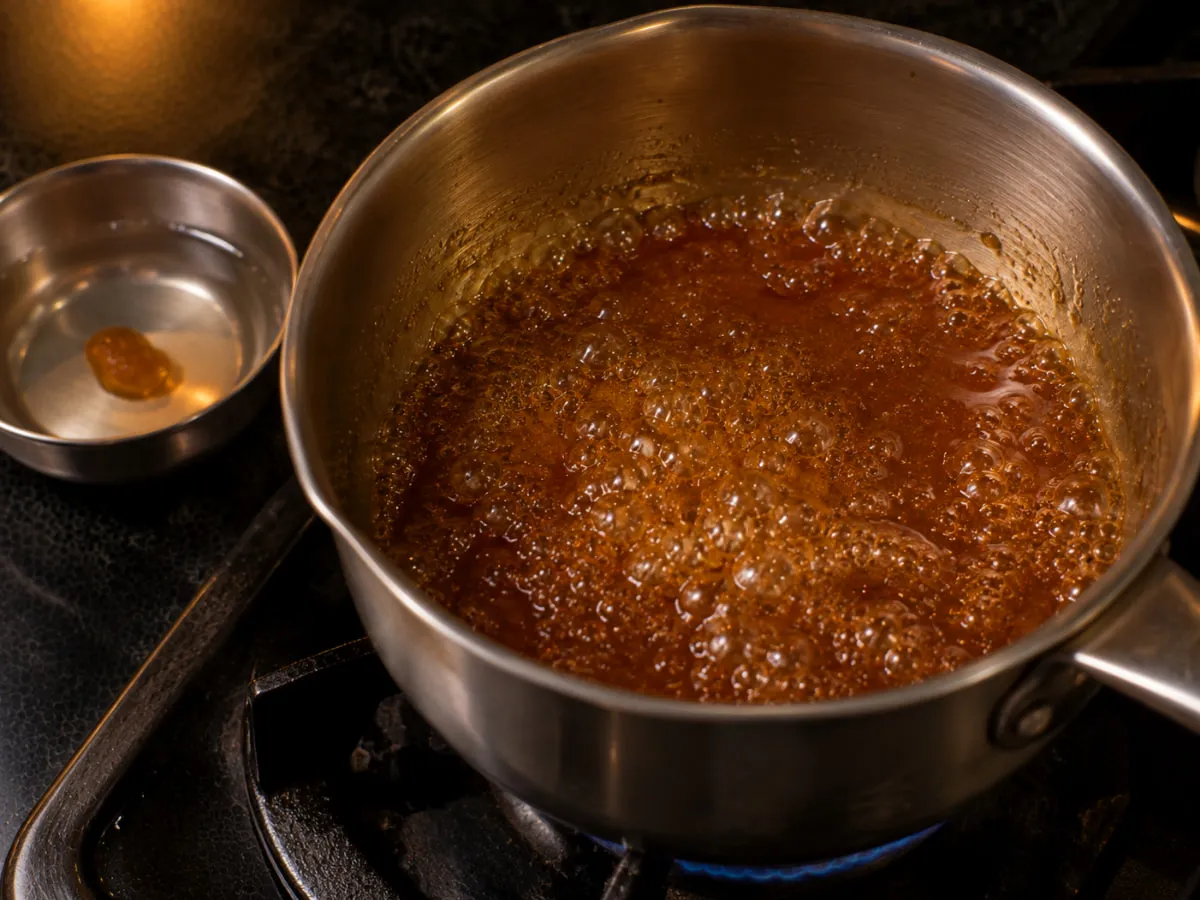
Look for: Drop a little into a bowl of cold water. It should gather into a ball you can lift out and roll between your fingers — soft, holding its shape, not spreading and not hard. Spreading means keep going; a ball that clicks against the bowl has gone too far and will set the dough like a brick.
8–14 min · medium heat · saucepan
Take the syrup off the heat and pour it over the flour in a wide bowl, mixing with the handle of a spoon as it goes. Stir in the sesame, cardamom and dry ginger and bring it together.
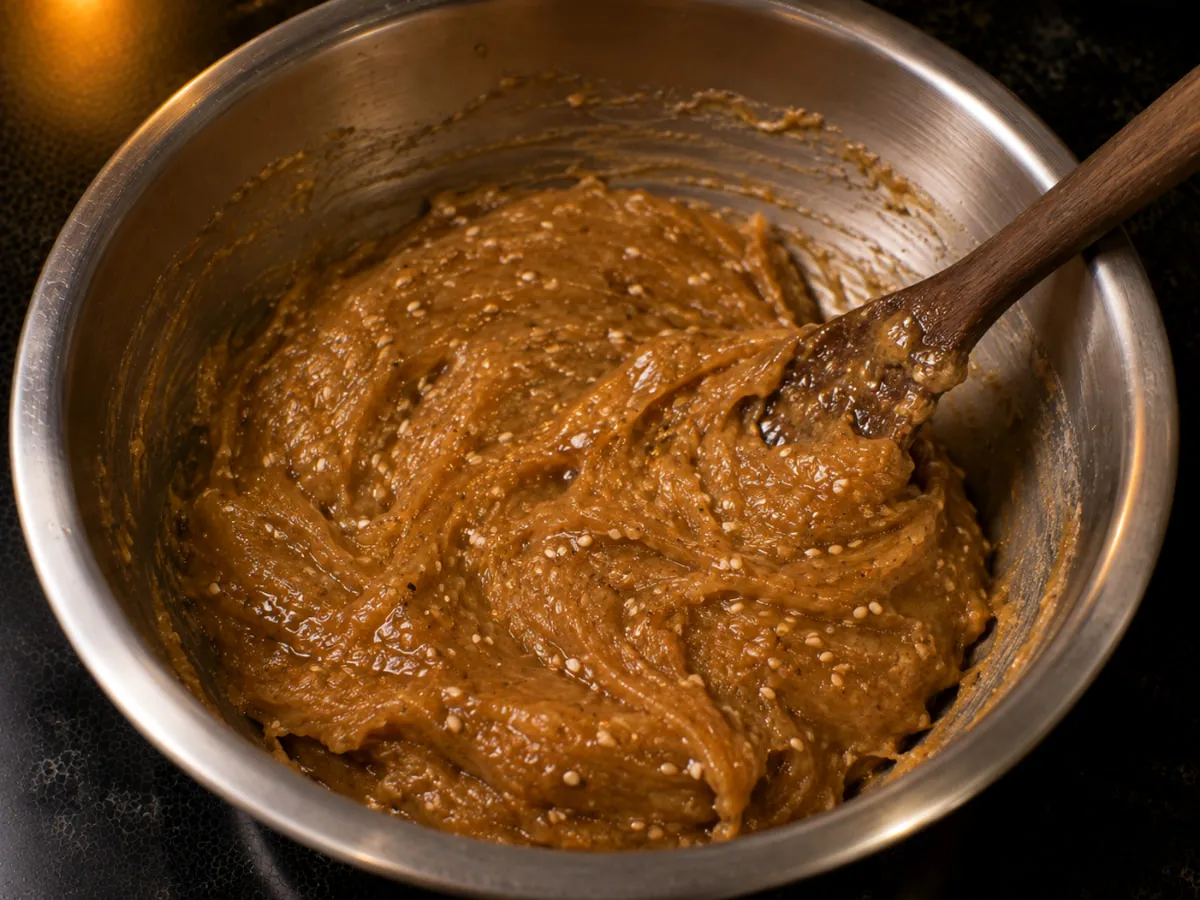
Look for: Softer and stickier than a chapati dough — it should sag rather than hold a ball. It stiffens considerably as it rests, so resist adding more flour now.
3–5 min · bowl
Cover the dough and leave it at room temperature. Overnight is the minimum; two or three days is better and is what most kitchens do.
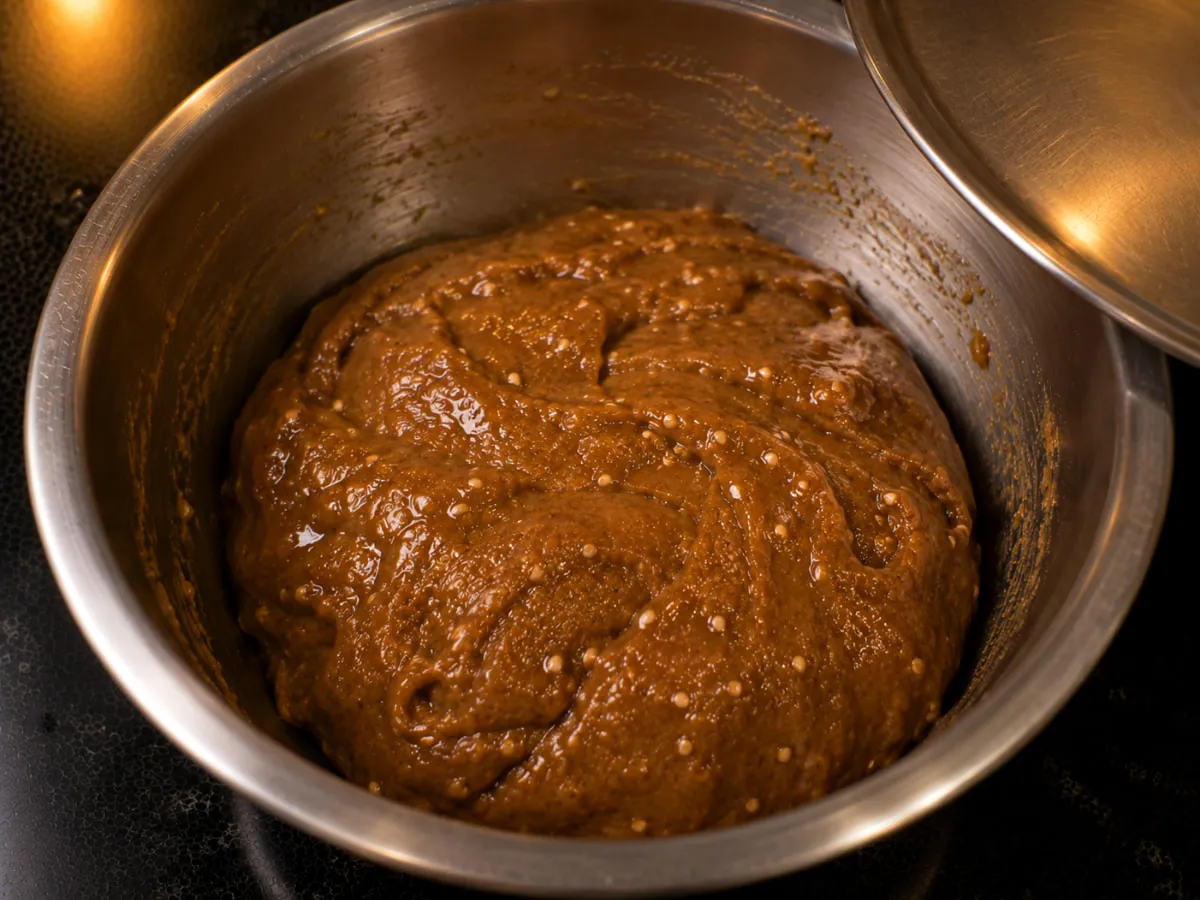
Look for: The dough darkens, slackens, and smells strongly of jaggery. Pinched off, a piece should flatten under the fingers without cracking at the edge.
480–4320 min · bowl
Pat a lime-sized ball flat on a greased sheet of plastic or a banana leaf, about half a centimetre thick, and slide it into the hot oil. Fry one at a time, spooning oil over the top, and turn once.
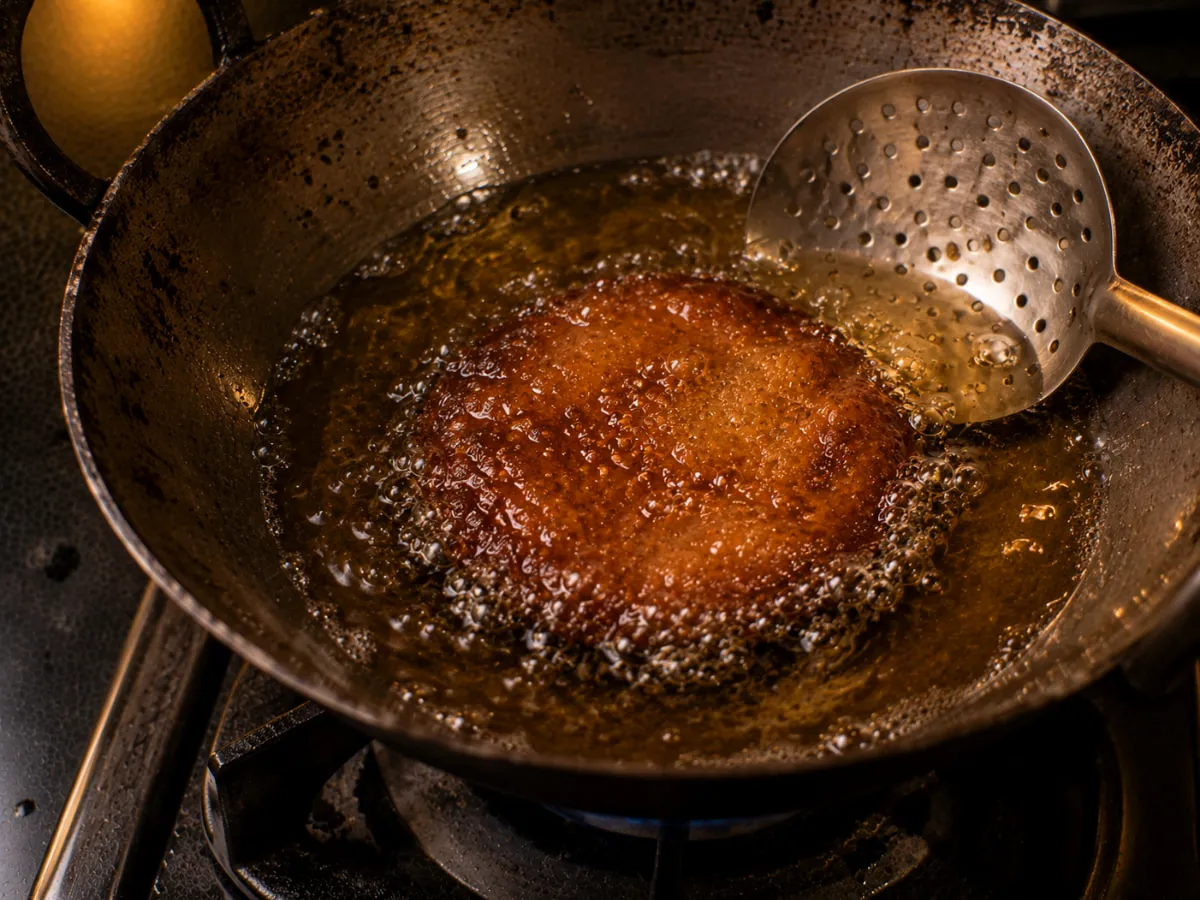
Look for: It sinks, puffs, and floats up; the loud bubbling settles to a quiet fizz and the colour goes deep reddish brown. A pale adhirasam is under-fried and will be doughy in the middle.
3–5 min · medium-low heat · kadai
Lift it out and press it flat between two flat ladles, or between the backs of two spoons, while it is still hot. This squeezes out the oil it soaked up.
Look for: Oil runs out as you press and the adhirasam flattens and firms. Left unpressed it stays greasy and will not keep.
1–2 min
About this dish
Adhirasam turns up for Deepavali and Karthigai and as temple prasadam across Tamil Nadu, and the same sweet is made in Andhra and Telangana as ariselu. Packaged rice flour is the obvious shortcut and it is the reason most failed adhirasam fail — dry commercial flour cannot absorb the syrup the way flour ground from damp rice does, and the result is hard instead of chewy. The soaking, shade-drying and grinding is the recipe. Stored in a tin, they keep for a couple of weeks and soften slightly as they sit, which is not a fault.