Akki Rotti
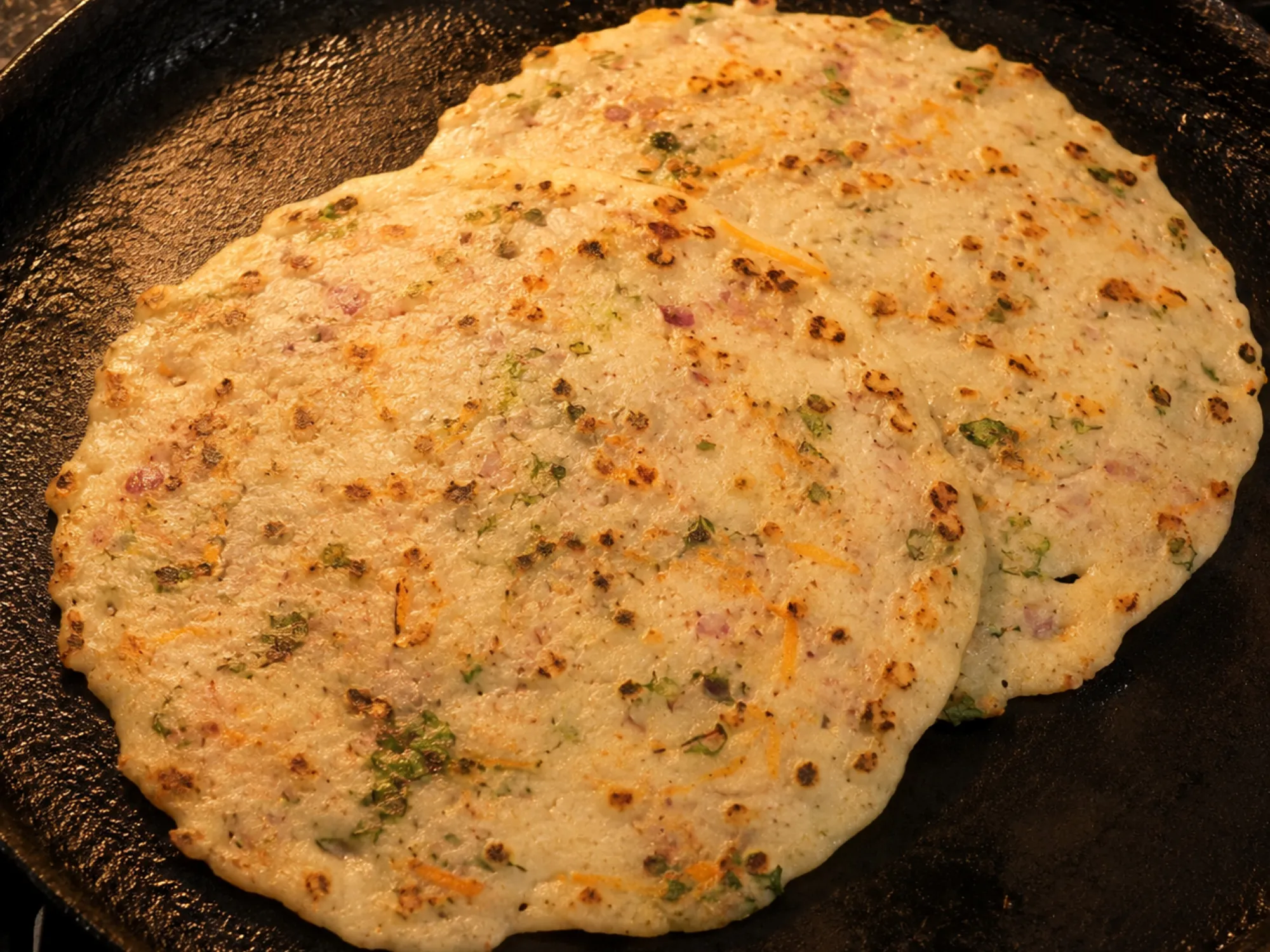
Rice flour dough patted out by hand on a greased sheet, then inverted onto the tawa — no rolling pin, and the water has to go in boiling hot.
Drafted — not yet cooked in our kitchen
- Hands on
- 21 min
- Total
- 21 min
- Serves
- 4
- Difficulty
- medium
Boiling water, patted not rolled, and cooked on medium rather than high. A rolling pin will tear this dough and warm water will not bind it — both rules come from there being no gluten in it at all.
Step by step, with timers and flame levels. Your screen stays awake.
Ingredients
Tap what you already have.
Method
Mix the rice flour with the onion, carrot, coriander, green chilli, cumin, grated coconut and salt while everything is still dry. Vegetables folded in after the water is added never distribute properly and tear the dough as you pat it.
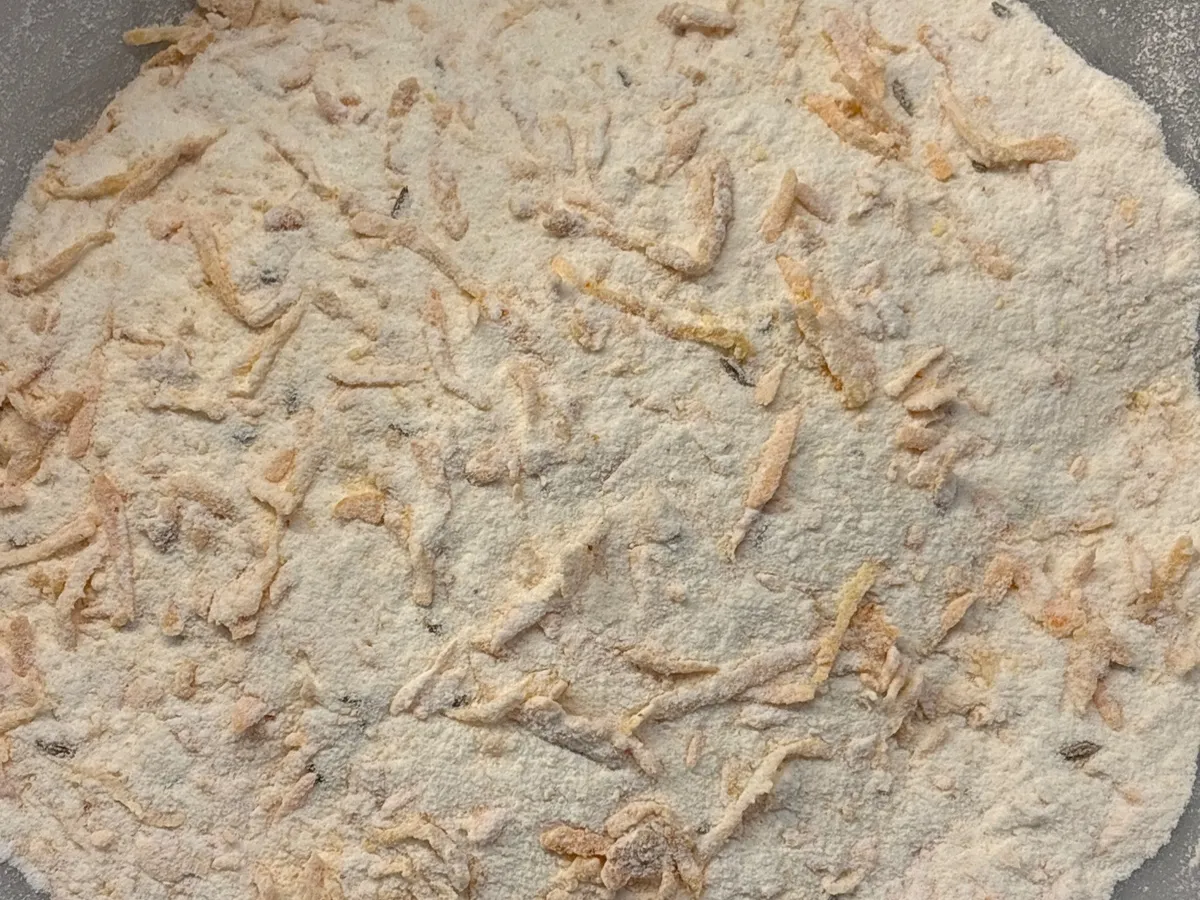
Look for: Everything evenly distributed through the flour, with no clumps of onion.
8–12 min · bowl
Pour boiling water over the mixture and stir it with the handle of a spoon before it is cool enough to touch. Boiling, not warm — hot water gelatinises some of the rice starch and that is the only thing holding this dough together, since there is no gluten in it. Knead smooth once you can bear the heat.
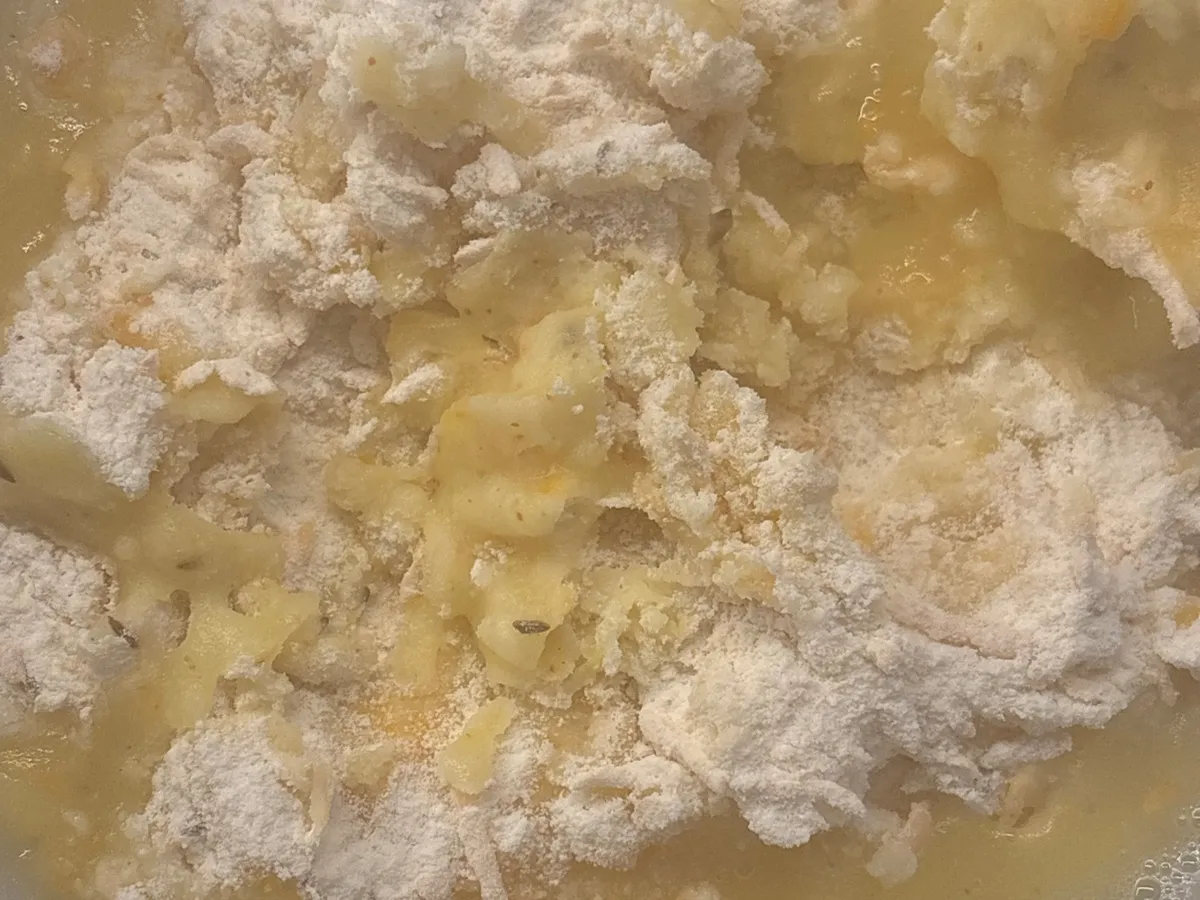
Look for: A soft, smooth, slightly sticky dough that holds together when squeezed and does not crack at the edges when you flatten a ball in your palm. Crumbly means more water; it should be softer than a chapathi dough.
5–8 min · bowl
Take a ball of dough, put it on a greased square of banana leaf or plastic sheet, and pat it out flat with wet fingers, working from the centre outward. Wet your fingers each time they start to drag. Make a hole in the middle and one or two off-centre — those let steam out and stop the rotti puffing away from the pan.
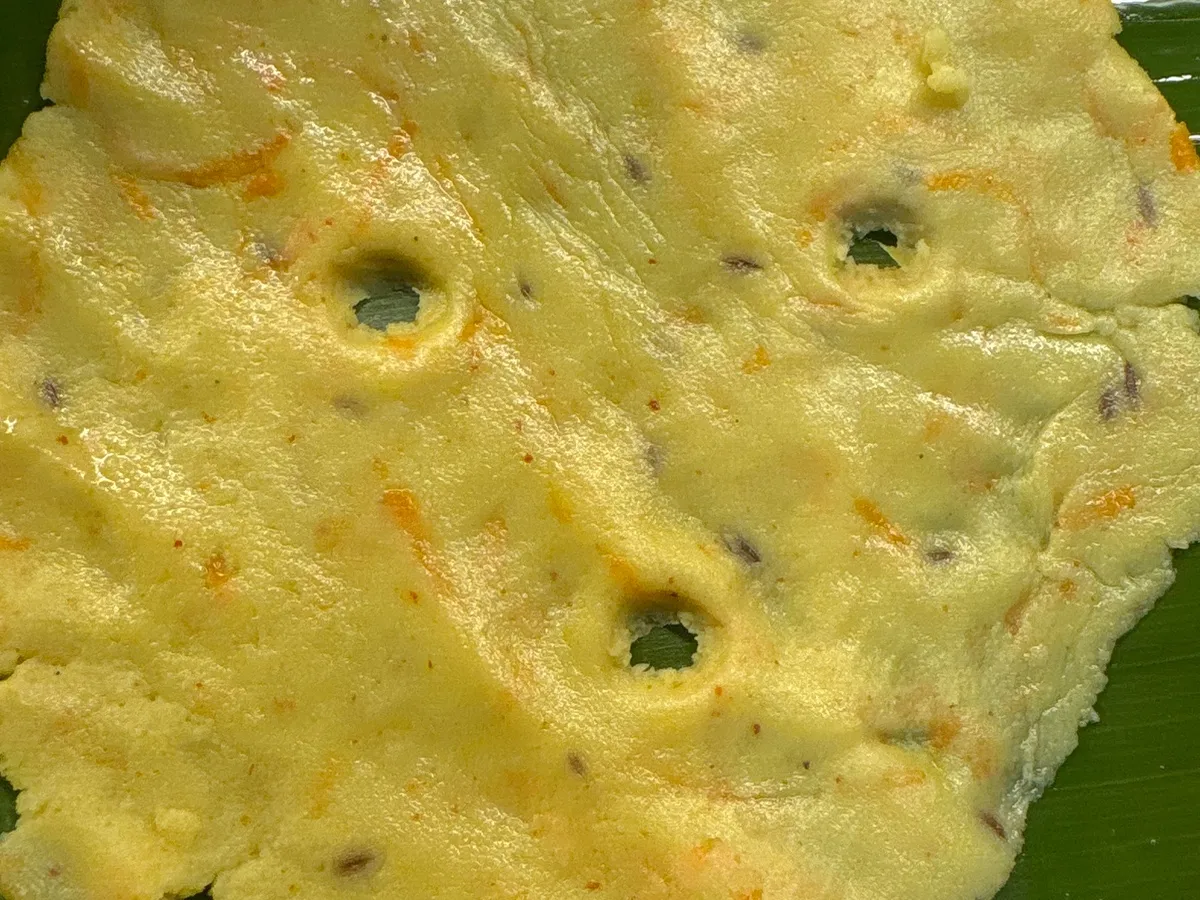
Look for: An even round about 2 mm thick with no thin patches or torn edges.
3–5 min
Invert the sheet onto a medium-hot tawa and peel it away, then drizzle oil into the holes and around the rim. If the tawa is very hot the sheet will not release cleanly — this wants medium, not the high heat a dosa needs.
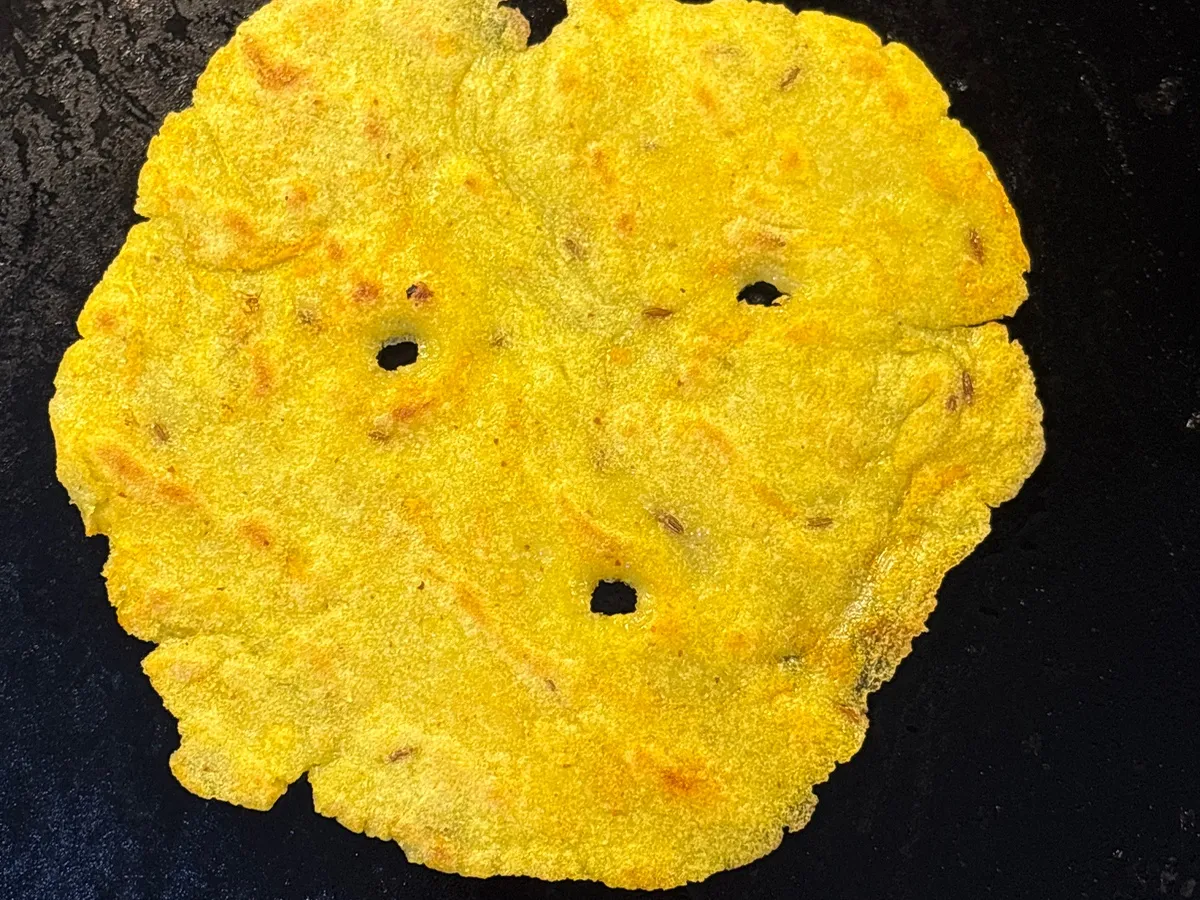
Look for: The surface turns from wet white to matte and the edges lift slightly. Underneath there should be brown spots rather than an even colour.
3–5 min · medium heat · tawa
Flip and cook the second side. Press it down with a folded cloth so the middle meets the pan — akki rotti has no leavening and will not puff, so contact is what cooks it.
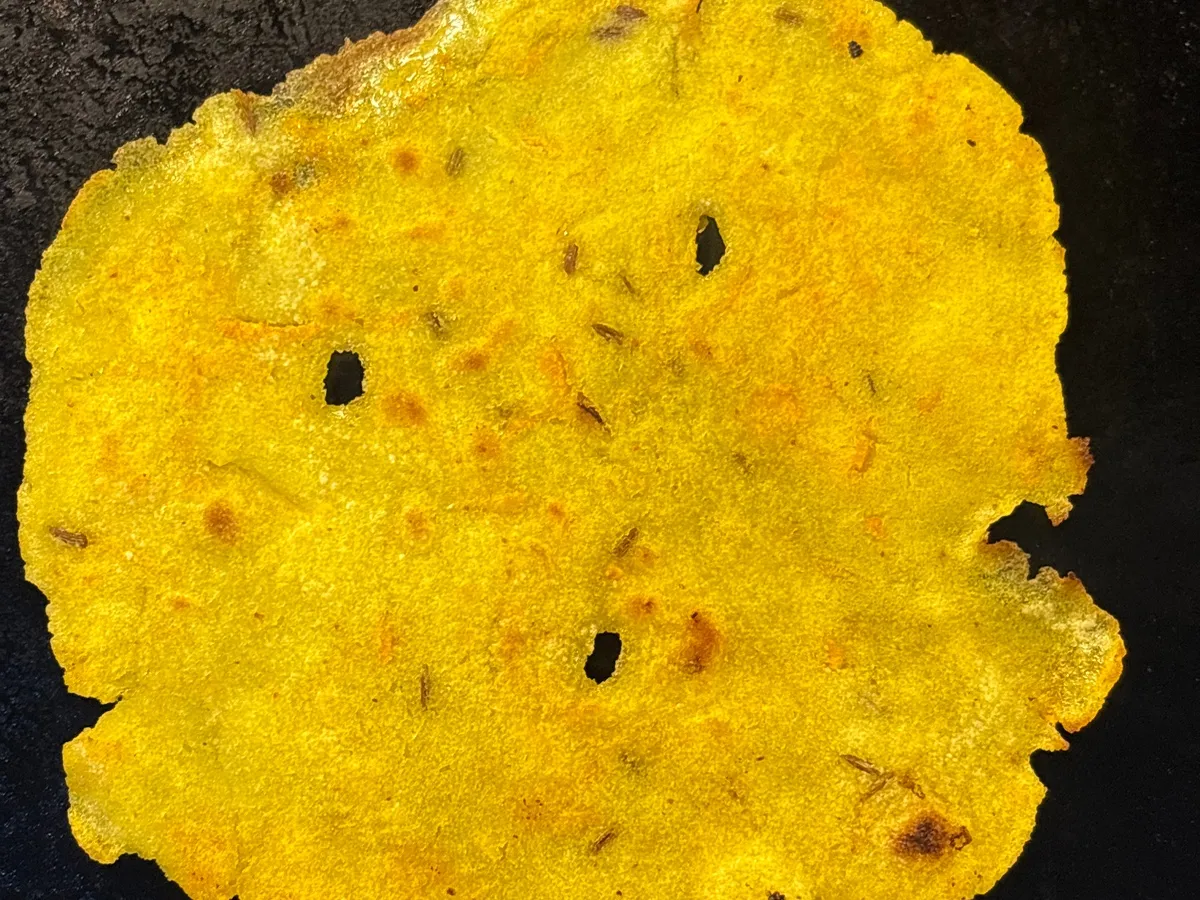
Look for: Brown spots on both faces, no raw pale patches, and the rotti feels firm rather than floppy. It should smell toasted.
2–3 min · medium heat · tawa
Serve hot off the tawa with coconut chutney or butter. Akki rotti stiffens as it cools far more than a wheat rotti does, which is why it is made one at a time and eaten as it comes.
About this dish
There is no gluten in rice flour, so nothing here behaves like a wheat dough. It cannot be rolled — a rolling pin tears it — and it will not hold together unless the water goes in boiling. Both facts follow from the same thing: the only structure this dough has is gelatinised rice starch, which needs heat to form. Patting it out on a sheet and inverting it onto the pan is the domestic method. The other way is to pat it directly onto a cold tawa and then put the tawa on the flame, which gives a thinner rotti and means the pan is out of action between each one. Households that make several use two tawas. The vegetables are not fixed. Onion and coriander are the constant; grated carrot, dill, cabbage, cucumber and methi all get used, and a cucumber version needs less water because the cucumber brings its own.