Allam Pachadi
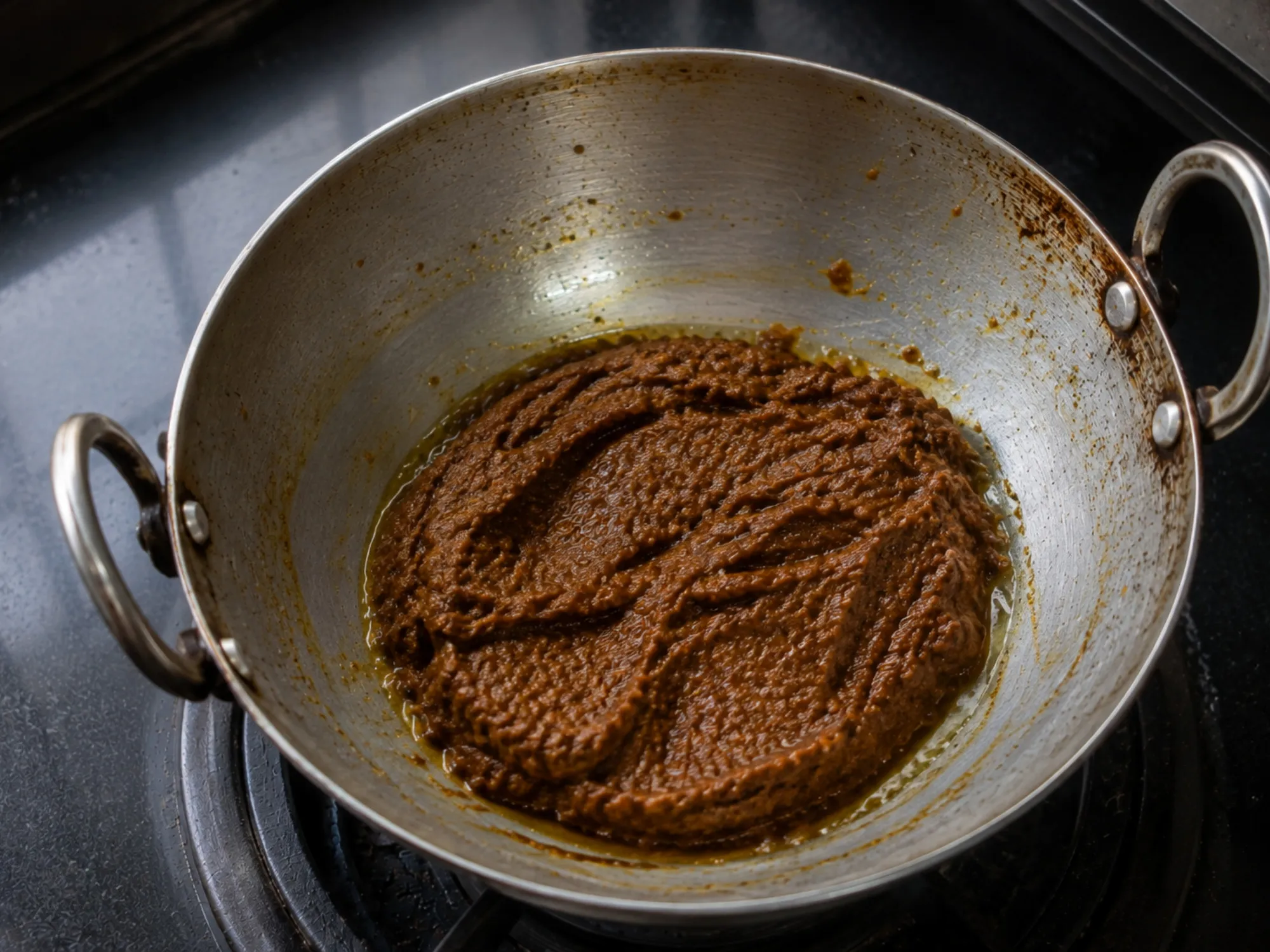
The dark, sweet-sour ginger chutney that goes with pesarattu — cooked down in oil until it thickens and keeps for weeks in the fridge.
Drafted — not yet cooked in our kitchen
- Hands on
- 27 min
- Total
- 27 min
- Serves
- 8
- Difficulty
- medium
Ginger on its own is punishing. What makes allam pachadi work is that the ginger is fried before it is ground, and the ground paste is then cooked again in oil — two rounds of heat that turn the raw burn into something dark and round, held between jaggery and tamarind. Rush either one and you can taste it.
Step by step, with timers and flame levels. Your screen stays awake.
Ingredients
Tap what you already have.
Method
Scrape the ginger with the back of a spoon rather than peeling it with a knife — the skin comes away and the flesh doesn't. Chop it small. Tear the tamarind up and cover it with 60 ml hot water.
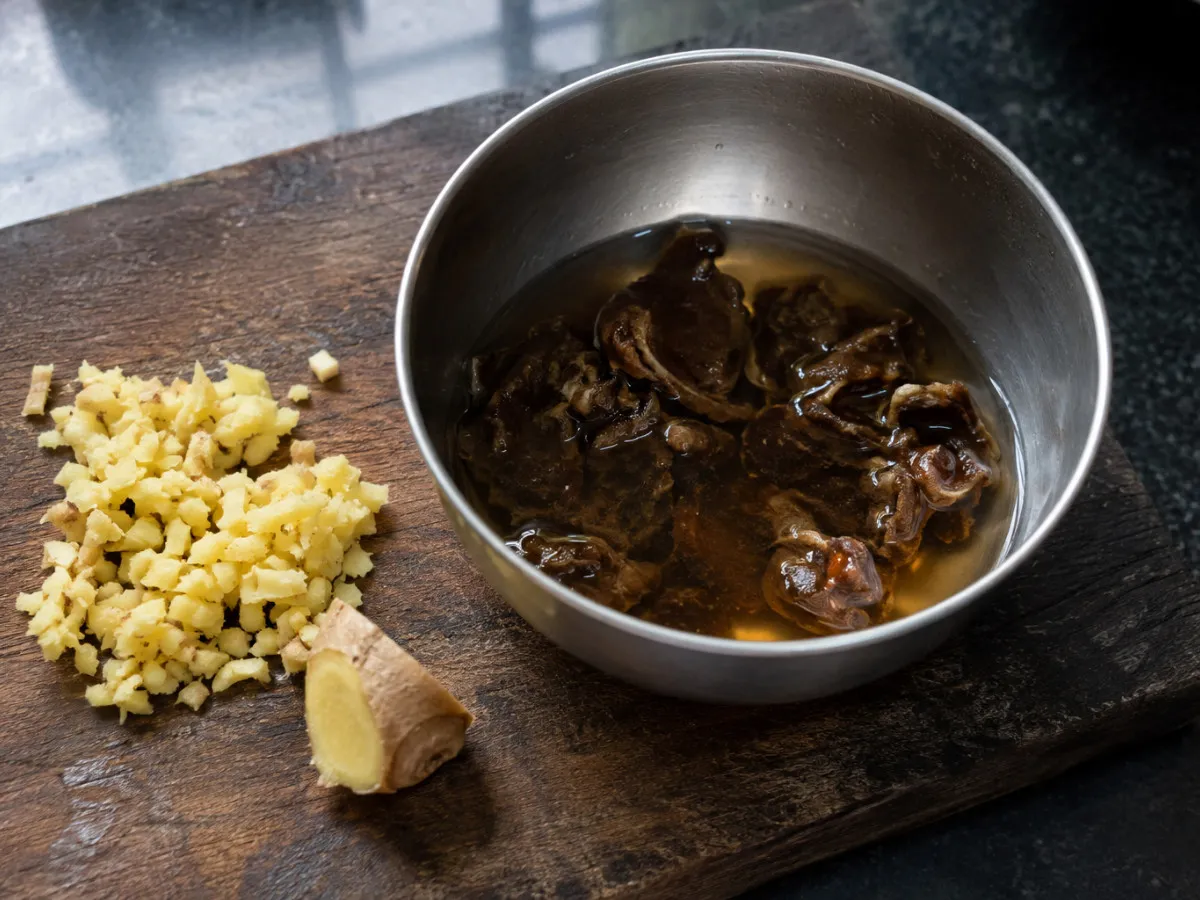
Placeholder — we haven't photographed this step yet. Look for: The tamarind should go soft enough to squash against the side of the bowl with your thumb.
8–10 min · bowl
Warm 1 tbsp of the sesame oil in a kadai on medium. Put in the chana dal and urad dal first, then the coriander seeds and fenugreek about a minute later, and the red chillies last — the chillies need the least time and burn bitter if they get the same as the dal.
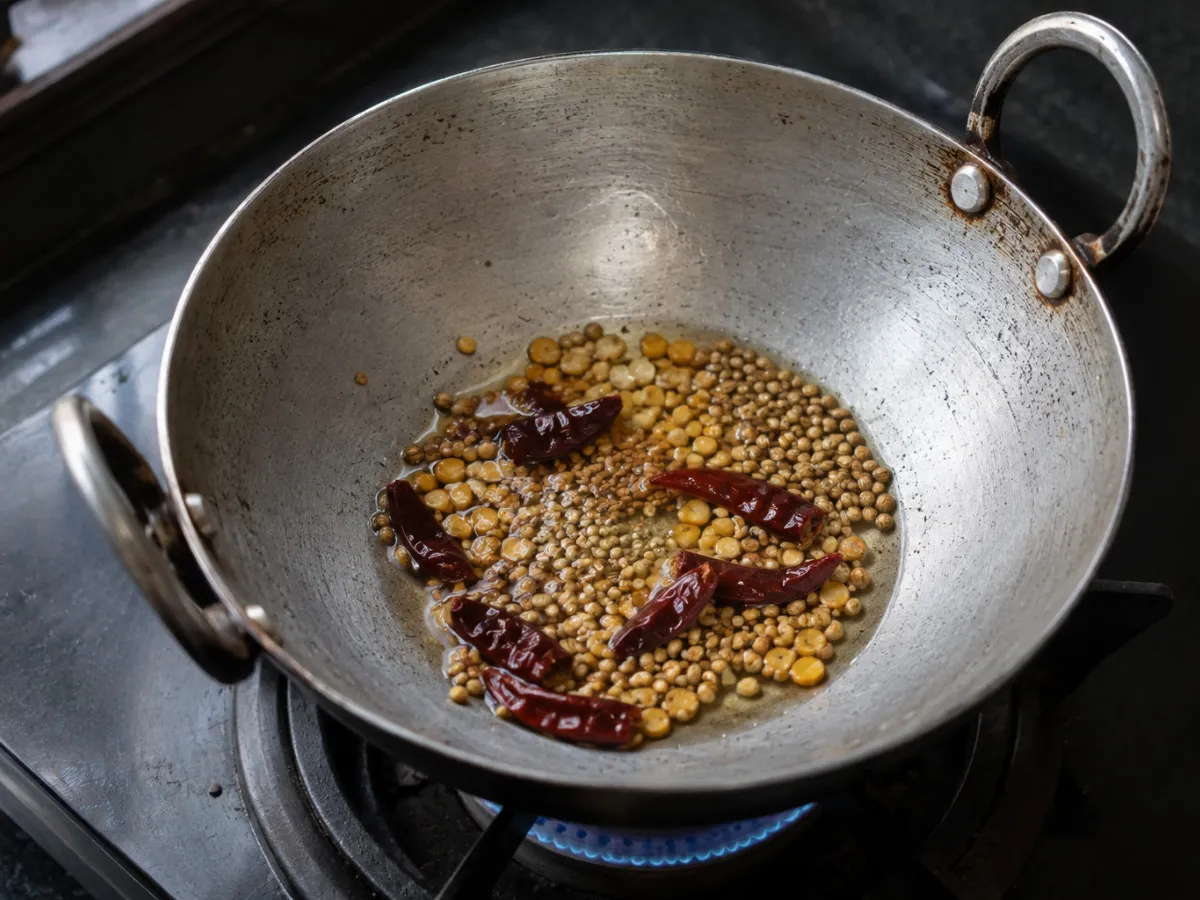
Placeholder — we haven't photographed this step yet. Look for: The dals turn the colour of weak tea and smell nutty; the chillies go a shade darker and puff slightly. Fenugreek that has gone dark brown is already bitter — start again.
4–6 min · medium heat · kadai
Tip the roasted spices onto a plate to stop them cooking. Add the remaining 2 tbsp sesame oil to the same kadai and fry the chopped ginger on medium.
Look for: The sharp, wet smell of raw ginger goes and turns warm and slightly sweet; the pieces shrink and take colour at the edges. Under-frying here is what makes allam pachadi taste harsh three days later.
5–7 min · medium heat · kadai
Grind the roasted spices to a coarse powder first, dry. Then add the fried ginger, the tamarind with its soaking water, the jaggery and the salt, and grind to a thick paste. Add water only a spoon at a time — this should be stiff, not pourable.
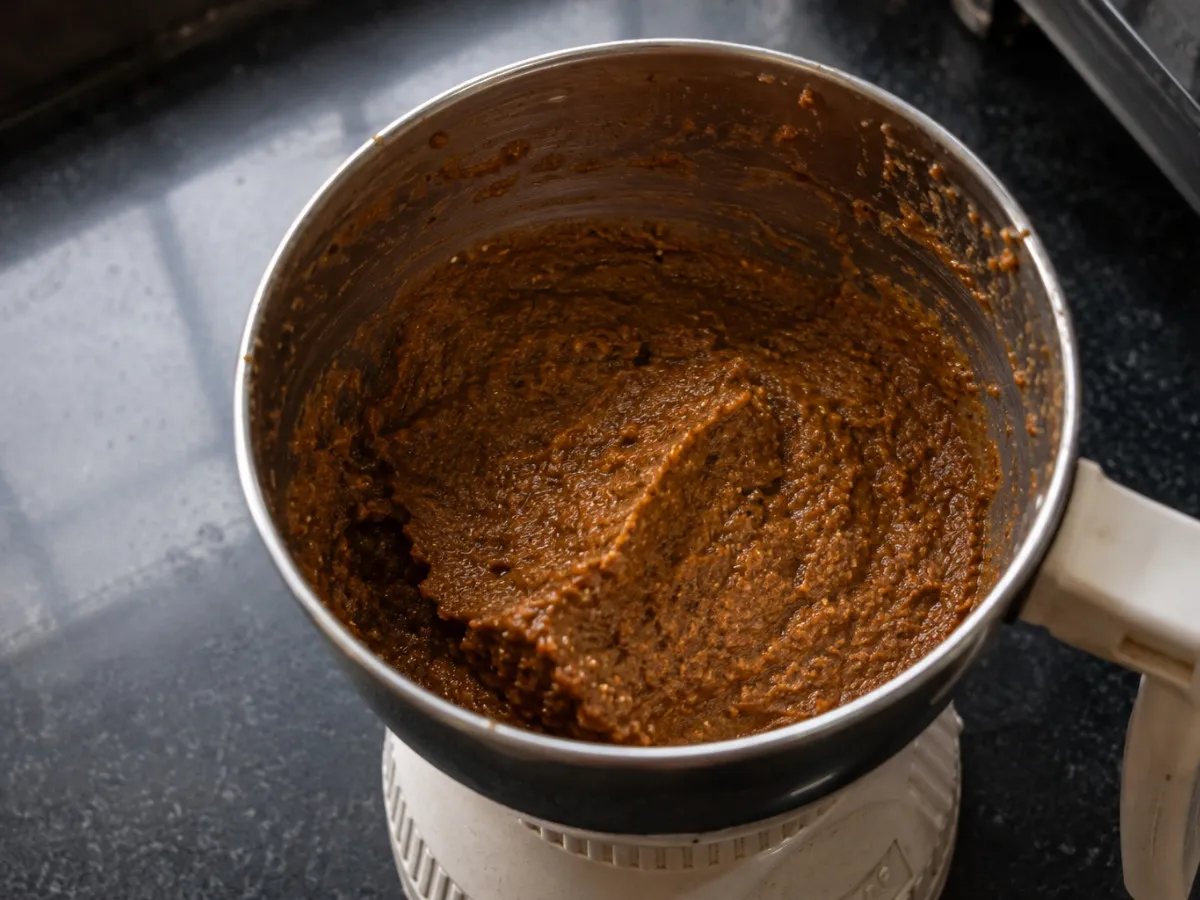
Placeholder — we haven't photographed this step yet. Look for: Thick enough to hold a ridge when you drag a spoon through it.
3–5 min · mixer-grinder
Return the paste to the kadai on low. Cook it down, scraping the base every half minute or so — it catches easily once the jaggery is in.
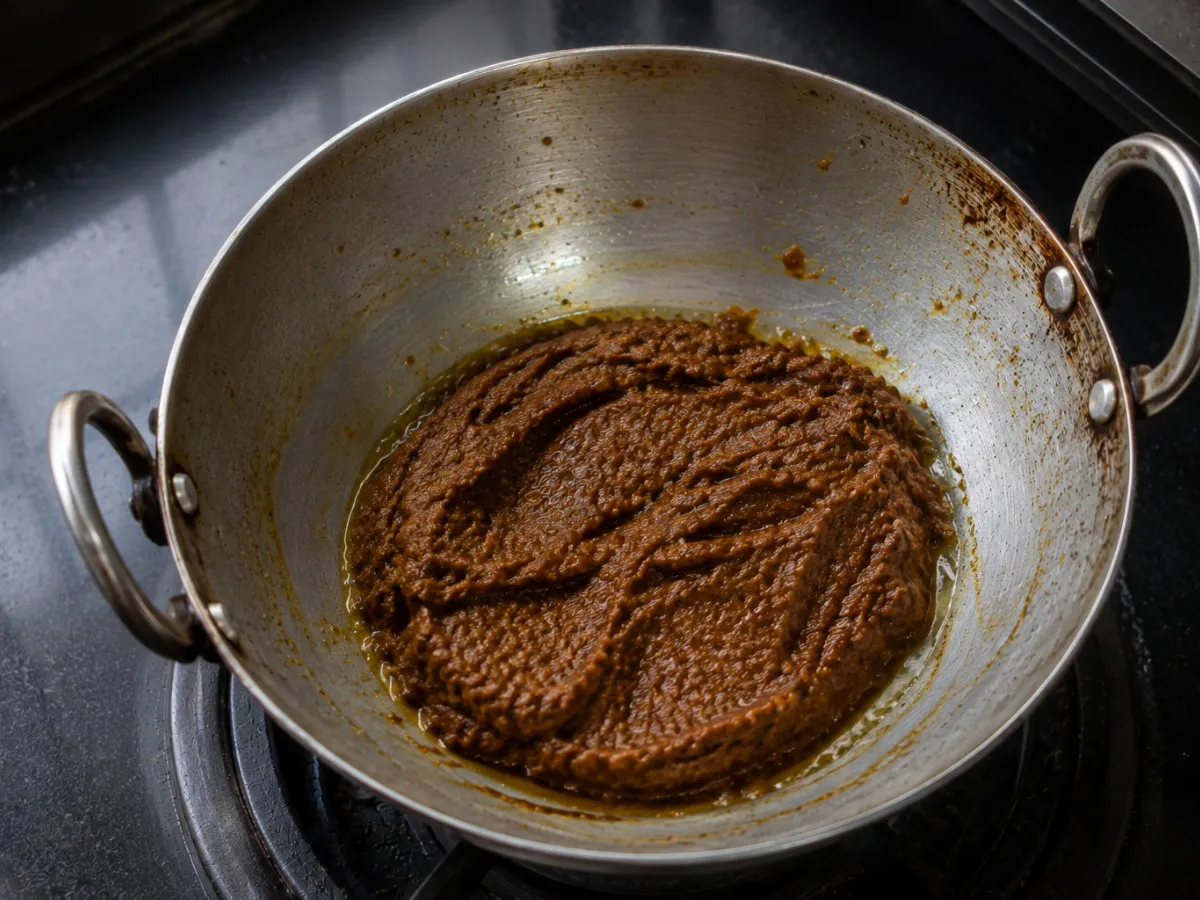
Placeholder — we haven't photographed this step yet. Look for: It darkens, pulls away from the sides in a mass, and a thin film of oil shows at the edges. That oil is what lets it keep — stop before it and you get a week, not a month.
6–9 min · low heat · kadai
In a small pan, heat the groundnut oil until a mustard seed dropped in cracks at once. Add the mustard seeds, then the urad dal, then the curry leaves and asafoetida off the heat. Pour it over the chutney and stir it through.
Look for: Mustard popping steadily and the urad dal just turning gold. Curry leaves should crackle and stay green — blackened ones taste of nothing.
1–2 min · medium-high heat · saucepan
About this dish
This is the chutney that turns up next to pesarattu, and the pairing is the reason most people meet it. It is not a fresh chutney — it is closer to a relish, cooked in enough oil to sit in the fridge and get better for a fortnight. Spoon it into a dry jar, level the top, and keep a clean spoon for it; a wet spoon is what spoils a jar of this. Some households use only jaggery for the sweetness and lean hard on tamarind for the sour; others put a little onion in with the ginger, which softens the bite and shortens how long it keeps. This version has no onion, so it keeps longer.