Aloo Gobi
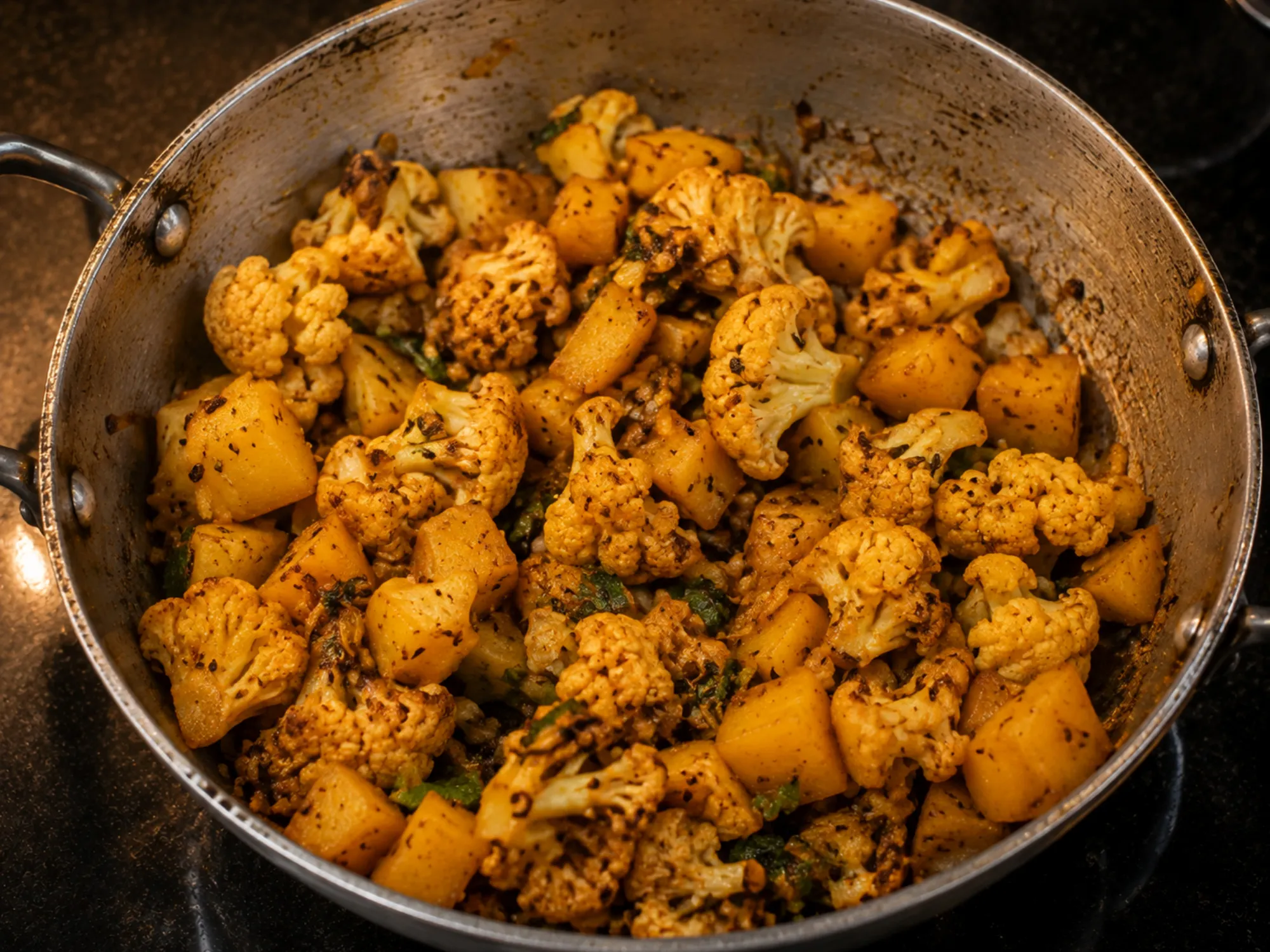
Potato and cauliflower cooked dry in a wide pan, left alone long enough to brown rather than steam.
Drafted — not yet cooked in our kitchen
- Hands on
- 26 min
- Total
- 26 min
- Serves
- 4
- Difficulty
- easy
Wide pan, dry vegetables, and the discipline to stop stirring. Potato goes in before the cauliflower because it takes longer, and the sour hits at the very end off the heat.
Step by step, with timers and flame levels. Your screen stays awake.
Ingredients
Tap what you already have.
Method
Cut the cauliflower into florets with a bit of stalk left on each and the potato into cubes about the same size. Spread the florets out and let them dry off — a washed cauliflower going into hot oil wet will steam itself pale, and this dish lives on browning.
Look for: The florets look dry, not glossy, and leave no wet mark on the board. Pieces roughly matched in size so they finish together.
10–15 min
Heat the oil in a wide kadai over medium-high and add the cumin. Once it darkens and crackles, add the ginger and green chilli and give them a few seconds.
Look for: Cumin dark brown and fragrant, ginger no longer smelling raw. Black cumin is bitter — start again if it goes that far.
1–2 min · medium-high heat · kadai
Add the potato first and give it a head start, then the cauliflower. Spread everything into one layer and then leave it alone for three or four minutes at a time. The browning happens in the still moments; constant stirring is what gives you pale, wet aloo gobi.
Look for: Brown patches on the flat faces of the florets and on the potato corners. The pieces should move loose in the pan rather than sticking.
10–15 min · medium-high heat · kadai
Lower the heat to medium-low — the powders scorch in seconds at frying heat — and add the turmeric, coriander powder, chilli powder and salt. Toss to coat, then cover and cook for a few minutes so the cauliflower stems finish.
Look for: A knife goes through a floret stem with no resistance and the powders smell toasted rather than dusty. Do not add water — the vegetables have enough of their own under a lid.
5–8 min · medium-low heat · kadai
Take the lid off, raise the heat for a moment to drive off any moisture, then take the pan off and stir in the amchur, crushed kasuri methi and coriander. Amchur cooked in the pan goes dull; at the end it is what lifts the whole thing.
Look for: The pan base is dry and the vegetables sizzle rather than hiss. It should smell sour over the top of the cumin.
· medium-high heat · kadai
About this dish
Every version of this dish that disappoints has the same cause: too much water and too small a pan. Cauliflower holds water in its florets, potato releases more, and a crowded kadai turns both into a steamer. Wide pan, high heat, and long undisturbed stretches are the entire technique. There is no tomato and no onion here on purpose. The dry Punjabi dhaba version is built on cumin, ginger and amchur, and adding tomato makes a perfectly good dish that is wetter and sweeter and no longer really aloo gobi. Leaving a little stalk on each floret is worth doing. It holds the floret together through the pan and the stalk is the part that browns best.