Amritsari Aloo Kulcha
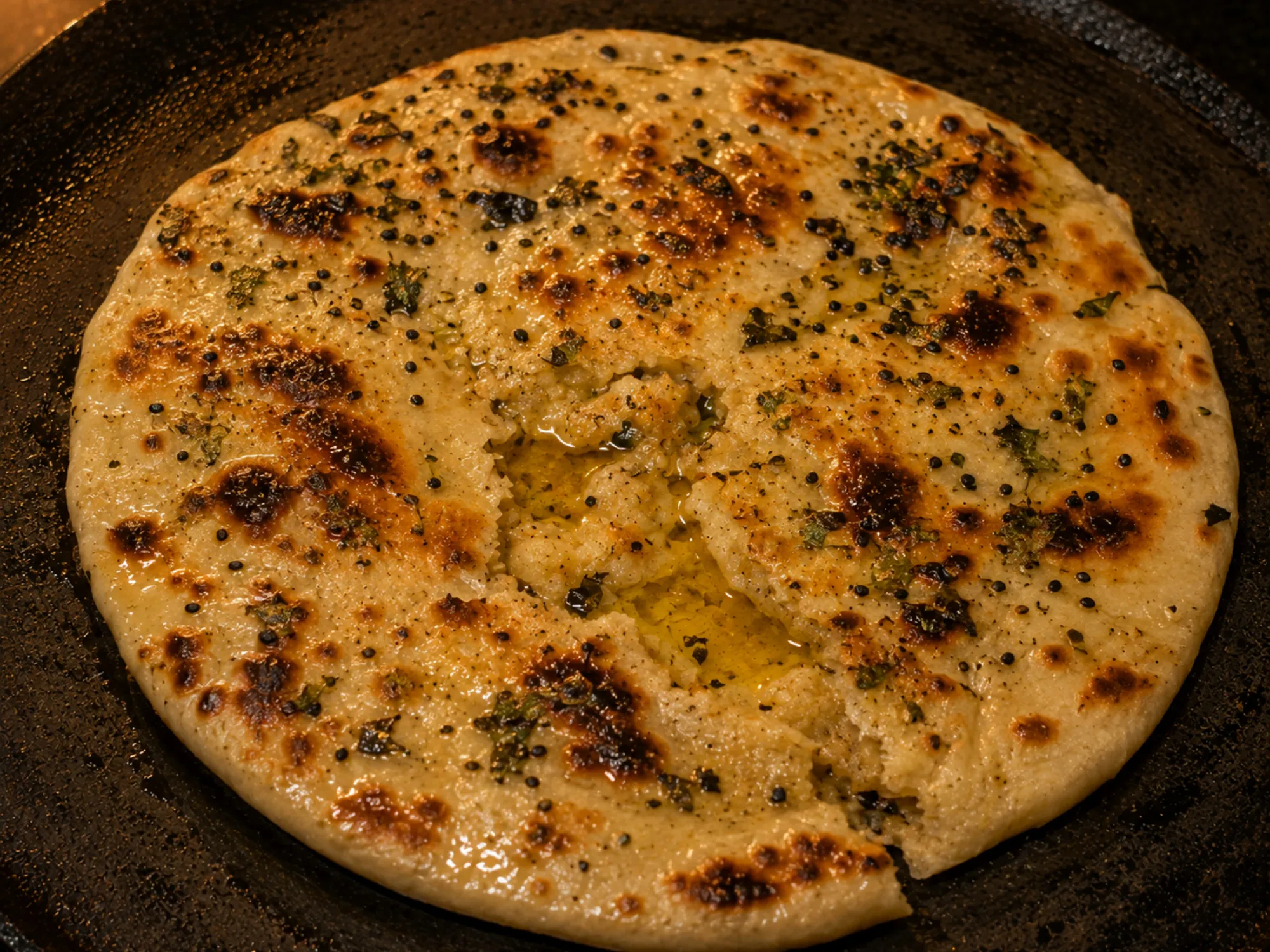
The stuffed kulcha of Amritsar, potato inside and coriander pressed into the crust, cooked on an upturned tawa.
Drafted — not yet cooked in our kitchen
- Hands on
- 33 min
- Total
- 2 hr 53 min
- Serves
- 6
- Difficulty
- medium
A kulcha is a maida bread stuffed with spiced potato, rolled out with the filling inside it, and cooked hard enough to blister. Get the potato dry and cool before anything else happens, because a wet filling cannot be rescued once it is sealed into the dough.
Step by step, with timers and flame levels. Your screen stays awake.
Ingredients
Tap what you already have.
Method
Boil the potatoes whole and unpeeled in enough water to cover. Whole and in their skins matters — cut potatoes take on water, and a wet filling will split the kulcha as it is rolled.
Look for: A knife slides into the centre with no resistance and the skin has started to split in one or two places.
20–30 min · medium-high heat · saucepan
Whisk the maida with the baking powder, baking soda, sugar and salt, then work in the curd, oil and most of the milk. Knead to a soft dough.
Look for: Softer than roti dough and just short of sticky — it should stretch when pulled rather than tear.
8–10 min · bowl
Cover and leave the dough somewhere warm while the potatoes cool.
Look for: Slack and puffed, and it stretches thin between the fingers without springing straight back.
120–180 min · bowl
Peel the cooled potatoes and grate them rather than mashing — grated potato stays dry and lump-free. Mix in the green chilli, coriander, carom seeds, cumin, amchur, chilli powder and salt.
Look for: Squeezed in a fist the filling holds its shape and leaves no water behind in the bowl. If it weeps, the potatoes were too warm — spread it out and let it cool.
6–8 min · bowl
Divide dough and filling into 6 each. Flatten a ball into a cup in your palm, sit the filling in it, and draw the edges up over the top, pinching them closed. Pinch off any thick knot of dough at the seam and set it seam side up.
Look for: The seal is smooth and unbroken, with no filling showing through and no lump of doubled dough at the centre.
8–10 min
Roll each ball out gently to about 18 cm, working from the centre and turning as you go. Scatter coriander and nigella seeds on top and give one more light pass to press them in.
Look for: Even thickness with the filling spread right to the edge, and no tear letting potato through.
8–12 min
Heat a cast-iron or heavy steel tawa on medium-high — bare metal, metal handle, no non-stick. Wet the underside of a kulcha and lay it wet side down.
Look for: The top dulls from wet to matt and bubbles push up between the seeds. A kulcha is thicker than a naan and needs the longer end of this.
2–3 min · medium-high heat · tawa
Turn the tawa over above the flame and move it about until the top is blistered.
Look for: Brown-black patches over the risen parts and the coriander on top gone dark and crisp.
1–2 min · medium-high heat · tawa
Take it off, crush it once between your palms to open the layers, and brush butter on while it is hot.
About this dish
Amritsari kulcha is stuffed and then rolled, which is what separates it from a plain kulcha where the dough alone does the work. The rolling is where it goes wrong: too much pressure and the filling pushes through, too little and the centre stays a doughy lump. Everything about the filling is a moisture problem. Whole potatoes, fully cooled, grated rather than mashed, and no onion in the mix — raw onion draws water out for as long as it sits. Amchur is the sourness here. Lemon juice is the usual substitute and it is a wetter one, so add it to the filling only just before stuffing.