Aloo Paratha
Potato-stuffed flatbread where the filling is kept dry and cool, which is the whole difference between stuffing and patching.
Drafted — not yet cooked in our kitchen
- Hands on
- 34 min
- Total
- 1 hr 57 min
- Serves
- 4
- Difficulty
- medium
The dough and the filling both want to be soft, and only one of them is allowed to be wet — neither. Boil the potatoes in their skins, grate them cold, and the rolling stops being a fight.
Step by step, with timers and flame levels. Your screen stays awake.
Ingredients
Tap what you already have.
Method
Mix the atta, a teaspoon of the oil and the salt, then add water in stages and knead to a soft dough. Softer than chapathi dough — a stiff dough will not stretch around a filling, it will split.
Look for: A poked finger leaves a dent that stays. The dough should feel like an earlobe and pick up nothing off the bowl.
6–9 min · bowl
Oil the surface, cover, and set it aside. Resting is doing structural work here — an unrested dough springs back as you roll and forces you to fight it exactly when there is a filling inside.
Look for: The dough has relaxed visibly and stretches when pulled rather than tearing.
30–45 min · bowl
While that rests, boil the potatoes whole in their skins. Cut potatoes take on water and a wet filling will burst out through the dough no matter how carefully you seal it.
Look for: A knife slides to the centre and out again with nothing clinging to it, and the skins have started to split.
18–25 min · medium-high heat · pressure cooker
Drain, peel while just cool enough to handle, and grate the potato rather than mashing it. Then spread it out on a plate and leave it to go completely cold before anything else goes in. Warm filling steams inside the paratha and tears it from within.
Look for: Cold to the back of the hand, dry-looking, and fluffy rather than sticky.
20–30 min
Mix in the ginger, coriander, amchur, cumin, coriander powder, red chilli and salt. Go easy on the chilli for a small child and let the amchur carry the interest instead — it does the same job of waking the potato up without the heat.
Look for: Taste it. The filling should be slightly saltier and sharper than you would want on its own — the dough around it is unseasoned and will flatten everything.
3–5 min · bowl
Take a ball of dough, flatten it into a small cup in your palm, put a ball of filling the same size into the hollow, and gather the edges over the top. Pinch the seam shut and twist off the excess knob of dough — that knob is thick, will stay raw, and is worth losing. Flatten the sealed ball gently, seam side up.
Look for: A sealed ball with no filling visible and no thick lump at the join. Equal weights of dough and filling is the ratio to aim at.
10–15 min
Roll out on a floured board with light, even pressure from the centre out, turning the paratha a quarter turn between strokes. Do not bear down on one spot — that is where it splits and the filling comes through.
Look for: About the size of a small plate and evenly thick throughout. A patch of filling showing through is a leak; dust it with flour and carry on rather than starting again.
12–18 min
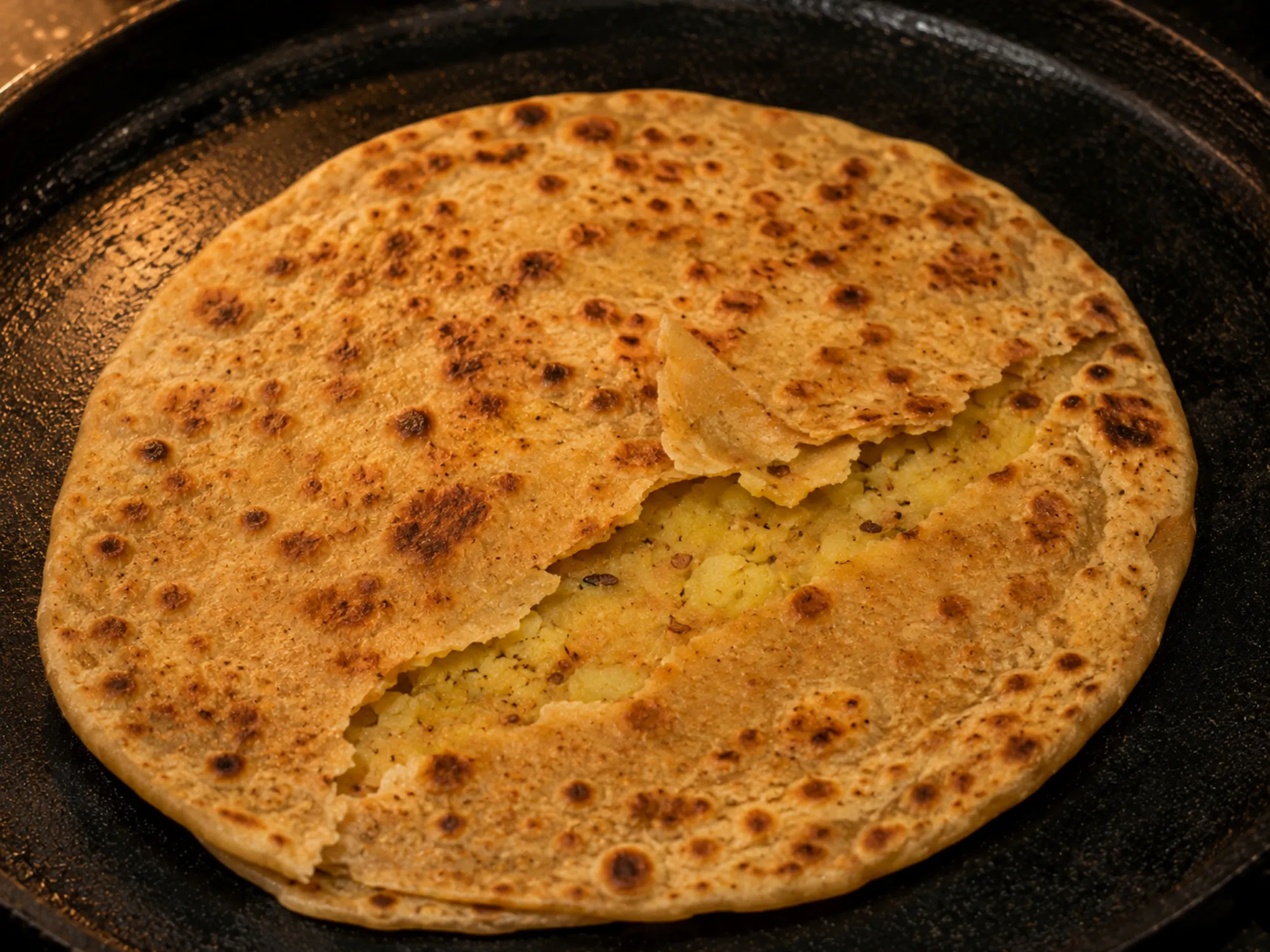
Lay it on a hot tawa dry. When the underside has pale spots, flip it, smear ghee over the cooked face, flip once more and press the puffed areas down with a folded cloth so the raw patches meet the metal.
Look for: Dark golden blisters over both faces and no doughy grey patches left. It should feel light in the hand, not dense.
2.5–4 min · medium-high heat · tawa
Stack the parathas as they come off and keep them covered. For a box, let them cool completely first and then wrap — a hot paratha sealed in a steel dabba sweats and arrives limp.
Look for: Cool through, still soft, and foldable in half without the surface cracking.
15–25 min
About this dish
Almost every aloo paratha problem is a moisture problem. Potatoes boiled cut up, filling used warm, or the potato mashed rather than grated — each one puts water where it does not belong, and the dough tears in the pan and welds itself to the tawa. Grating rather than mashing matters for a second reason: mashing works the starch and gives you a gluey filling that pulls the dough thin in patches while leaving lumps elsewhere. A box grater takes ten seconds longer and removes the problem entirely.