Aloo Tikki
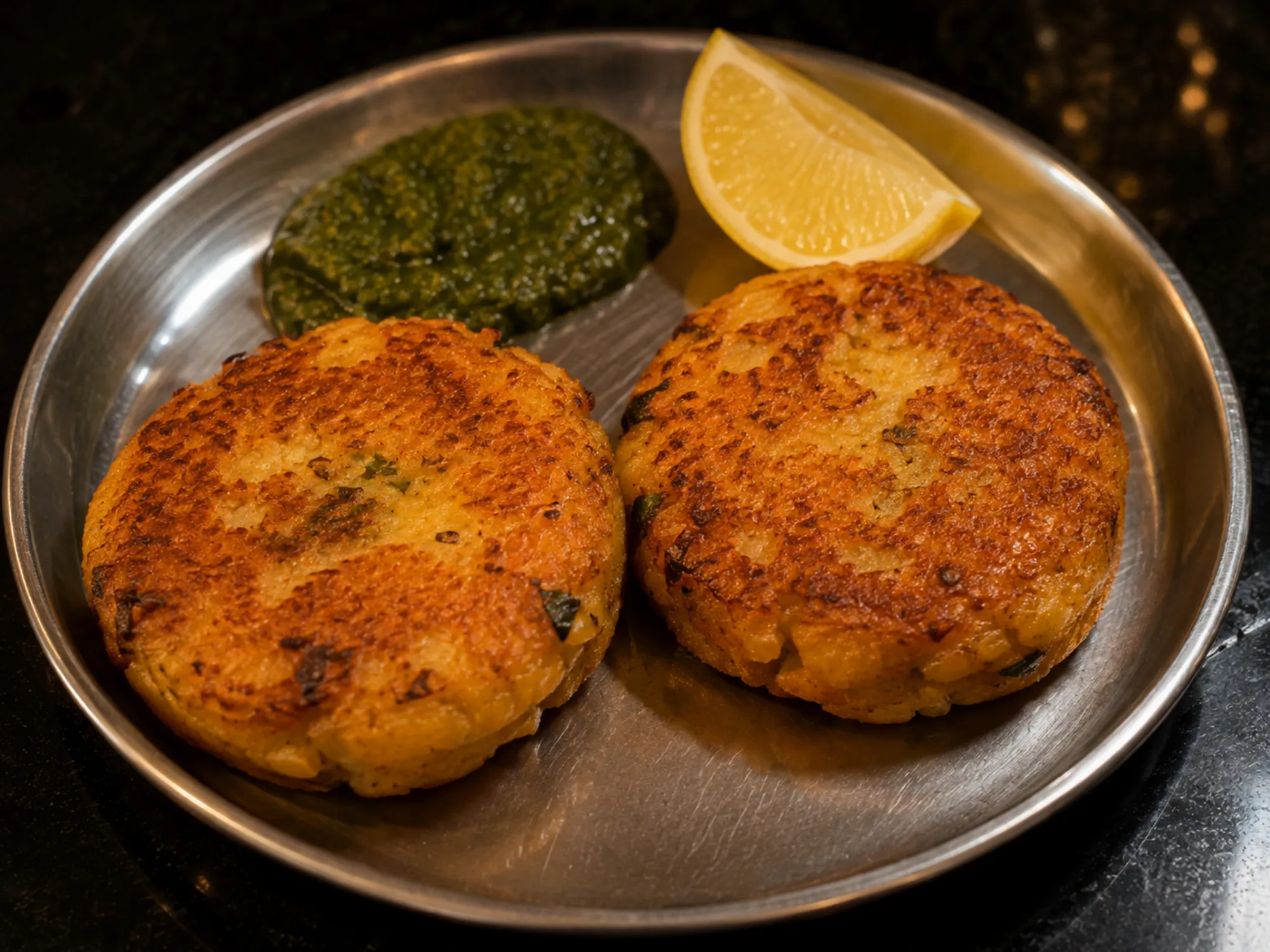
Potato patties griddled on a tawa until the crust is deep gold, sharpened with amchur and finished with chaat masala and lemon.
Drafted — not yet cooked in our kitchen
- Hands on
- 7 min
- Total
- 54 min
- Serves
- 4
- Difficulty
- medium
A good tikki is settled at two points: the potato has to be cool and dry before anything else goes near it, and the patty has to be left alone once it hits the pan. Get those right and the spicing is forgiving.
Step by step, with timers and flame levels. Your screen stays awake.
Ingredients
Tap what you already have.
Method
Cook the potatoes whole and unpeeled with 250 ml water. Skins on keeps them from drinking water, and a waterlogged potato will not hold a patty together. Three whistles on a high flame, then off the heat and let the pressure drop on its own.
Look for: A knife goes into the middle with no resistance and comes out clean. A firm core means one more whistle.
12–16 min · high heat · pressure cooker
Peel while they are still warm, grate them on the coarse side of a box grater, and spread the gratings on a wide plate to cool. Do not rush this on the counter with a fan — you want them cool, not dried out.
Look for: No steam coming off the plate and the potato feels cool under your palm. Salt hitting warm potato turns the mix sticky.
15–20 min
Tip the cooled potato into a bowl with the green chilli, ginger, coriander leaves, coriander and cumin powders, amchur, chilli powder, garam masala, cornflour and salt. Mix with your fingertips, lifting rather than kneading — worked hard, potato goes gluey and the tikki turns dense.
Look for: A pinch squeezed in your fist holds its shape and leaves no wet sheen on your palm.
· bowl
Divide into eight and roll each into a ball between wet palms, then press to a disc about 2 cm thick. Go around the rim with your fingers and close every crack — a cracked edge opens in the pan and the tikki drinks oil through the split.
Look for: Smooth-sided discs, all roughly the same thickness so they finish together.
Put the shaped tikkis on a plate, uncovered, in the fridge. Cold ones hold their shape on the tawa; room-temperature ones sag and spread.
Look for: Firm to a fingertip press, surface dry rather than tacky.
20–30 min
Heat the tawa on medium, spread half the oil, and lay the tikkis down with space between them. Leave them alone — the temptation to nudge them about is what breaks them.
Look for: Deep gold underneath and it lifts cleanly when you slide a spatula under. If it grips the tawa it is not ready — wait, do not scrape.
4–6 min · medium heat · tawa
Turn once, drizzle the rest of the oil around the edges so it runs under, and let the second side go. If they are colouring too fast, drop the flame to medium-low — the outside crisping before the inside heats through is the usual failure here.
Look for: Both faces evenly gold, the sides set, and the tikki sounds crisp against the spatula when you tap it.
3–5 min · medium heat · tawa
Off the tawa, dust with chaat masala and squeeze lemon over while they are still hot. Serve straight away with green chutney and a sweet tamarind one — a tikki that sits ten minutes on a plate is a different, sadder thing.
About this dish
Stall versions are usually cooked on a wide flat tawa with a shallow moat of oil, which is closer to a fry than a griddle and gives the thick lacquered crust you get outside a market. At home the tawa with four tablespoons is the version worth cooking — the crust is thinner but the inside stays potato rather than turning to paste. Two common additions: a spoonful of crushed boiled peas or soaked chana dal worked into the mix for texture, or a stuffing of spiced chana pressed inside each patty. Both make the tikki harder to keep whole, so they are worth trying once the plain one is coming off the tawa cleanly.