Bajra Khichdi
Whole pearl millet pounded damp to loosen the husk, then pressure cooked soft with moong dal and finished with a good deal of ghee.
Drafted — not yet cooked in our kitchen
- Hands on
- 12 min
- Total
- 2 hr 37 min
- Serves
- 4
- Difficulty
- medium
Whole bajra needs three things before it is worth eating: the husk knocked loose, a couple of hours in water, and a long run under pressure. Moong dal goes in with it because the two finish at roughly the same time, which is unusual and convenient.
Step by step, with timers and flame levels. Your screen stays awake.
Ingredients
Tap what you already have.
Method
Sprinkle the bajra with a few tablespoons of water — damp, not wet — and pound it in a mortar in short bursts. You are not trying to break the grain, only to loosen the husk. Then rub it between your palms and winnow or rinse the loosened bran away.
Look for: Most grains show a pale, exposed surface where the darker skin has come away, and the rinse water runs grey with bran. A few grains cracked in half is fine; a mortar full of flour means you pounded too hard.
8–12 min
Rinse the pounded bajra in two or three changes of water and leave it to soak. Pearl millet is a hard grain and this soak is the difference between forty minutes in the cooker and twenty.
Look for: Grains swollen and noticeably paler, giving slightly when pressed with a nail.
120–240 min · bowl
Heat the ghee in the cooker on medium and add the cumin. When it darkens and smells toasted, add the asafoetida and green chilli with the cooker swung off the flame. The tempering is short on purpose — bajra has a strong, slightly bitter flavour of its own and a long masala fights it rather than helping.
Look for: Cumin one shade darker and clearly toasted in the nose. Hing added to fiercely hot ghee turns acrid in about two seconds — off the heat, every time.
1–2 min · medium heat · pressure cooker
Add the drained bajra, the rinsed moong dal, the turmeric, salt and water. Bring it to the first whistle on high, then drop to medium and give it a long run. Let the pressure fall on its own; there is nothing to be gained by hurrying a grain this hard.
Look for: The dal should have disappeared entirely and the bajra should crush to a soft paste under a spoon, still holding its shape on the plate. If any grain resists, close the cooker and give it another two whistles — this is the one thing worth going back for.
25–35 min · medium heat · pressure cooker
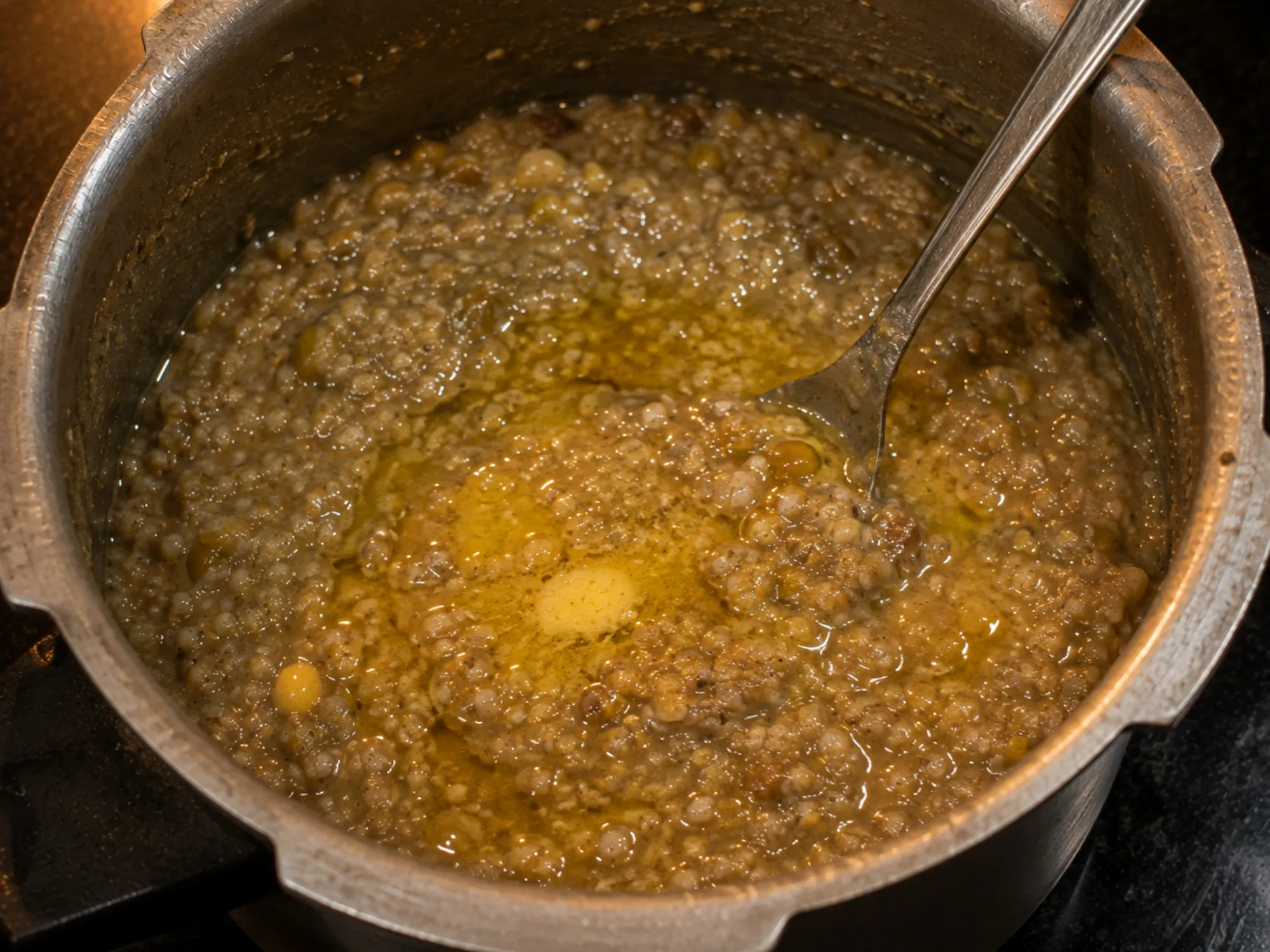
Open the cooker and mash it a little against the side with a ladle, then loosen it with hot water and let it simmer open for a few minutes. It should be looser than you think you want it — bajra khichdi sets fast, and what looks right in the pot is stiff in the bowl.
Look for: It should fall off a tilted ladle in a thick stream rather than in a lump. Check the salt here — bajra takes noticeably more than you would expect.
3–5 min · low heat · pressure cooker
Serve it hot with a spoon of ghee poured into a well in the middle of each bowl. The ghee is not a garnish. It cuts the bitterness pearl millet carries and keeps the khichdi from setting solid in front of you, which is why every version of this is generous with it.
Look for: Thick, soft and steaming, with the ghee melting into a pool. Eat it straight away; reheated, it needs a good splash of hot water and a whisk.
About this dish
Pounding the grain damp is the step that gets dropped and it is worth keeping. The bran on pearl millet is where most of the bitterness sits, and taking the loose part of it off changes the taste of the finished khichdi more than any amount of tempering does. Curd, jaggery and more ghee are the usual things on the side, and the combination is not as odd as it reads — the sourness and the sweetness both work against what bajra does on its own.