Bajra Raab
Bajra flour roasted in ghee and cooked out with jaggery into a thin, drinkable gruel, finished with dry ginger and cardamom.
Drafted — not yet cooked in our kitchen
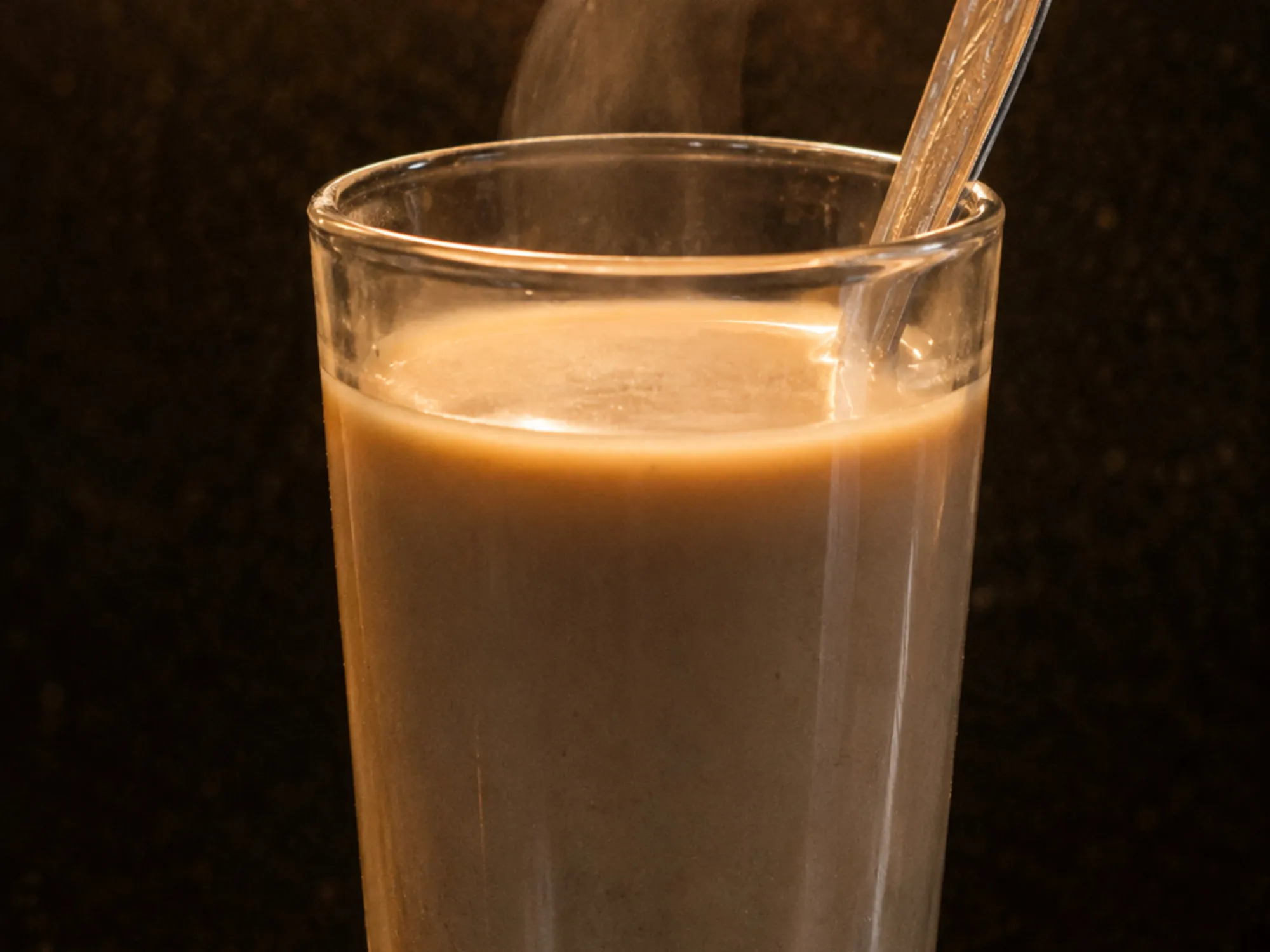
- Hands on
- 15 min
- Total
- 15 min
- Serves
- 2
- Difficulty
- easy
Four ingredients and one thing that can go wrong: flour into hot ghee needs a low flame and your full attention for five minutes, and water into that roux needs the pan off the heat. Get those two right and the rest is stirring.
Step by step, with timers and flame levels. Your screen stays awake.
Ingredients
Tap what you already have.
Method
Melt the ghee in a heavy saucepan on low and stir in the bajra flour. Keep it moving with a wooden spoon and keep the flame low. This is the step that decides whether the raab tastes nutty or tastes of raw flour, and it cannot be hurried on a higher flame — bajra flour catches and goes bitter before it browns.
Look for: The paste loosens and starts sliding off the spoon instead of clinging to it, and the smell turns from raw and grassy to toasted. The colour barely moves — go by smell and by how it flows.
5–8 min · low heat · saucepan
Take the pan right off the heat and let it stand for half a minute, then pour in a little of the water and whisk hard until it is completely smooth. Only then add the rest. Water into a hot roux spits and seizes into lumps that never come out, and a lumpy raab has to be strained and is never quite the same.
Look for: Smooth, thin and the colour of weak coffee, with nothing catching in the whisk.
· saucepan
Back on medium-low, bring it up to a simmer and cook it, stirring often and scraping the base. It will thin out first as it heats and then start to thicken — both are expected, and the thickening is the flour finally cooking.
Look for: Thick enough to coat the back of a spoon but still pourable, and no floury smell left when you hold the pan up to your face. It should still run off the spoon in a stream — this is a drink, not a porridge.
8–12 min · medium-low heat · saucepan
Lower the flame, add the grated jaggery and stir until it has completely dissolved. It goes in at the end and on a low flame — jaggery boiled hard in a thin gruel scorches on the base of the pan and takes the whole thing with it.
Look for: No grains of jaggery left when you draw the spoon along the base, and the colour deepens by a shade or two.
2–3 min · low heat · saucepan
Take it off the heat and stir in the dry ginger, cardamom and a small pinch of salt. The salt is not there to be tasted; it sharpens the jaggery, and leaving it out makes the whole thing read flat and one-note. Serve hot, in a glass.
Look for: Warm heat from the ginger coming through behind the sweetness. Drink it hot — cooled, it sets thick and dull and wants thinning and reheating.
· saucepan
About this dish
Consistency is the whole argument with a raab. Cooked thin it is drunk from a glass; cooked another five minutes it becomes something you eat with a spoon, and both versions have people who insist theirs is correct. This is written thin. Some households make it with buttermilk in place of some of the water, which gives a sour, savoury version seasoned with salt and cumin instead of jaggery. That is a different drink rather than a variation on this one.