Barnyard Millet Idli
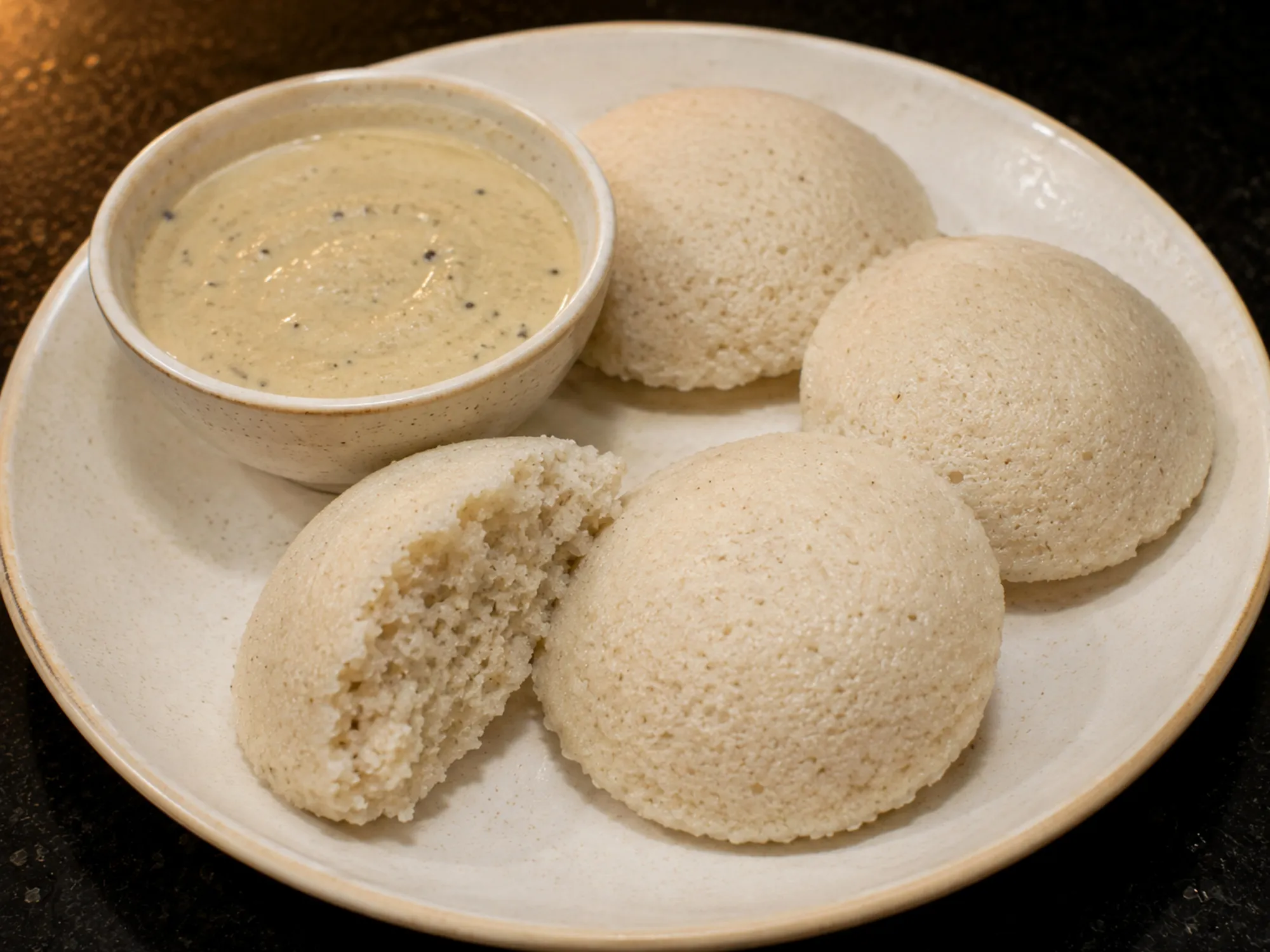
Samak in place of rice in an idli batter, ground with urad dal and fermented overnight — softer than a rice idli and quicker to sour.
Drafted — not yet cooked in our kitchen
- Hands on
- 0 min
- Total
- 12 hr 14 min
- Serves
- 4
- Difficulty
- medium
Barnyard millet takes urad dal’s lead well: it grinds to the right grain, it holds water, and it ferments in less time than rice needs. What it does not do is forgive a slow batter, because it sours faster than you expect.
Step by step, with timers and flame levels. Your screen stays awake.
Ingredients
Tap what you already have.
Method
Rinse the urad dal and fenugreek together until the water runs clear and soak them in one bowl. Rinse the millet separately and soak that in another. Two bowls, not one: urad has to be ground to a light foam and the millet to a grainy paste, and they cannot go in the jar together.
Look for: Urad grains crush to a smooth paste between two fingers with no grit; the millet swells and goes opaque. Four hours is enough for both — the millet does not need the long soak rice would want.
240–300 min · bowl
Drain the urad and grind it first, adding cold water a little at a time, until it is smooth and has visibly risen in the jar. Add the water in small pours and stop as soon as the batter turns light — a batter ground loose will not trap air and the idlis come out dense however long they ferment. Cold water matters: a mixer heats the batter as it runs, and hot urad batter will not hold air. Scoop it into a large vessel with room to double.
Look for: White, glossy and light — drop a little into a bowl of water and it should float. If it sinks, grind on. This float test is the one to trust; volume alone can mislead.
· mixer-grinder
Now grind the drained millet with a little water to a paste that is smooth but still faintly grainy — think fine rava between the fingers. Mix it into the urad batter with your hand rather than a spoon, and add the salt now.
Look for: The mixed batter should be thick and drop off the ladle in a heavy ribbon that holds a moment on the surface. Too thin and the idlis spread flat; too thick and they steam heavy.
· mixer-grinder
Cover loosely and leave it somewhere warm to ferment — around 25–30°C is what the batter wants. Loosely, because it needs air and it needs room to climb — a sealed lid on a rising batter is how people end up cleaning a shelf. In an air-conditioned room or a cold month, stand it in the oven with only the light on, or in a warm cupboard, and give it longer than the times below; go by the rise, not the clock.
Look for: Risen by roughly half again, domed on top, and airy with small bubbles right through when you look at the side of the vessel. It should smell pleasantly sour, not sharp.
480–720 min · bowl
Stir the batter gently — once, and from the bottom. The whole point of the last twelve hours is the air in it, and beating it now knocks that straight back out. Grease the idli plates and fill each mould about three-quarters.
Look for: The batter should still be visibly bubbly after stirring and should mound slightly in the mould rather than settling flat.
· idli steamer
Put the plates into a steamer with water already at a rolling boil, cover, and steam on medium-high. Going in at a boil is what sets the outside quickly and gives an open crumb; starting from cold water gives you something denser.
Look for: A skewer pushed into the middle comes out clean and the surface is matte rather than shiny and tacky. Millet idlis are done a shade sooner than rice ones — check at ten minutes.
10–13 min · medium-high heat · idli steamer
Take the plates out and leave them for a few minutes before you go near them with a spoon. Idlis lifted straight from the steamer tear; given four or five minutes they come away from the mould in one piece.
Look for: The edges pull back slightly from the mould and a wet spoon slides under without dragging.
4–5 min
About this dish
The urad dal is not negotiable and neither is its proportion. It is doing all the fermenting and all the structure; the millet is bulk and flavour. Cutting the urad down to make the idli "more millet" gives a batter that rises poorly and steams into something closer to a savoury cake. Batter keeps four or five days in the fridge and goes on souring slowly. By day three it is better on the tawa as a dosa than in the steamer.