Bhindi Fry Masala
A dry okra fry, cooked uncovered so the slime burns off before the masala goes anywhere near it.
Cooked and tested by Kiran · 20 August 2026
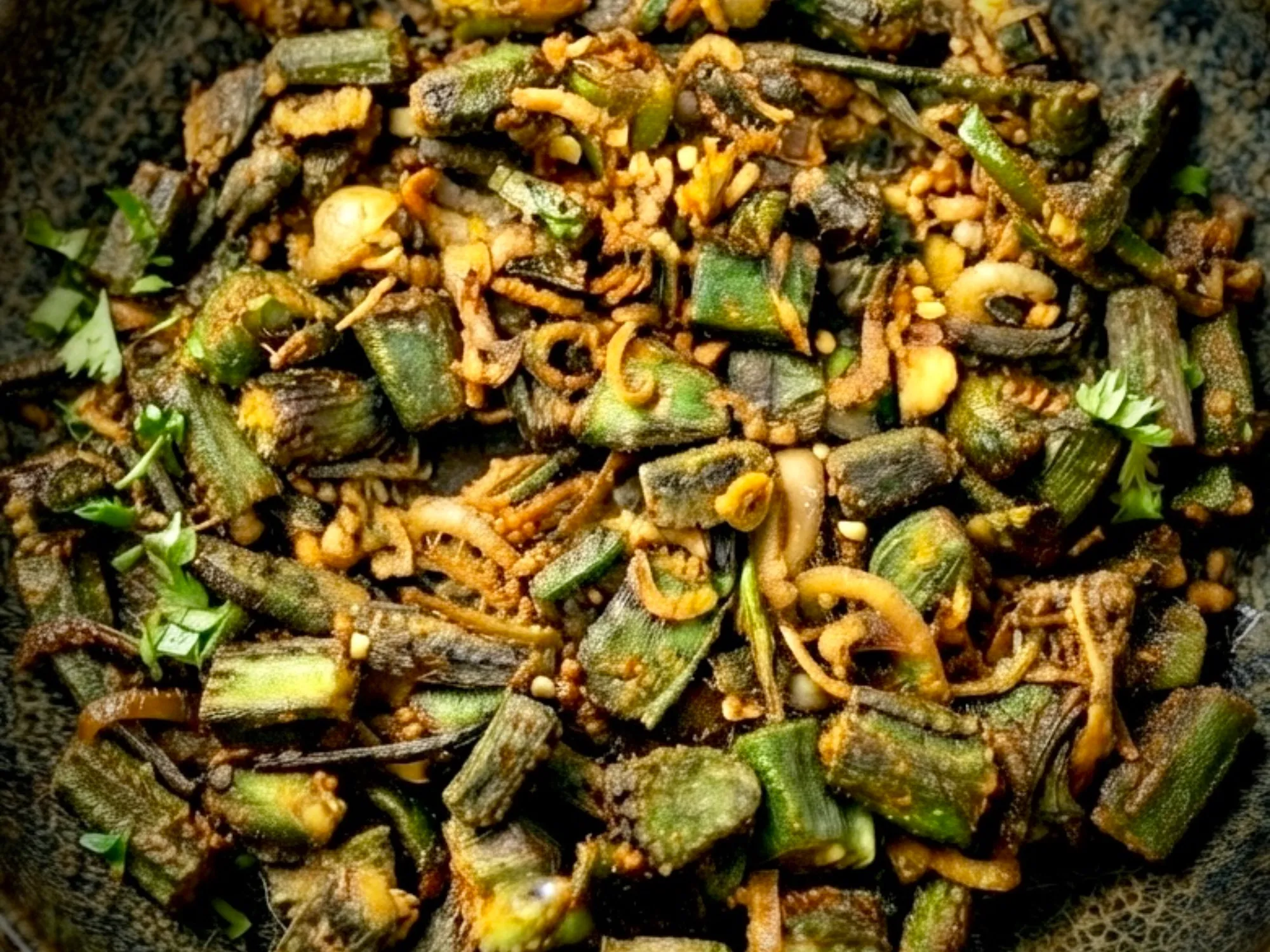
- Hands on
- 41 min
- Total
- 41 min
- Serves
- 4
- Difficulty
- easy
Bhindi fry masala lives or dies on one thing: whether the okra was dry before it met the oil. Get that right and the rest is a straightforward dry sabzi — fry, onion, powdered spices, a spoon of besan to bind the coating, and souring at the end off the heat.
Step by step, with timers and flame levels. Your screen stays awake.
Ingredients
Tap what you already have.
Method
Wash the okra whole, under running water, then spread the pods on a cloth and wipe every one dry — including the stem end where water sits. Water on the skin is what turns the fry ropy later, and no amount of high heat afterwards undoes it.
Look for: The pods look matte, not glossy. Run a finger down one — it should squeak slightly and leave no wet mark on the cloth.
10–20 min
Trim the cap and the tail off each pod and cut into rounds about a centimetre thick — thumbnail width. Wipe the knife on a dry cloth every dozen pods or so, otherwise the sticky sap builds up on the blade and smears onto every cut after it.
Look for: Cut faces look damp and threaded — that is the sap, and it is expected at this stage. The board should be dry.
8–12 min
Slice the onions lengthways into thin wedges rather than dicing them, so they hold their shape through the fry, and slit the green chillies down their length.
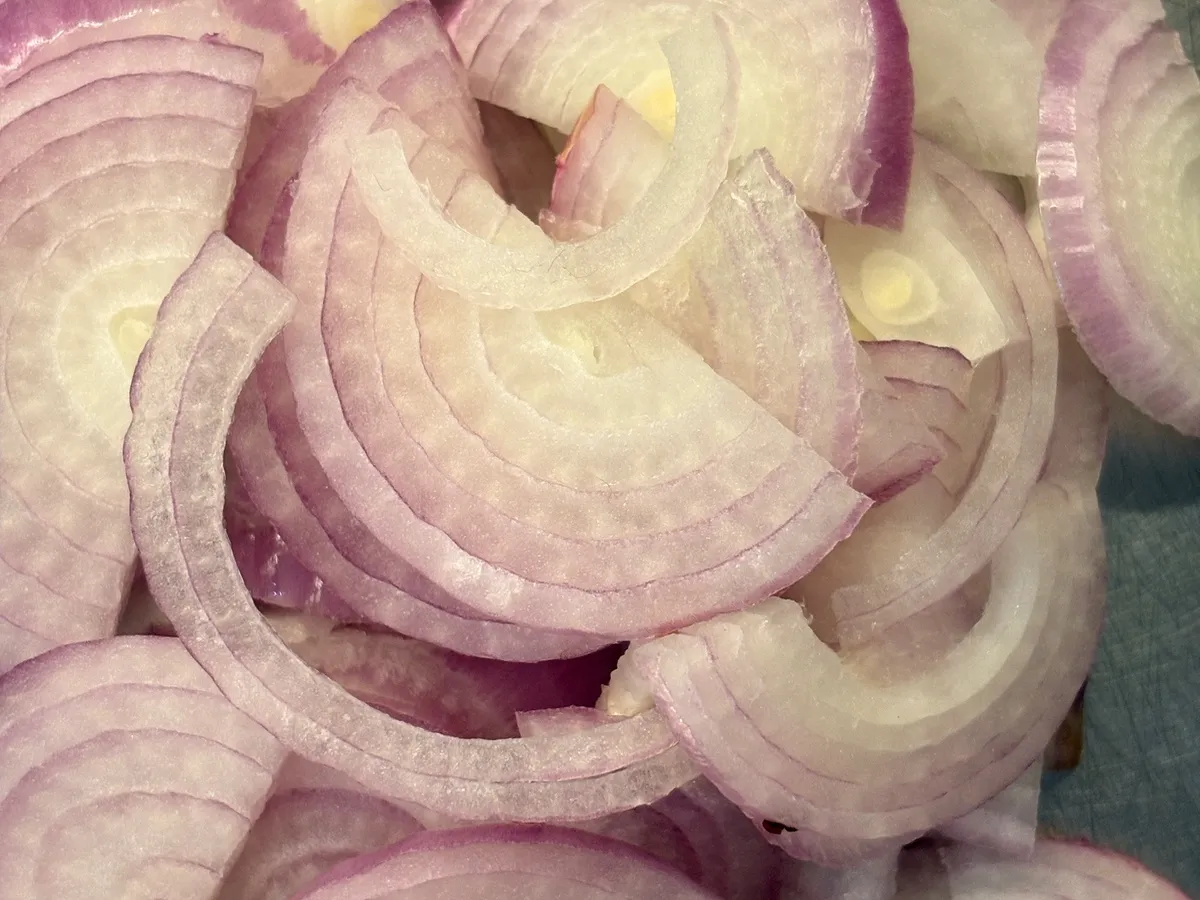
Look for: Wedges roughly the thickness of the okra rounds, so the two finish together rather than one going soft while the other is still raw.
3–5 min
Heat the oil in a wide kadai over medium. When it thins and moves easily, add the cumin and the ajwain. Ajwain is here for the okra specifically — its sharpness cuts through a vegetable that otherwise tastes flat under this much spice.
Look for: Cumin sizzles steadily and darkens one shade, and the ajwain smells sharp and thyme-like. Pull it forward if the cumin goes past brown — burnt cumin is bitter all the way through.
0.5–1 min · medium heat · kadai
Raise the heat to medium-high and tip in the okra. Spread it into one layer and then leave it alone for the first three or four minutes — stirring early is what drags the sap out. After that, turn it over every couple of minutes with a flat spatula. The pan stays uncovered the whole time; a lid traps steam and steam is the enemy here.
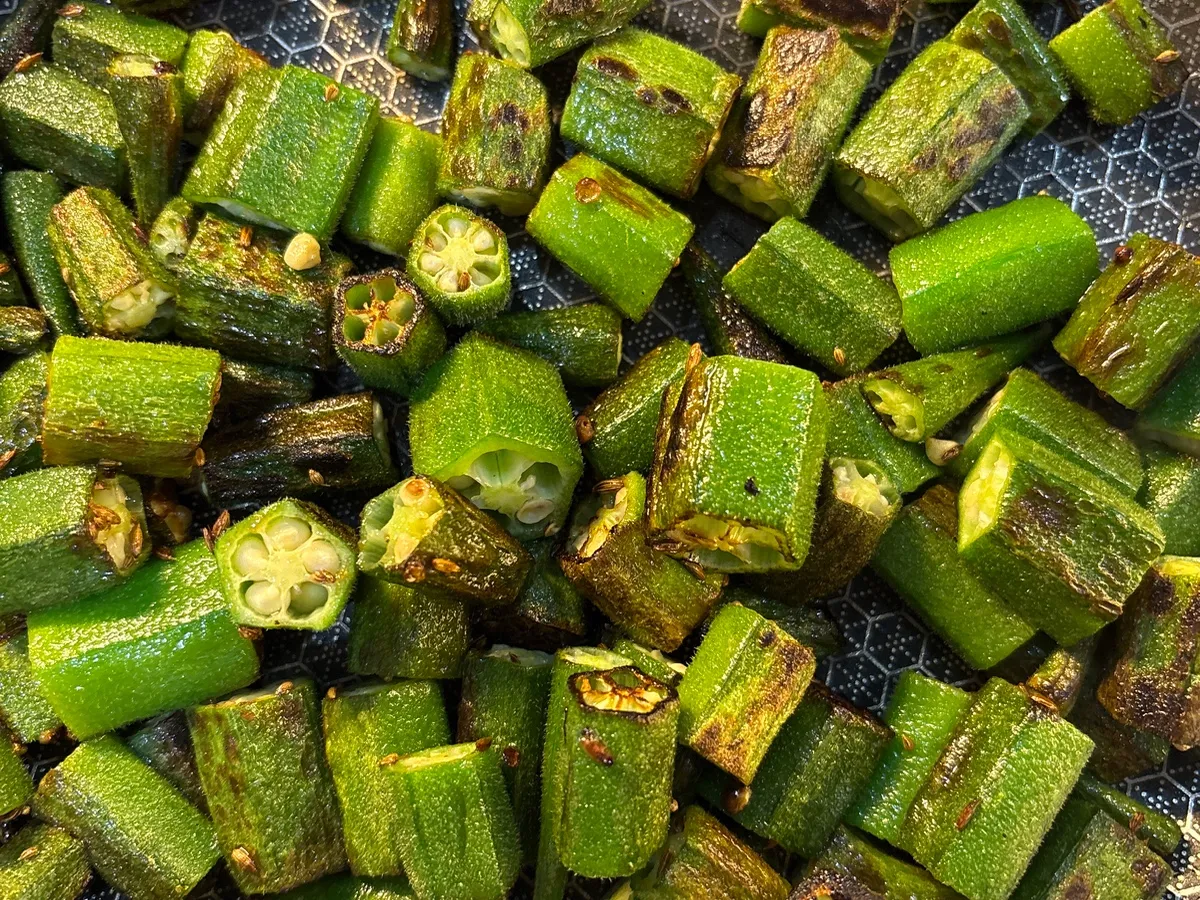
Look for: Lift a piece with the spatula and no thread follows it. The cut edges are browned in patches and the pieces move loose in the pan instead of clumping.
10–15 min · medium-high heat · kadai
Push the okra to the sides, drop the onion and green chilli into the middle, and let them take the direct heat for a minute before mixing everything together. Onion added earlier than this releases water into okra that has only just stopped being slimy.
Look for: Onion wedges are limp with brown at the edges, and the raw onion smell is gone.
5–8 min · medium-high heat · kadai
Lower the flame to medium-low — this matters, the powders scorch in seconds at frying heat — and add the turmeric, chilli powder, coriander powder, cumin powder and salt. Toss to coat everything.
Look for: The dusty smell of raw powder gives way to something toasted, and the oil at the base of the pan runs red rather than pale.
1–2 min · medium-low heat · kadai
Sprinkle the besan over the top a little at a time, tossing as you go so it does not land in one lump. It soaks up the last of the loose oil and gives the masala something to hold onto instead of sliding off the okra.
Look for: The besan smell turns nutty, and the coating looks dry and clings to each piece with nothing pooling at the bottom of the pan.
2–4 min · medium-low heat · kadai
Take the pan off the heat before the amchur and garam masala go in. Both are finishing spices — amchur turns dull and faintly bitter if it is cooked, and garam masala loses its top notes. Stir them through with the coriander leaves and taste for salt now that the sourness is in.
Look for: The masala smells sour-sharp over the top of the spice. If it tastes only hot and not tangy, add amchur a quarter teaspoon at a time.
1–1 min · kadai
Serve straight away, in a shallow dish rather than a deep one — piled deep it steams itself soft on the way to the table.
About this dish
Okra releases a mucilage when it is cut, which is prized in some cooking — it is what thickens a gumbo or a Kerala vendakka pachadi — and unwanted in a dry fry, where it coats the pieces and stops them browning. Nearly every rule in this recipe is about that one problem: dry pods, a dry knife, a wide pan, high heat, no lid, and no acid or salt until the frying is done. Amchur is the usual souring agent because it is dry. Lemon juice or tomato does the same job in flavour terms but adds water back into a dish built around driving water out — if you use lemon, squeeze it at the table rather than in the pan.