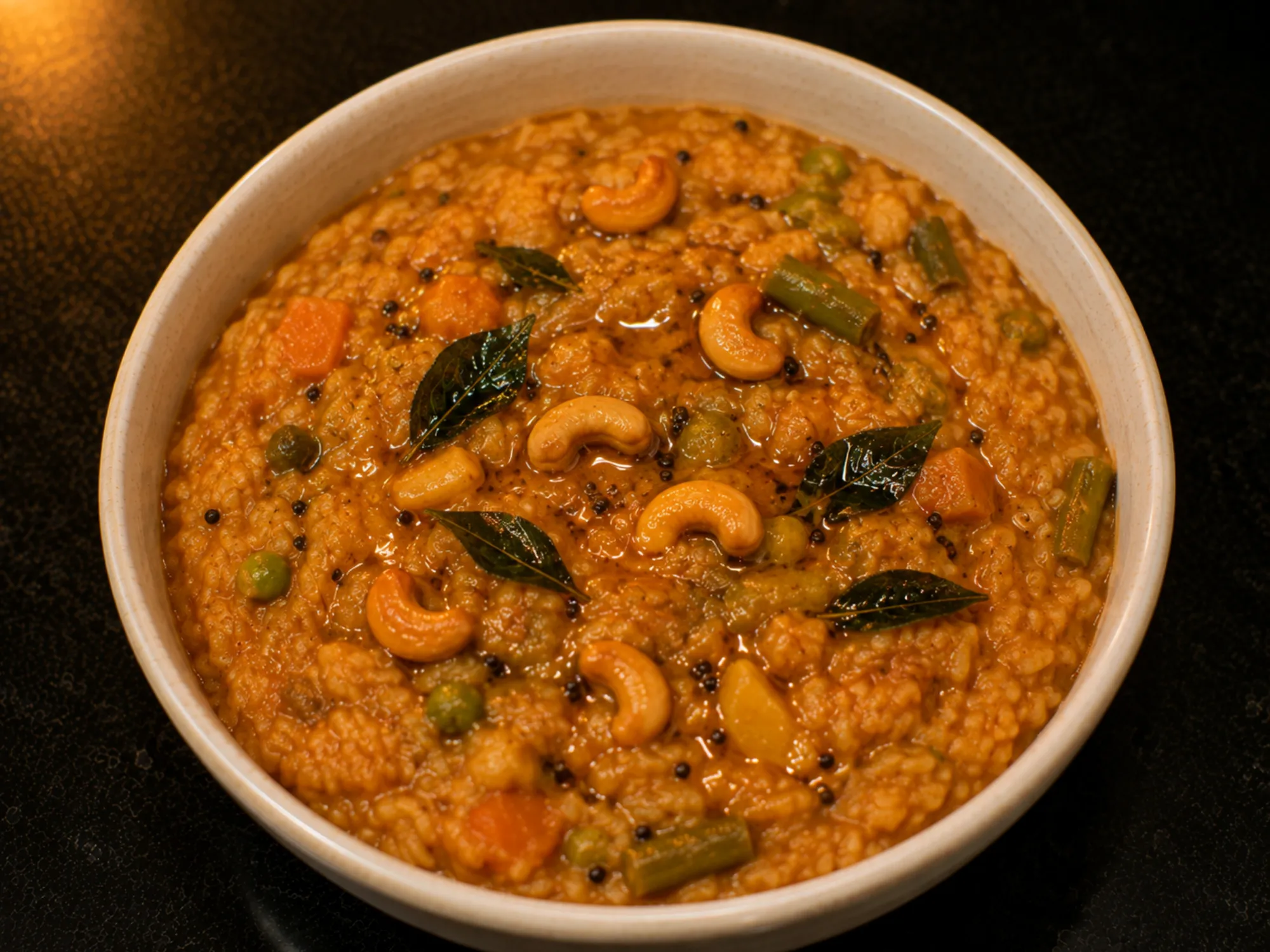
Bisi Bele Bath
Rice, toor dal and vegetables cooked into one pot with a fresh-ground masala — thick, sour and meant to be eaten hot.
Drafted — not yet cooked in our kitchen
- Hands on
- 24 min
- Total
- 49 min
- Serves
- 6
- Difficulty
- medium
Everything is cooked separately and then cooked together until it stops being separate things. Grind the masala fresh if you possibly can — that, and the marathi moggu in it, is what makes this taste like bisi bele bath rather than sambar rice.
Step by step, with timers and flame levels. Your screen stays awake.
Ingredients
Tap what you already have.
Method
Dry roast the masala spices in a pan over medium-low, in order of how long each needs — chana dal and urad dal first, then coriander seeds, then the chillies, marathi moggu, cinnamon and cloves, then the copra because it colours fast, and the fenugreek last and briefly because it is the first of them to burn. Roasting everything together is how you end up with burnt coconut and raw dal in the same masala.
Look for: Both dals gold, coriander smelling nutty, copra just turning colour. Nothing dark brown — the fenugreek especially, which turns the whole masala bitter if it goes past golden.
8–12 min · medium-low heat · kadai
Cool it completely and grind to a fine powder. Cool first: warm spices in a mixer sweat, clump and grind coarse instead of fine.
Look for: A fine, even, reddish-brown powder with no visible pieces of chilli skin or dal.
2–4 min · mixer-grinder
Pressure cook the toor dal with turmeric and water until it collapses completely, and whisk it smooth. The dal is the body of this dish, not an ingredient in it, so anything holding its shape is a fault.
Look for: Smooth yellow purée with no whole lentils.
15–20 min · medium heat · pressure cooker
In a large pot, boil the vegetables in the tamarind extract with salt until tender. Vegetables cook in the tamarind rather than in plain water — the acid keeps them from disintegrating, and this pot gets stirred a great deal later.
Look for: The vegetables give under a fork but hold their shape, and the sharp raw smell of the tamarind has gone.
10–15 min · medium-high heat · stockpot
Cook the rice separately until very soft, then add it to the vegetables along with the whisked dal, four to five tablespoons of the masala powder and the jaggery. Stir it together and let it simmer, adding hot water freely. It thickens fast and sets like a brick as it cools, so keep it far looser than looks right.
Look for: One homogeneous mass with no separate layer of dal or water, thick enough to hold a spoon for a second but still pourable. The masala should smell cooked rather than dusty.
12–18 min · medium-low heat · stockpot
Heat the ghee in a small pan, fry the cashews to gold, then add the mustard seeds, dried chilli, asafoetida and curry leaves and pour the lot in.
Look for: Cashews gold, mustard finished popping, curry leaves stiff.
2–4 min · medium heat · saucepan
Serve immediately, hot, with more ghee and a spoon of boondi or a papad. The name says hot lentil rice and it means it — this is not a dish that waits, and it sets solid within twenty minutes.
About this dish
Bisi bele bath is hot lentil rice, and unlike most one-pot rice dishes it is deliberately not a pulao — everything is cooked soft and stirred together until it is one thing. Rice with distinct grains in it means it has not been cooked enough. Marathi moggu is the distinctive note and there is no real substitute for it. It is the dried flower bud of a kapok relative, it appears in Karnataka masalas and almost nowhere else, and a masala without it tastes like a slightly odd sambar powder. Shops in Karnataka sell it as marathi moggu; it is hard to find elsewhere and worth buying when you see it. Fresh-ground masala is the whole difference between this and the bought powder version, and it is why the recipe grinds enough for several batches. It keeps a month in a sealed jar and gets used up quickly. Every household has a different vegetable list. Beans, carrot, peas, potato and shallots are the common core; capsicum, ash gourd and drumstick all appear. Avarekalu in season is what a Bangalore household would use.