Bread Idli
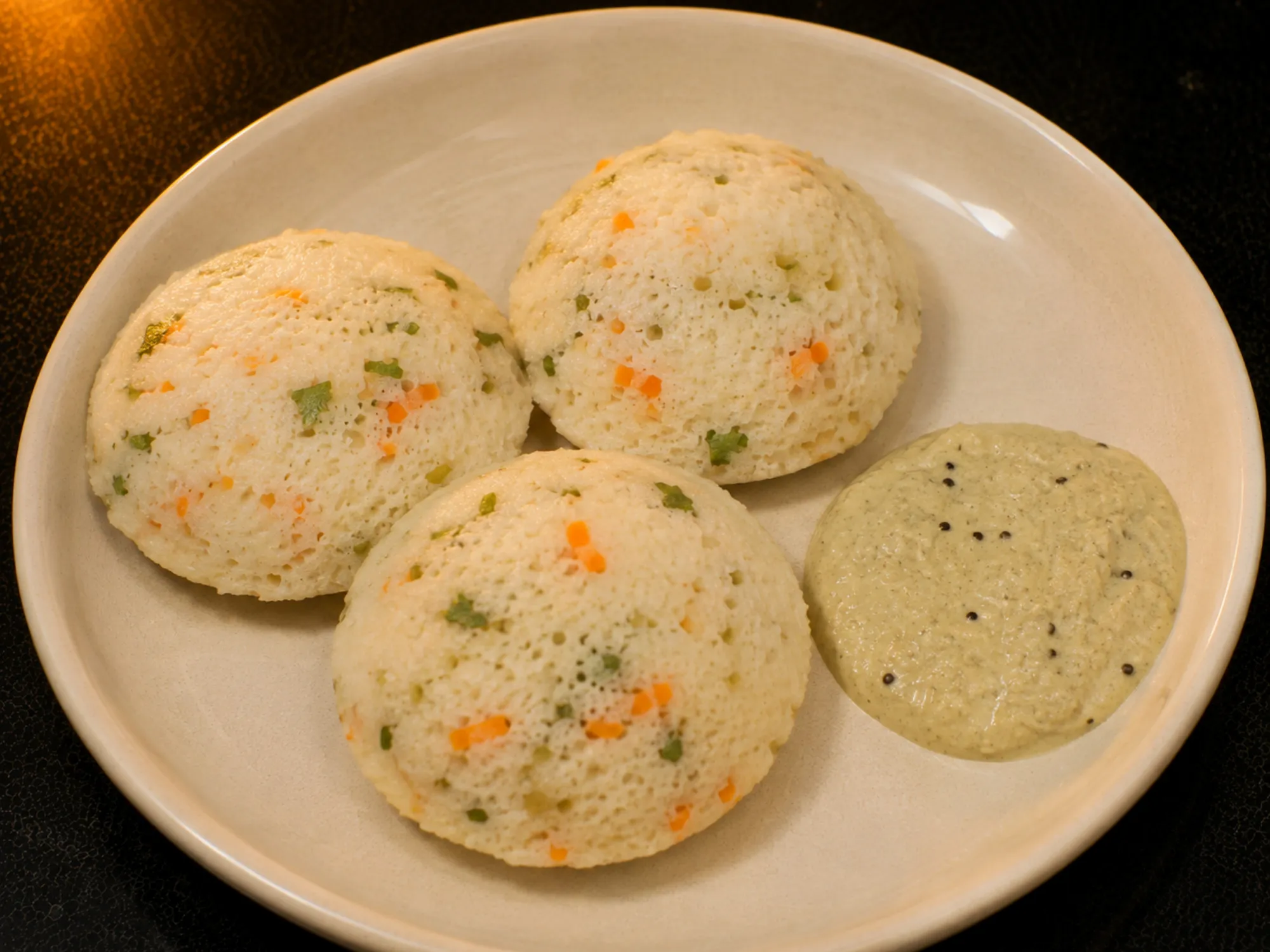
Bread blitzed to crumbs and swelled in curd with rava, tempered, then steamed straight away into soft instant idlis with no fermenting at all.
Drafted — not yet cooked in our kitchen
- Hands on
- 11 min
- Total
- 45 min
- Serves
- 4
- Difficulty
- easy
This is the useful thing to do with the end of a loaf. The bread is not padding — blitzed to crumbs it swells in the curd the way soaked rava does, and it is what keeps these soft rather than rubbery.
Step by step, with timers and flame levels. Your screen stays awake.
Ingredients
Tap what you already have.
Method
Tear the bread up, crusts and all, and pulse it in the mixer to fine crumbs. Do it in two lots — a full jar packs down and you get paste at the bottom and whole pieces on top.
Look for: Loose crumbs like coarse sand, with no flattened lumps of dough left. Slightly stale bread crumbs far better than fresh.
2–4 min · mixer-grinder
Stir the crumbs and rava into the curd with the salt. It will look far too thick at first — leave it alone and let the rava and the bread drink. This resting is what replaces the overnight fermenting a real idli batter needs.
Look for: The batter has thickened and lost its grainy look, and a spoonful holds together instead of running. Slightly sour curd works better here than fresh — it gives the idli some of the tang fermenting normally would.
20–30 min · bowl
Heat the oil, pop the mustard seeds, then the curry leaves, green chilli and ginger for a few seconds. Mustard first and always — added after the leaves it never gets oil hot enough to burst.
Look for: The seeds crackle hard and go quiet, and the curry leaves turn glassy. Take it off before the ginger browns.
1–2 min · medium-high heat · kadai
Pour the tempering into the batter with the carrot and coriander, and slacken it with water a few spoons at a time. Get the consistency right now — once the fruit salt is in there is no time left to be adjusting anything.
Look for: Thick but pourable — it should fall off the ladle in a heavy ribbon that sinks back into the batter within a couple of seconds. Too thick and the idlis come out dense; too thin and they will not rise.
3–5 min · bowl
Grease the idli plates and get the steamer water boiling before the fruit salt goes anywhere near the batter. Then add the fruit salt with a teaspoon of water over it, fold it in gently four or five times, and stop.
Look for: The batter froths up and visibly lightens as you fold. Beating it now knocks the air straight back out — fold, do not stir.
5–8 min · high heat · idli steamer
Ladle into the moulds immediately, filling each about three-quarters, and get them into the steamer. Every minute the batter waits is lift you are throwing away.
Look for: A skewer pushed into the middle of the thickest idli comes out clean and dry. The tops should look matte and set rather than wet and shiny.
10–14 min · medium-high heat · idli steamer
Turn the heat off and leave the idlis in the steamer with the lid off for a few minutes before you try to lift them out. Straight out of the steam they tear on the spoon; a short rest firms them up and they come away whole.
Look for: A wet spoon slides under the edge and lifts an idli out in one piece.
4–6 min · idli steamer
About this dish
An instant idli works on a different principle from a real one. A fermented batter is raised by the gas that wild yeast and bacteria produce over a night, and the sourness comes from the same process. Here the fruit salt supplies the gas in about thirty seconds and the curd supplies the sourness, which is why the batter has to go into the steamer at once and why sour curd is an advantage rather than a problem.