Bread Kofta Curry
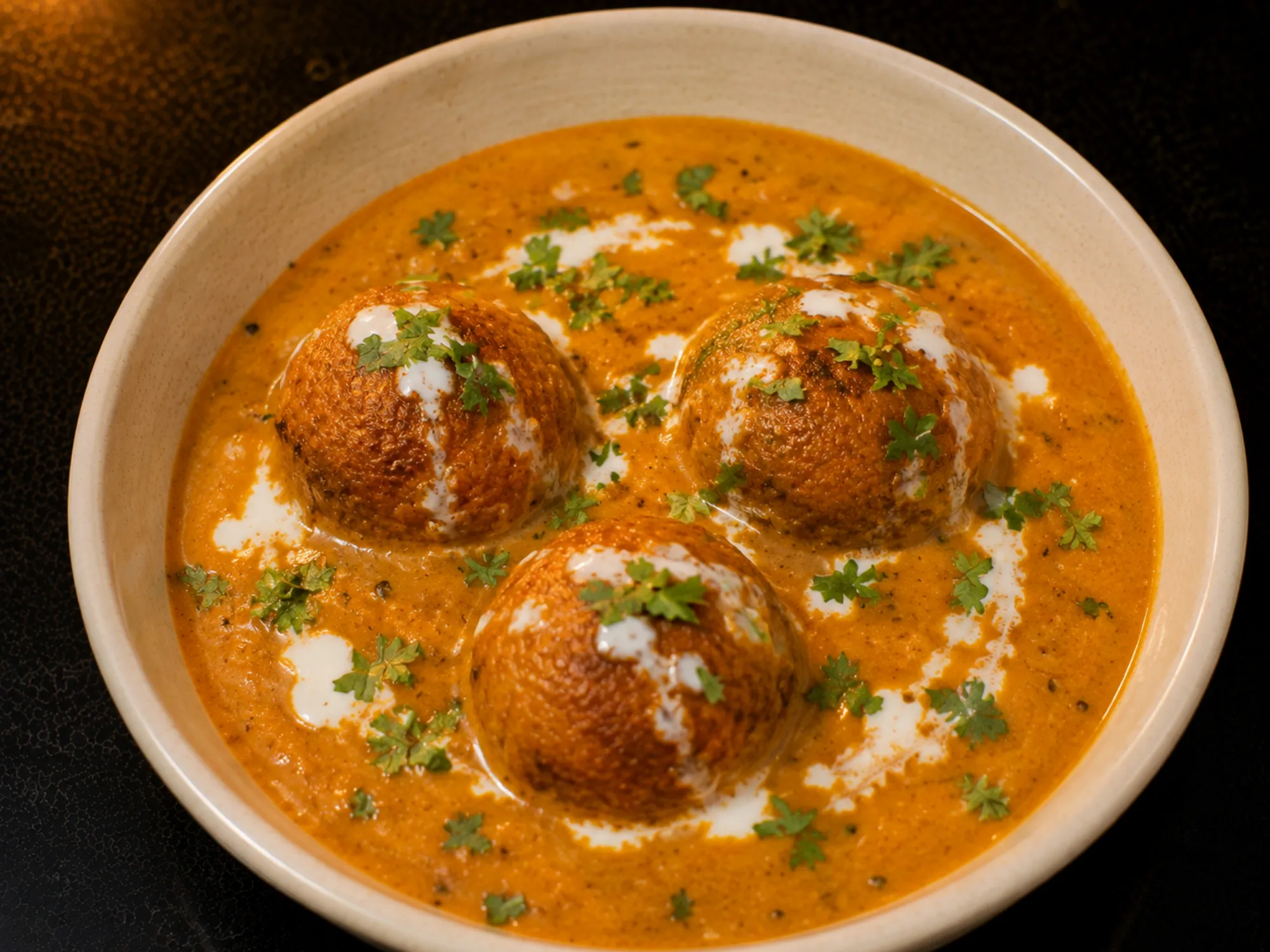
Koftas bound with bread instead of flour, fried dark and dropped into a cashew-tomato gravy at the table so they stay whole.
Drafted — not yet cooked in our kitchen
- Hands on
- 47 min
- Total
- 1 hr 2 min
- Serves
- 4
- Difficulty
- medium
The rule with any bread kofta is that the gravy goes to the kofta, never the other way round. Fry them darker than looks right, keep them out of the pan, and pour the gravy over at the table. Everything else here is an ordinary onion-tomato-cashew base, and it is worth grinding it smoother than you think you need to.
Step by step, with timers and flame levels. Your screen stays awake.
Ingredients
Tap what you already have.
Method
Tear the bread into pieces and blitz it to coarse crumbs, or grate the slices on the rough side of the grater. Mix with the grated paneer, the mashed potato, corn flour, green chilli, ginger, coriander, garam masala and salt, and knead it with your palm until it comes together as a dough.
Look for: Smooth and slightly tacky, holding together in a ball with no cracks when you roll it. If it cracks, the mix is dry — a teaspoon of milk fixes it. If it sticks to your palm in strands, add another spoon of crumbs.
6–8 min · bowl
Roll into balls the size of a small lime. Heat the oil in a kadai to medium and slide in one kofta as a test before committing the batch — if it breaks up, work another spoon of corn flour through the mix. Fry four or five at a time, turning them so they colour evenly.
Look for: Deep brown all over — darker than you would take a pakora, because a pale kofta softens the moment it touches gravy. The bubbling slows and they float high in the oil.
12–18 min · medium heat · kadai
While the koftas drain, cover the cashews with hot water and leave them. They need to be soft enough to grind without a trace of grit — a gritty cashew paste is what makes a home gravy taste home-made in the wrong way.
Look for: A cashew crushes to a smooth paste between thumbnail and finger with no chalk left in the middle.
15–20 min · bowl
Heat the oil in a kadai on medium and add the cumin. When it darkens and smells toasted, add the onion and cook it down properly. This takes longer than it looks and it is where the sweetness in the gravy comes from.
Look for: Golden brown and collapsed, with the raw edge gone from the smell. If it starts to catch, pull the pan off the heat and add a splash of water — burnt onion cannot be rescued later.
8–12 min · medium heat · kadai
Stir in the ginger-garlic paste and fry until the raw smell goes, then lower the flame before the ground spices go in — turmeric, Kashmiri chilli and coriander powder burn in hot oil in seconds. Add the tomato and cook it right down.
Look for: The tomato loses its shape entirely, the mass pulls together and leaves the sides of the pan, and oil shows in red beads at the edges. That separation is the signal — before it, the gravy tastes raw.
8–12 min · medium-low heat · kadai
Cool the masala for a few minutes, then grind it with the drained cashews to a completely smooth paste. Blend it longer than feels necessary. If you want a restaurant-smooth gravy, push it through a sieve afterwards — it is the one step that separates the two.
Look for: No grain at all when a little is rubbed between finger and thumb. Any texture you can feel here you will taste in the finished gravy.
4–6 min · mixer-grinder
Return the paste to the pan, add the water, salt and sugar, and simmer gently. Crush the kasuri methi between your palms as it goes in — whole leaves stay whole and taste of nothing. Stir the cream through at the end, off the boil.
Look for: Thick enough to coat a spoon and hold a line drawn through it, with a slick of orange oil at the surface. It thickens as it stands, so stop a little looser than you want to serve it.
8–12 min · low heat · kadai
Put the koftas in the serving bowl and pour the hot gravy over them at the table. Do not simmer them in it and do not assemble ahead — bread koftas hold for about five minutes in gravy and then they are gone.
Look for: The koftas should still be sitting proud of the gravy when the bowl reaches the table.
1–2 min
About this dish
Bread is doing the job that besan or khoya does in a malai kofta — binding and bulking — and it does it more cheaply and with less risk of the kofta going heavy. What it will not do is survive being cooked in the gravy, so this is a dish where the two halves stay apart until the last moment. The gravy is worth making in double and freezing half. It is the same base under a great many north Indian restaurant dishes, and having a box of it is the difference between a weeknight and an hour at the stove.