Bread Pakora
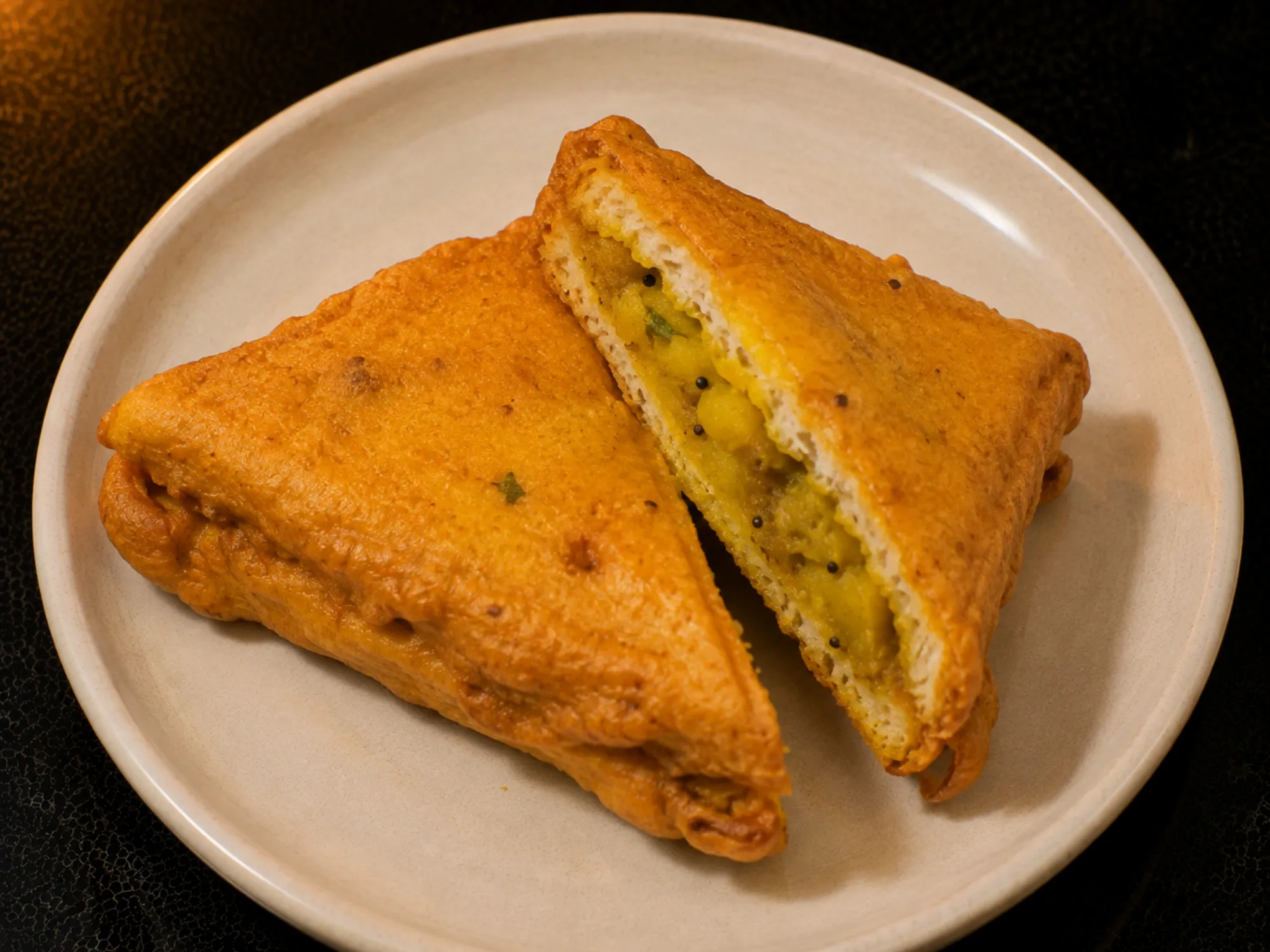
Slices of bread stuffed with potato masala, dipped in a thick besan batter and deep-fried so the bread crisps instead of drinking oil.
Drafted — not yet cooked in our kitchen
- Hands on
- 15 min
- Total
- 30 min
- Serves
- 4
- Difficulty
- medium
The failure everybody knows is a pakora that comes out heavy and oily, and it almost always traces back to the batter being too thin. Bread is a sponge with nothing holding it back, so the batter has to seal it completely before it goes anywhere near the oil. Thick enough to coat a spoon, oil at a steady medium, three at a time.
Step by step, with timers and flame levels. Your screen stays awake.
Ingredients
Tap what you already have.
Method
Boil the potatoes whole and unpeeled until a knife slides in with no resistance. Drain and let them cool enough to handle before peeling — a cut potato boiled in water takes water on, and that water is what turns the filling to paste.
Look for: The skins are split and a knife pushed into the thickest part comes out without lifting the potato with it.
15–20 min · medium-high heat · saucepan
Mash the potatoes coarsely — leave some lumps, they are the best part — and mix through the green chilli, ginger, coriander, turmeric, chilli powder, amchur, cumin and salt. Taste it now and get the salt right; nothing after this point seasons the filling.
Look for: A spoonful pressed flat holds together and does not weep. If it looks wet, the potatoes were overcooked — spread the filling out for ten minutes to let the steam go.
4–6 min · bowl
Spread the filling thickly over four slices, right to the edges, and press the other four on top. Cut each sandwich into two triangles and press the cut edges together with your fingers so nothing escapes in the oil.
Look for: The filling should be an even layer about as thick as the bread itself, with no gap at the corners where the batter would pool.
4–6 min
Whisk the besan, rice flour, carom seeds, chilli powder, turmeric and salt with the water, adding it in three goes and beating out the lumps as you go. Whisk it hard for a minute at the end — air in the batter is what makes the crust light.
Look for: Thick enough to coat the back of a spoon and stay there — draw a finger through it and the line should hold for a second before closing. A batter that runs off in a sheet will leave bare bread, and bare bread drinks oil.
3–5 min · bowl
Heat the oil in a kadai to medium. Hold a triangle by one corner, dip it fully in the batter, let the excess run off for a second, and lower it away from you. Two or three at a time, no more — a crowded kadai drops in temperature and the bread sits in warm oil soaking it up.
Look for: Deep even gold, the bubbling around them slowed to a lazy fizz, and the pakora feels light and sounds hollow when tapped with the spider. Pale patches mean the batter was too thin there; dark brown before four minutes means the oil is too hot.
4–6 min · medium heat · kadai
About this dish
Bread pakora is tea-stall food across north India, sold plain as often as stuffed — the plain version is a slice of bread dipped in batter and fried, and it is a different, thinner thing. The stuffed one is the version worth the trouble. Day-old bread is better than fresh. Fresh bread is soft enough to tear when you press the triangles shut and it holds more oil; a slice that has been out overnight is firmer and fries cleaner.