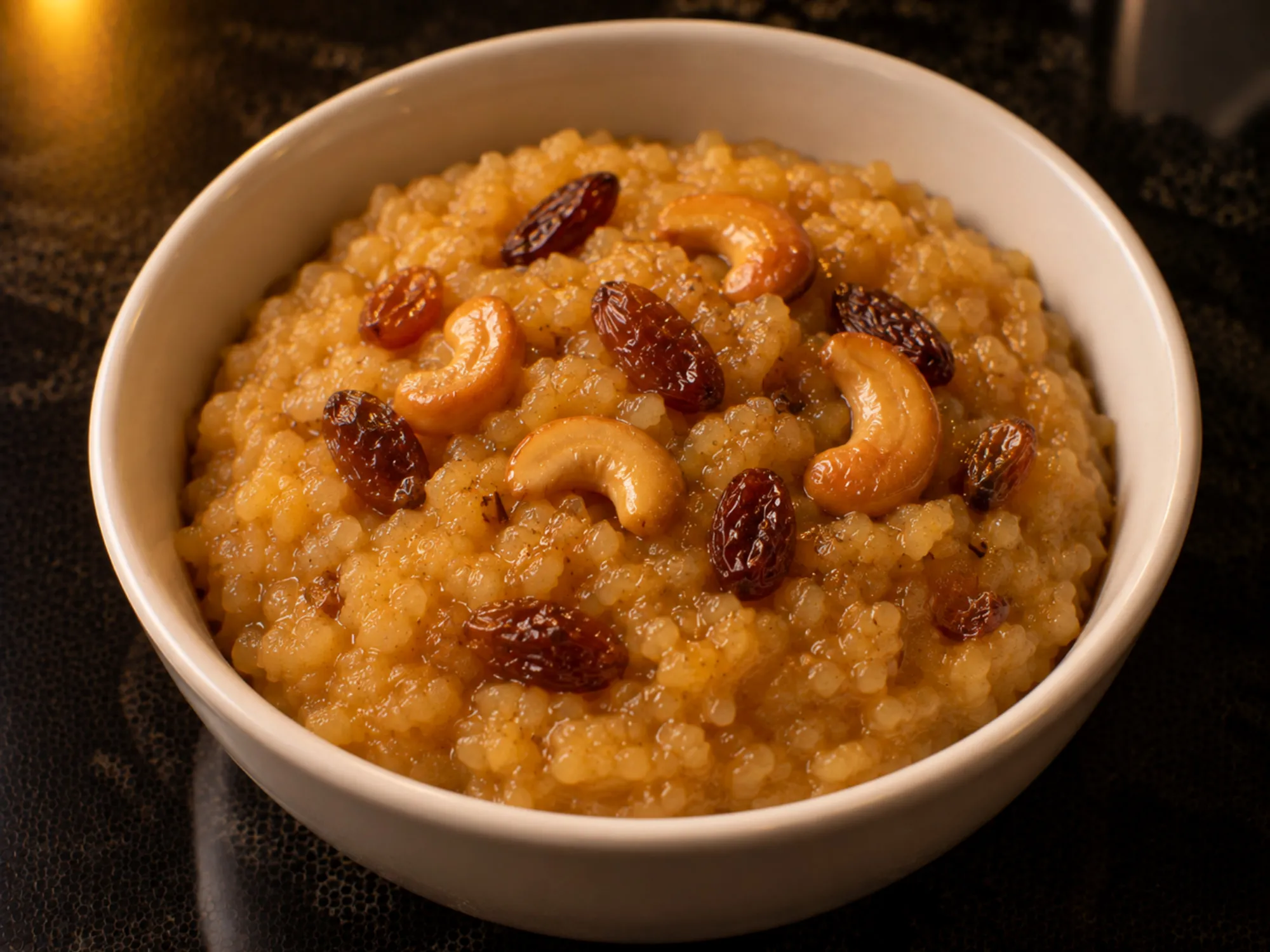
Chakkara Pongal
Rice and moong dal cooked soft, then folded into melted jaggery with ghee, cashews and raisins until it falls slowly off the spoon.
Drafted — not yet cooked in our kitchen
- Hands on
- 17 min
- Total
- 29 min
- Serves
- 6
- Difficulty
- easy
Two things decide whether this is good: how far past “cooked” the rice goes, and how much ghee you are willing to put in. Both want more than feels reasonable.
The jaggery goes in at the end. That order is the whole recipe.
Step by step, with timers and flame levels. Your screen stays awake.
Ingredients
Tap what you already have.
Method
Dry roast the moong dal in the pressure cooker until it smells nutty, then tip it out and rinse it with the rice. Roasting first is what keeps the dal from turning to complete mush later.
Look for: The dal turns a shade darker and the raw smell gives way to something like roasted nuts. Do not let it brown.
3–5 min · medium-low heat · pressure cooker
Return the rinsed rice and dal to the cooker with the water and milk, and cook on medium. The milk is what makes this rich rather than merely sweet — water alone gives a thinner result.
Look for: Both rice and dal should be soft enough to mash against the side of the vessel with no resistance. Pongal is meant to be overcooked — this is the one dish where a firm grain is a fault.
12–18 min · medium heat · pressure cooker
While that cooks, melt the jaggery with just enough water to cover it in a separate pan on medium-low. Strain it — jaggery almost always carries grit, and this is the only chance to take it out.
Look for: All the solid pieces gone and the syrup running clear off the spoon. No thread stage needed here — it only has to dissolve.
5–8 min · medium-low heat · saucepan
Mash the cooked rice and dal roughly with the back of a ladle, then pour in the strained jaggery syrup and stir on low. It will loosen alarmingly at first and then tighten again as the water cooks off.
Look for: The mixture pulls together and falls off the ladle in a slow sheet rather than running. Remember it firms up further as it cools, so stop while it still looks slightly loose.
6–10 min · low heat · pressure cooker
In a small pan, heat the ghee and fry the cashews until golden, then add the raisins and pull the pan off the heat as they swell. Raisins go in second and burn in seconds — adding them with the cashews is the usual way this goes wrong.
Look for: Cashews evenly gold, not brown. Raisins puffed round and glossy.
2–4 min · medium-low heat · kadai
Pour the ghee with the nuts and raisins into the pongal, add the cardamom, and fold it through off the heat.
Look for: The ghee should be fully absorbed with no separate pool sitting on the surface.
1–2 min · pressure cooker
About this dish
Chakkara pongal is the sweet counterpart to ven pongal, and on a Varamahalakshmi plate it is the offering that gets made first because it is the least fussy of the sweets — one vessel, no rolling, no frying beyond the garnish. Timing, in a full spread: this is the dish to make while something else rests. The pressure cooker stage is genuinely hands-free, which makes it the right thing to have running while you are rolling obbattu or shaping kozhukattai. It reheats better than any other item on the plate — add a splash of milk and warm it gently, because it sets firm in the fridge. It does not freeze well; the texture goes grainy. Jaggery is added after the rice is cooked, never before. Cooking rice directly in jaggery syrup stops the grains softening, and no amount of extra time fixes it once that has happened.