Cream Cheese and Mushroom Dumplings in Chilli Oil
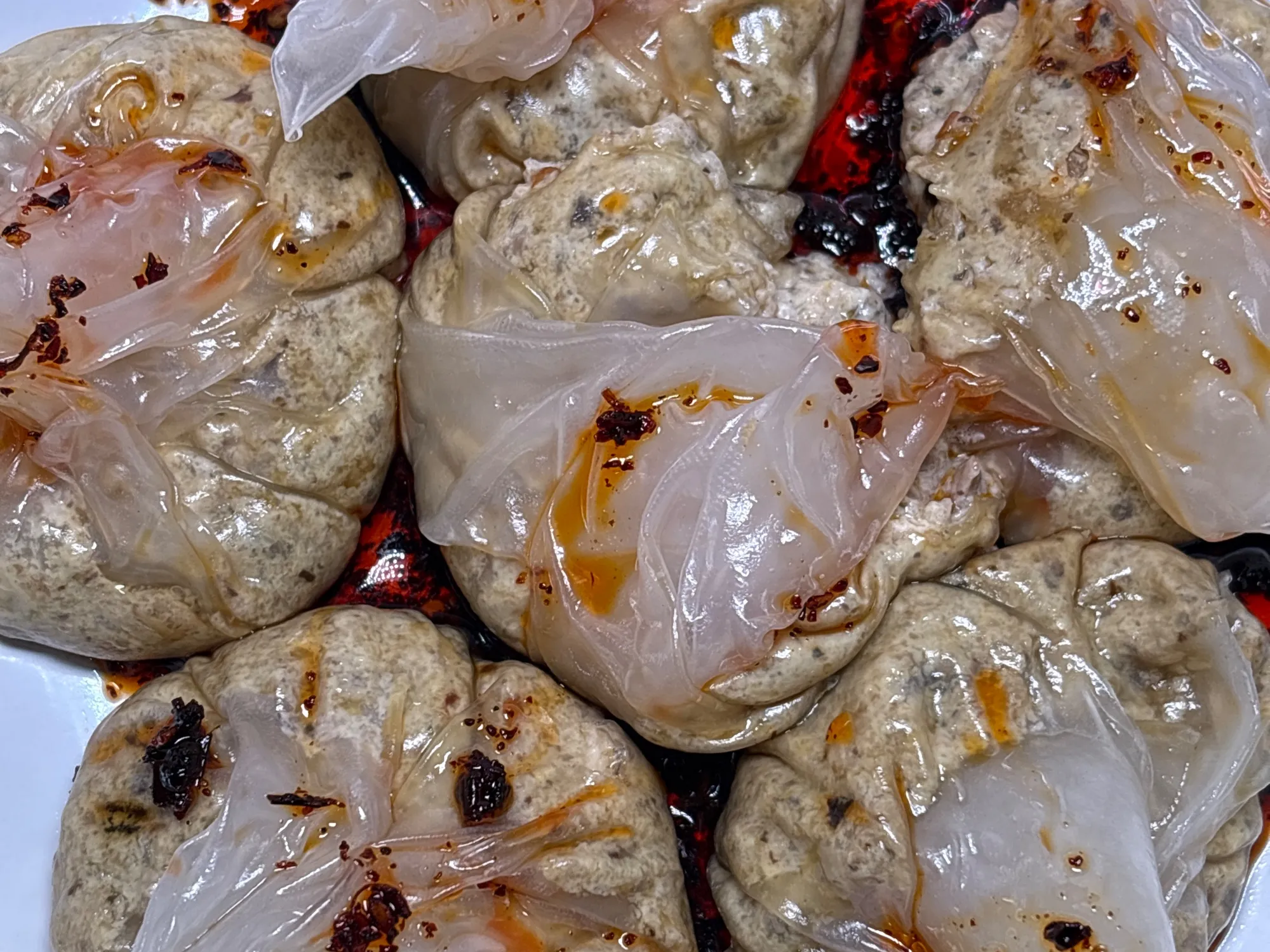
Rice paper dumplings filled with cream cheese and finely chopped button mushroom, sat in a chilli oil made with two chillies — one for colour, one for heat.
Drafted — not yet cooked in our kitchen
- Hands on
- 41 min
- Total
- 45 min
- Serves
- 4
- Difficulty
- medium
The filling is cream cheese and mushroom, which sounds rich and is, until the chilli oil underneath cuts straight through it. Two unglamorous steps decide whether it works: cooking the mushrooms until the pan is properly dry, and lifting each sheet of rice paper out of the water a good few seconds before it feels ready.
Step by step, with timers and flame levels. Your screen stays awake.
Ingredients
Tap what you already have.
Method
Chop the mushrooms as finely as you can manage — this is knife work, not a mixer, because a mixer turns them to a wet purée in three pulses. Chop the garlic and separate the spring onion whites from the greens.
Look for: Pieces about the size of a grain of rice. Anything larger will push a corner through wet rice paper, which is thinner than it feels dry.
8–10 min
Melt the butter in a kadai on medium and cook the mushrooms with the chopped garlic and spring onion whites. Keep going well past the point where they look done. Mushrooms are around nine-tenths water and all of it has to leave the pan here — a wet filling has nowhere to vent inside a sealed wrapper and will burst it in the steamer.
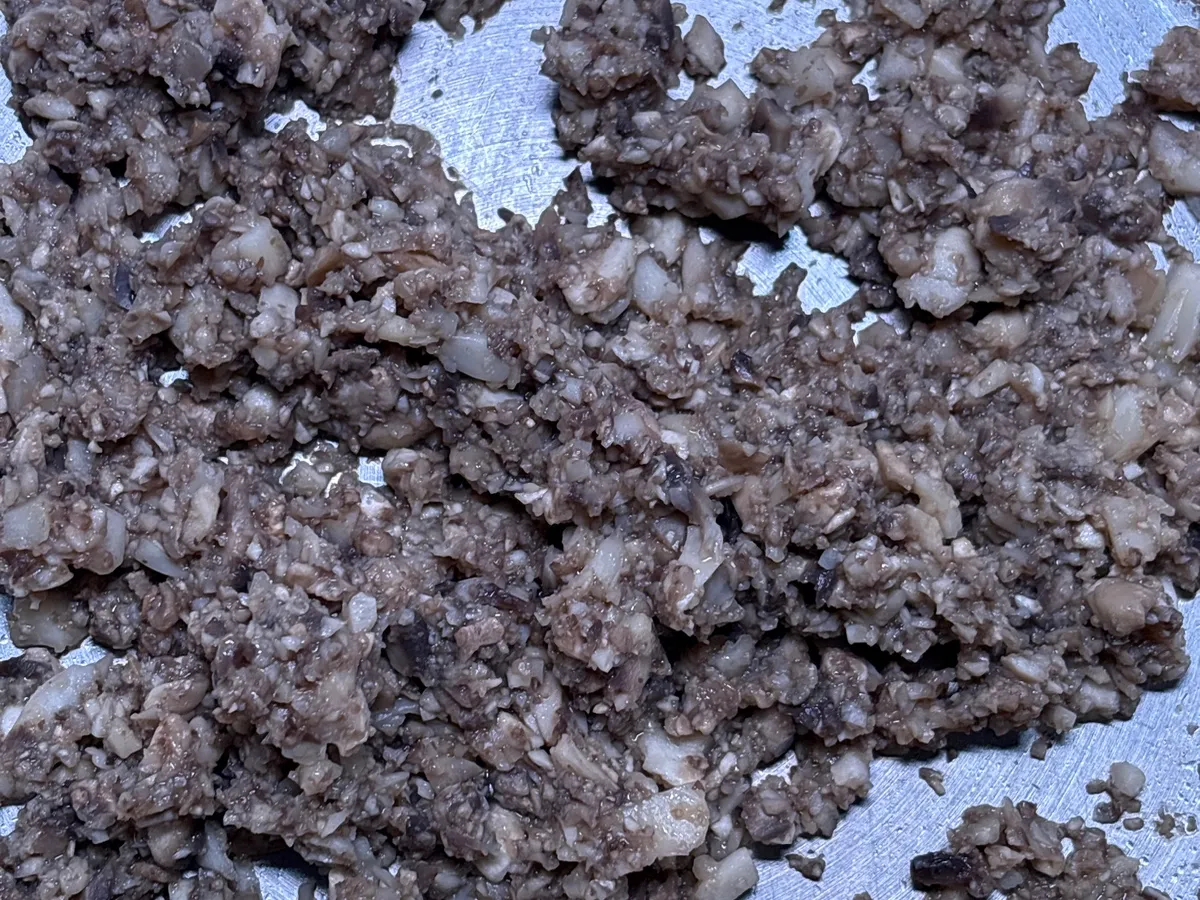
Look for: The pan goes from wet and steaming to sizzling, the mushrooms shrink to about a third and start catching gold. Tilt the pan — nothing should run to the low side. Then spread it on a plate and cool it completely.
8–12 min · medium heat · kadai
Put both chilli powders and the sesame seeds in a small heatproof bowl. Heat the groundnut oil with the sliced garlic on medium until the garlic is pale gold, then pour the whole lot over the powders — it will hiss and foam. Stir in the soy sauce, vinegar and sugar once it has stopped bubbling.
Look for: It should foam, smell toasted and settle to a deep red with the sediment sinking. If it smells sharp and burnt the oil was too hot — throw it out, because burnt chilli cannot be diluted back to edible.
2–3 min · medium heat · kadai
Beat the cream cheese smooth, then fold in the cold mushroom mixture and check the salt. Cold, not cool — cream cheese slackens as it warms, and a slack filling spreads across a wet sheet of rice paper instead of sitting in a mound where you put it. If the kitchen is warm, give the bowl twenty minutes in the fridge.
Look for: Thick enough to hold a peak on the spoon and to sit in a mound without spreading. Taste it — it wants to be saltier and sharper than seems right, because the wrapper around it is bland.
· bowl
Set up before you wet a single sheet, because once one is soaked you have about a minute and no free hands. You want a wide dish of warm water, a plate or board wiped with oil to fold on, and an oiled steamer plate to put the finished dumplings on. Warm water, not hot — hot water takes the sheet past workable in seconds.
Look for: Water warm to a fingertip and no hotter. Everything within reach of one hand.
3–4 min
Dip one sheet into the water for five to ten seconds and lift it out while it still feels firm and slightly stiff in the middle. Lay it on the oiled board — it carries on softening as it sits, and by the time you have the filling on it, it will be pliable. Put a heaped teaspoon in the centre, then lift four points of the rim up to meet in the middle and pinch them together, pinching the four seams closed from the middle outwards. Set each one on the oiled plate with a clear gap around it.
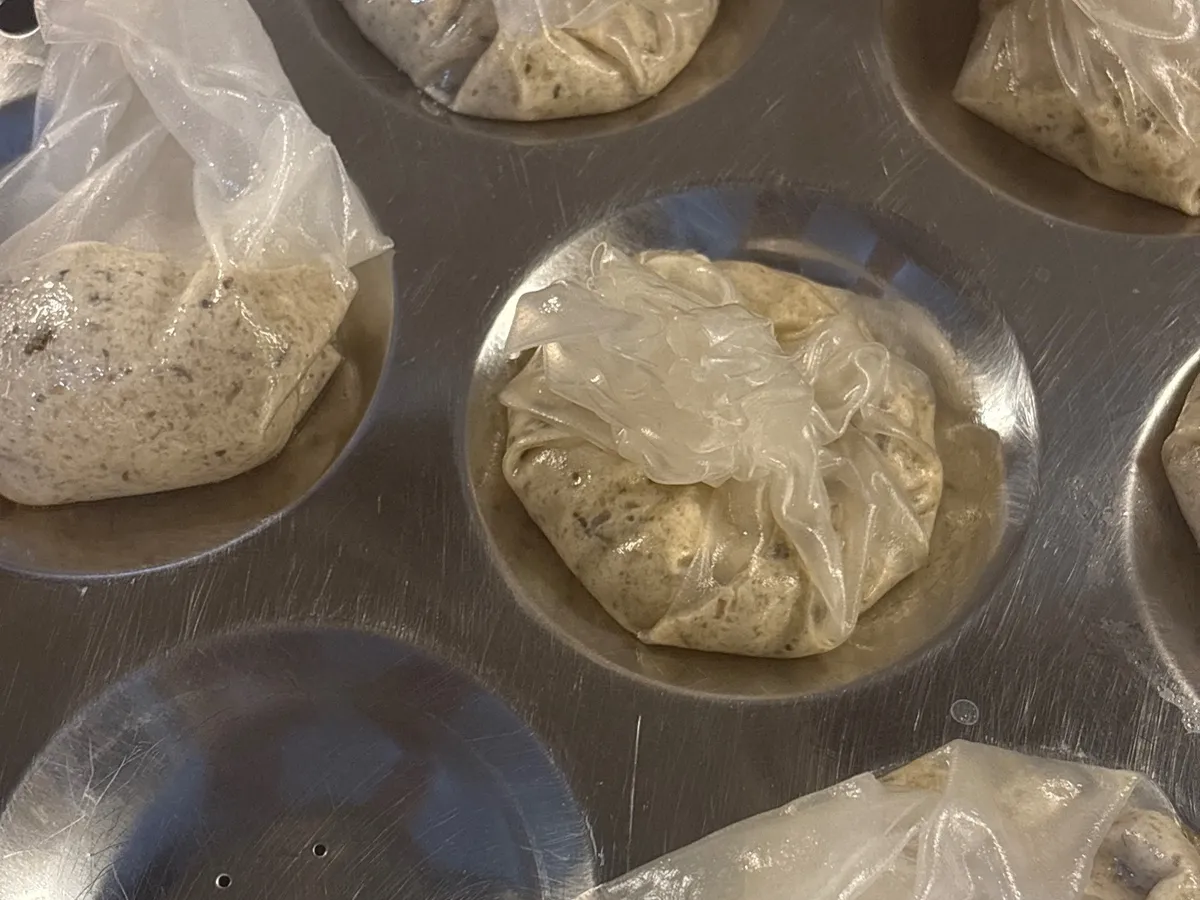
Look for: The sheet should still have a little body when it comes out of the water. If it is already floppy and clinging to itself in the bowl, it has gone too far — that one will tear, and the next one wants a shorter dip. Rice paper sticks to rice paper permanently, so nothing may touch.
20–25 min
Steam over water at a rolling boil, covered, on the oiled plate. Rice paper needs far less time than a wheat wrapper — the filling is already cooked and all this is doing is heating it through and setting the wrapper.
Look for: The wrappers turn glassy and you can see the darker filling through them. Stop there — steamed too long, rice paper goes slack and collapses under its own weight when you try to lift it. Take them off with a wet spoon.
4–6 min · medium-high heat · idli steamer
Spoon the chilli oil into the base of a shallow bowl and sit the dumplings on top of it rather than pouring it over — that way the wrappers stay glossy instead of going patchy. Drizzle over the olive oil, scatter the spring onion greens, and eat them straight away.
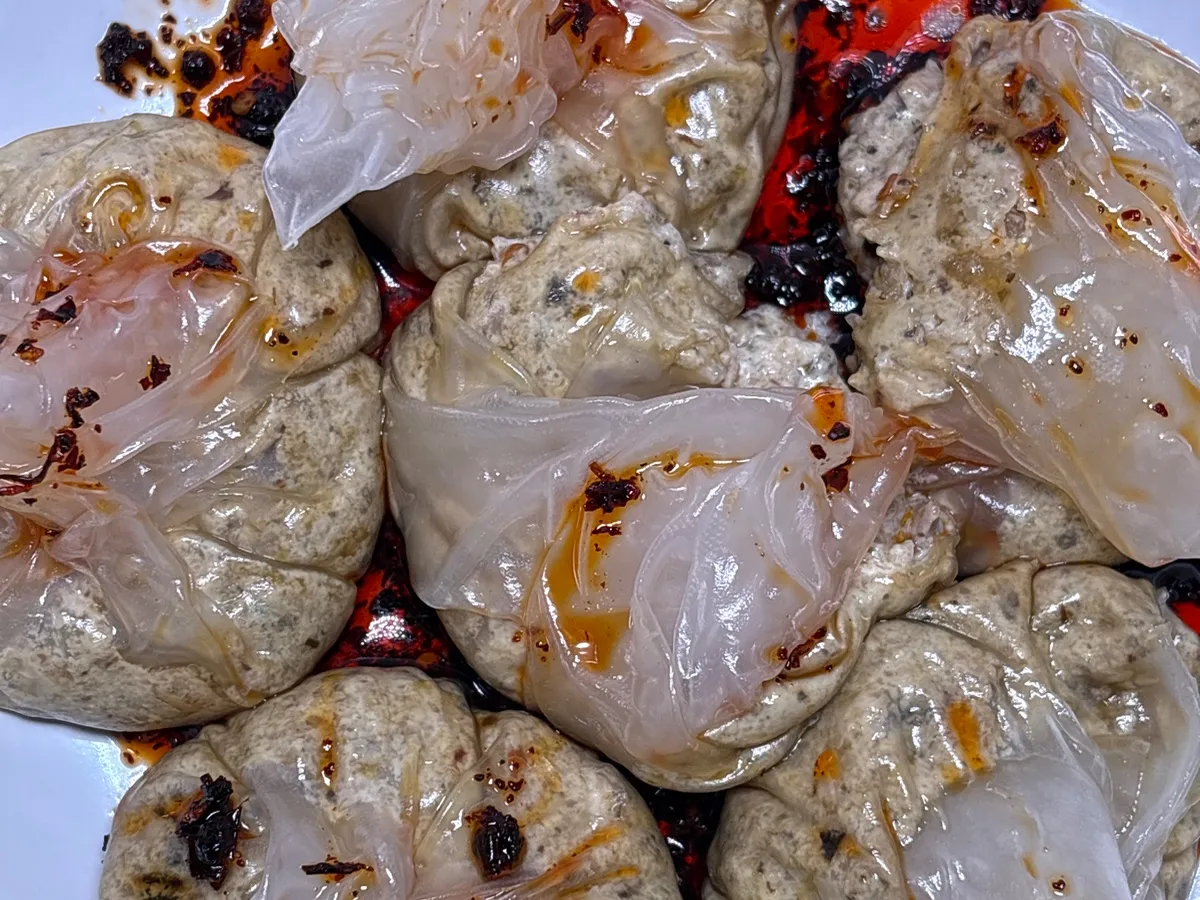
Look for: Serve within a few minutes. Rice paper stiffens as it cools and turns rubbery in a microwave — a minute back in the steamer is the only reheat worth doing.
About this dish
Rice paper is the wrapper here because it needs no dough, no resting and no rolling pin, and because it gives the slippery, glassy skin this dish is usually served with. The whole skill is in the dip: seconds rather than minutes, out while it still feels firm, and folded on an oiled surface. Every failure with rice paper is the same failure — it was left in the water too long. If the sheets keep splitting, use two at a time. Restaurants often do, and a double thickness is far more forgiving without changing the way it eats much. A hand-rolled wheat wrapper is the alternative if rice paper is not to be found. Two hundred grams of maida brought together with about 110 ml of water straight off the boil, kneaded smooth, rested half an hour and rolled thin, makes roughly twenty. Hot water is what takes the spring out of the gluten and lets it roll thin without pulling back. It is chewier than rice paper and wants eight to ten minutes in the steamer rather than four to six. The chilli oil makes more than these need. It keeps a fortnight in a jar in the fridge and is better on the second day, so there is no sense scaling it down.