Ghee Upma
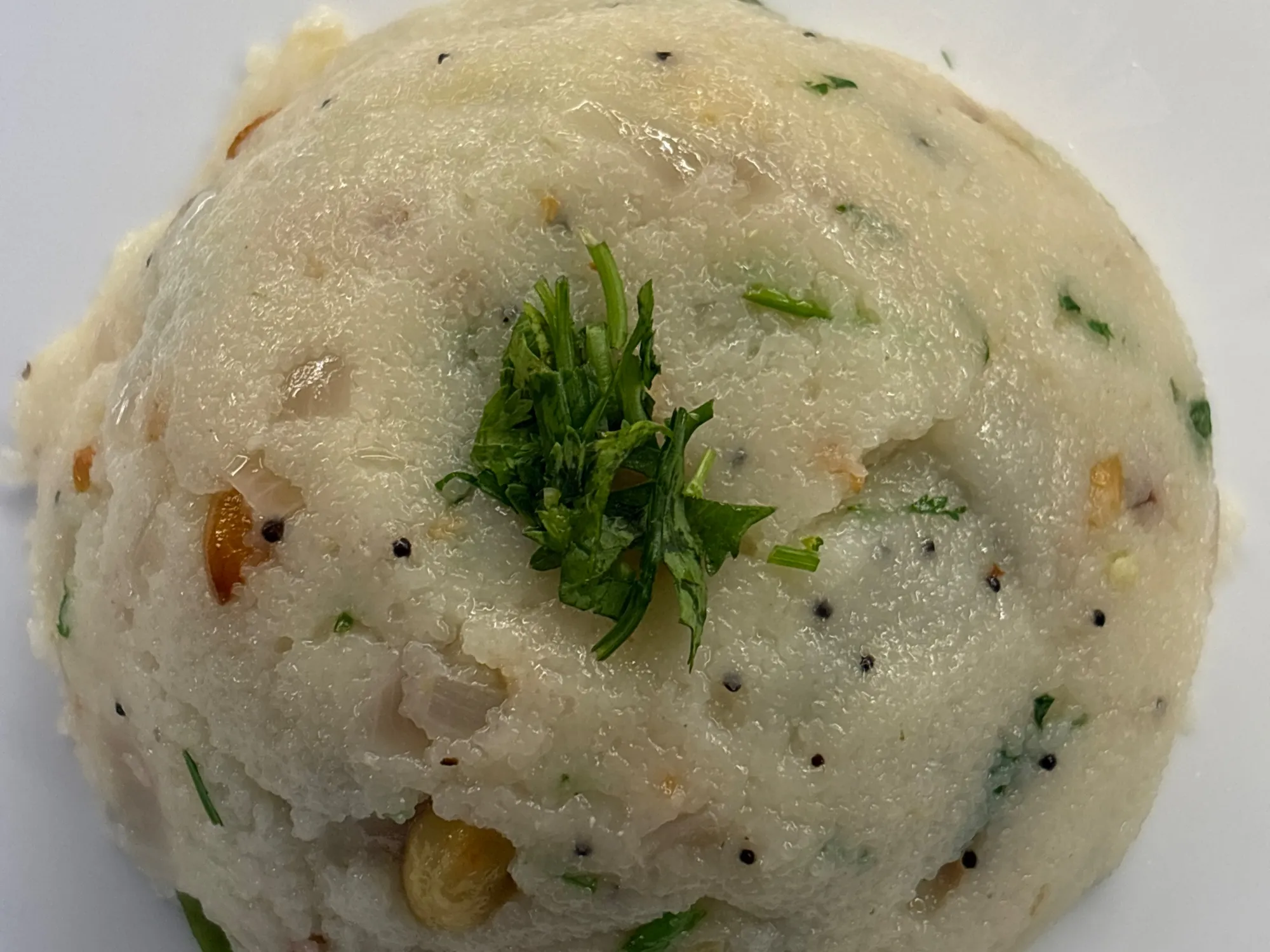
The tiffin-room version — rava roasted in ghee rather than dry, cooked soft with a little milk, and finished with more ghee off the heat.
Cooked and tested by Kiran · 13 August 2026
- Hands on
- 23 min
- Total
- 31 min
- Serves
- 4
- Difficulty
- easy
Two things decide whether this comes out like tiffin-room upma or like a saucepan of wet semolina, and both happen before the rava meets the water: roast it in ghee until it smells like toasted biscuit, and get the liquid to a genuine rolling boil. Everything after that is stirring.
Step by step, with timers and flame levels. Your screen stays awake.
Ingredients
Tap what you already have.
Method
Melt 3 tbsp of the ghee in a kadai over medium-low heat and add the rava. Roast it, stirring almost continuously, then tip it out onto a wide plate and leave it there.
Look for: The colour barely moves — pale sand, never brown. Go by smell and feel instead. It turns from raw and floury to toasted, like a plain biscuit, and a pinch rubbed between your fingers falls apart into separate grains rather than clumping. This step is why restaurant upma has no lumps, and roasting in ghee rather than dry is the whole difference in flavour.
8–10 min · medium-low heat · kadai
In the same pan, warm another tablespoon of ghee over medium heat and fry the cashews. Lift them out with a slotted spoon and set them aside.
Look for: An even pale gold, no darker. Pull them a shade before they look right — they carry enough heat to keep browning on the plate, and a scorched cashew is bitter all the way through.
2–3 min · medium heat · kadai
Into the same ghee, still on medium, add the mustard seeds and part-cover the pan. When they stop popping, add the chana dal and urad dal.
Look for: Mustard seeds pop hard within a minute; if they only sit there the ghee is not hot enough. The dals should reach a light biscuit brown and smell toasted — they are here for crunch, so undercooked means soft specks nobody enjoys biting.
2–3 min · medium heat · kadai
Lower the heat to medium-low. Add the green chillies, ginger, curry leaves and asafoetida — stand back, the leaves will spit — then the onion. Cook until the onion softens.
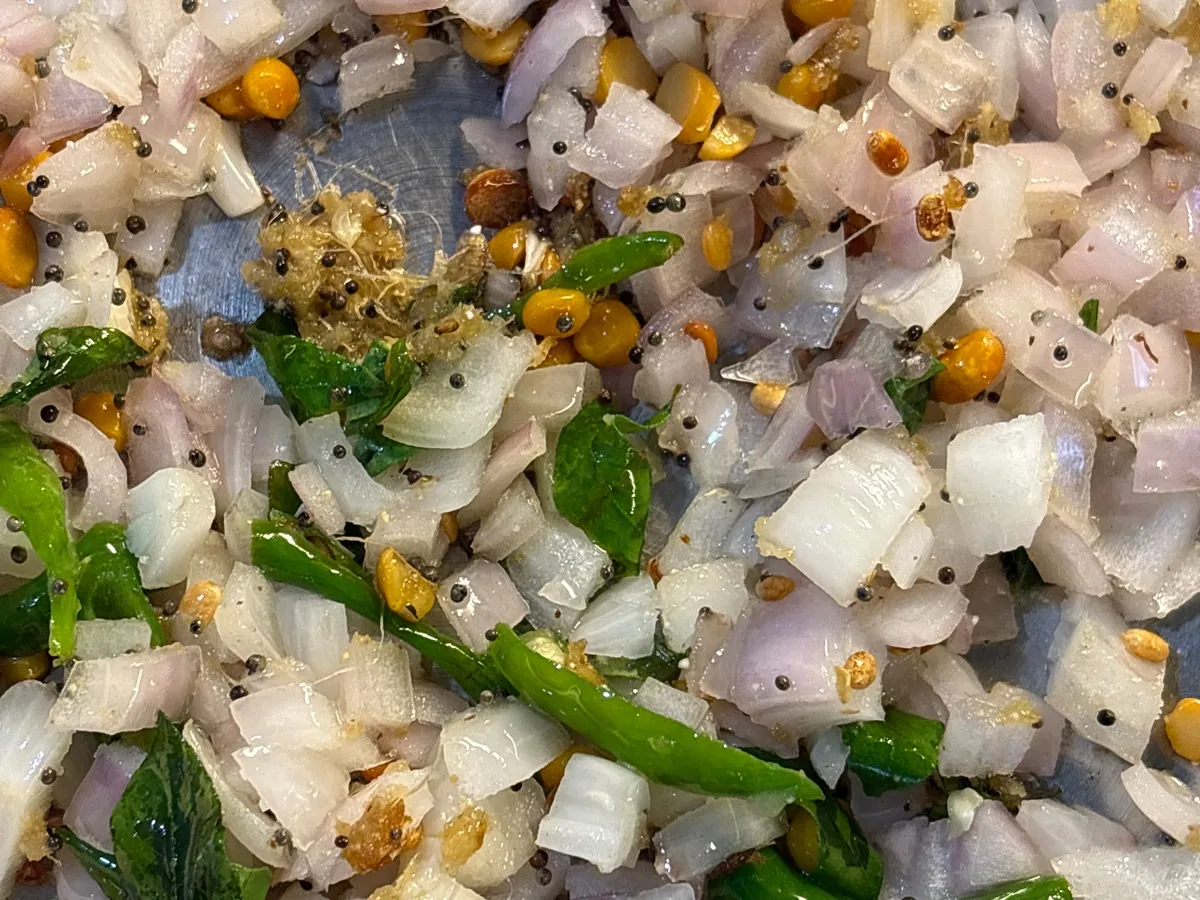
Look for: Soft and translucent with no colour on it at all. Browning the onion is the commonest way home upma goes wrong — it turns the whole dish sweet and dulls the pale colour that makes this look like tiffin-room upma.
4–5 min · medium-low heat · kadai
Raise the heat. Pour in the water and milk, add the salt and sugar, and bring it to a proper rolling boil.
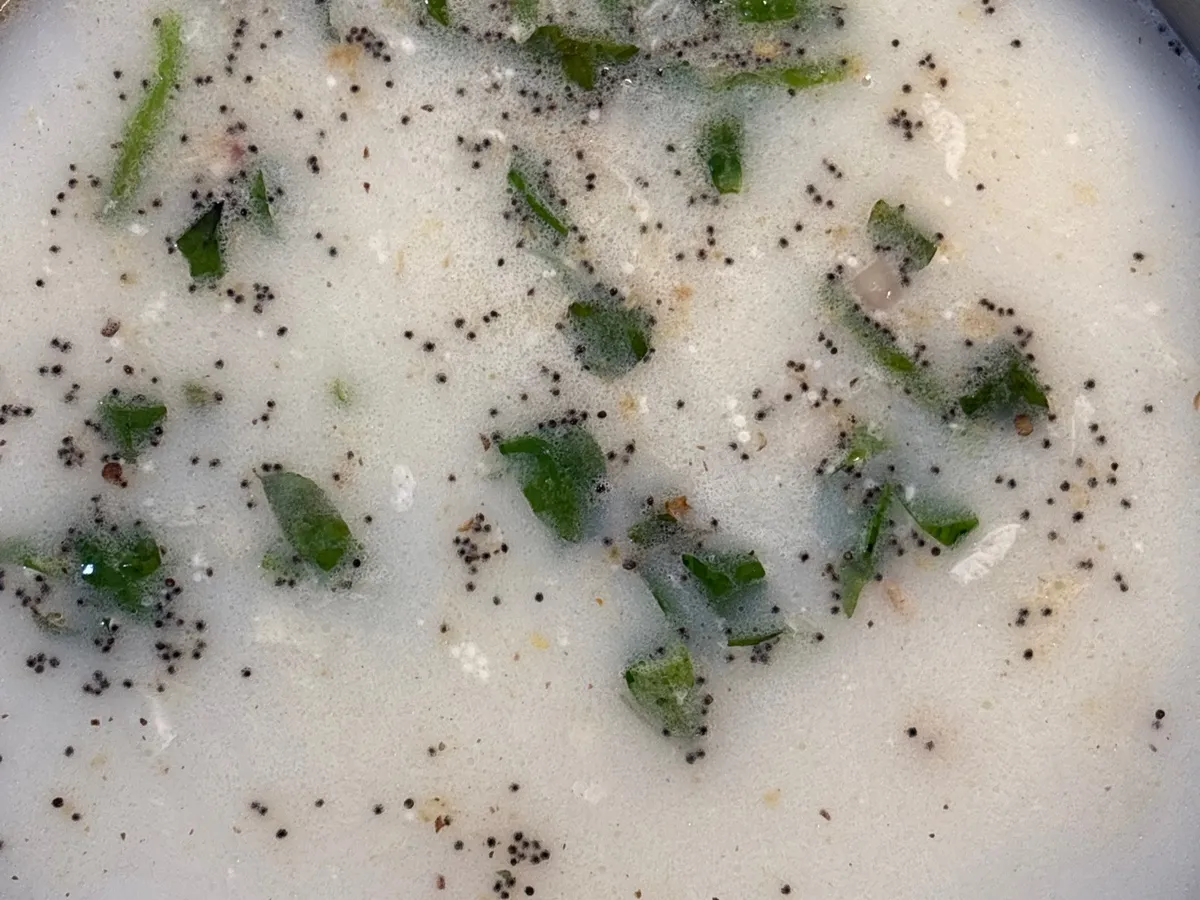
Look for: A rolling boil breaking the whole surface, not a lazy simmer at the edges. Rava meeting liquid that is merely hot is the second cause of lumps after under-roasting. Taste it now and it should be slightly saltier than you want the finished upma — the rava takes the edge off.
5–6 min · high heat · kadai
Drop the heat to low. Add the roasted rava in a thin steady stream with one hand while stirring hard with the other — do not tip it in at once. Keep stirring until it comes together.
Look for: It thickens faster than you expect. Stop when there are no dry pockets left and the mass just begins to pull away from the sides of the pan. If lumps do form, press them against the side with the back of the spoon straight away — they will not break up later.
2–3 min · low heat · kadai
Cover the pan and leave it on the lowest heat.
Look for: The grains swell and lose their grit — taste a little and it should be soft through, with no sandiness against the teeth. If it still bites, sprinkle over a few spoons of hot water, cover, and give it another two minutes.
3–4 min · low heat · kadai
Take the pan off the heat. Stir in the last tablespoon of ghee, the fried cashews, the coriander and a squeeze of lemon. Fold it through, cover, and let it sit.
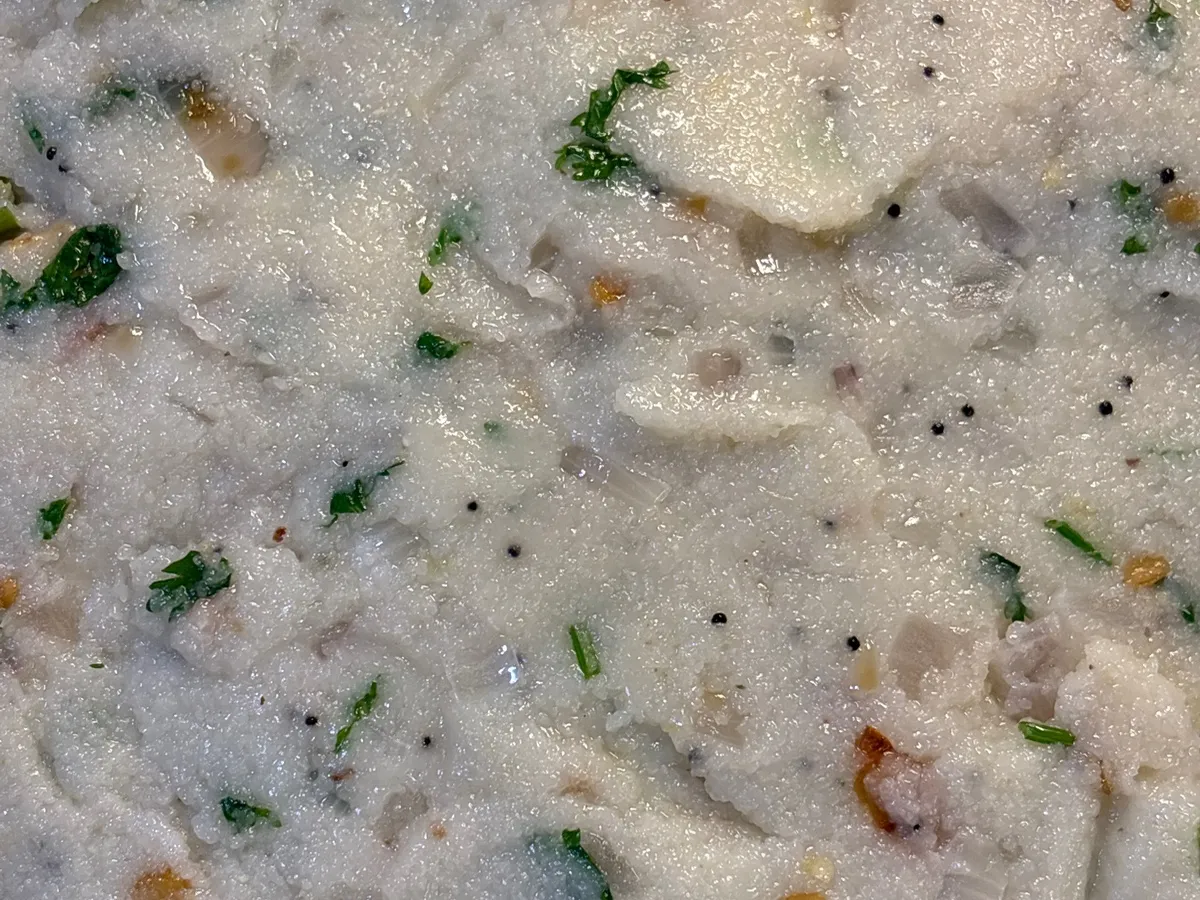
Look for: The ghee goes in off the heat on purpose — it stays as flavour rather than cooking away, and it is what makes this ghee upma rather than upma. After resting, the surface looks glossy and the grains have relaxed into each other without going sticky.
5–6 min · kadai
About this dish
In a darshini, ghee upma and khara bath are different things on the same board. Khara bath is the spiced one — vegetables, sambar powder, a deeper colour. Ghee upma is deliberately plain, so what you taste is the rava, the ghee and the tempering, which is exactly why the roasting step carries it. Two habits separate a tiffin room's from most home versions. The rava is roasted in ghee rather than dry, and the liquid is more generous than feels right, giving a soft set instead of a stiff one. The splash of milk is a third, less universal trick — it softens further and keeps the colour pale. It is at its best within about fifteen minutes of being made. Upma stiffens as it cools and does not reheat gracefully, so this is not a lunch-box dish however convenient that would be.