Idli Dosa Batter
One fermented batter for both — thick from the vessel for idli, a ladleful let down with water for dosa, ground at the ratio that sits between the two.
Drafted — not yet cooked in our kitchen
- Hands on
- 20 min
- Total
- 12 hr 45 min
- Serves
- 6
- Difficulty
- medium
Two grinds, one vessel. The urad dal is ground alone and first, with cold water and as little of it as will bring it together, because everything the idli rises with is air held in that dal. The rice goes coarse, for body. What separates this from a batter made for one job is the ratio and what happens after fermenting: the vessel stays thick for idli, and dosa is a ladleful thinned in a different bowl.
Step by step, with timers and flame levels. Your screen stays awake.
Ingredients
Tap what you already have.
Method
Rinse the rice until the water runs almost clear and soak it in one bowl. In a second bowl, rinse and soak the urad dal with the fenugreek seeds. Two bowls, not one — they are ground separately and to different textures.
Look for: A rice grain should snap cleanly between your teeth with no chalky centre, and a soaked urad grain should crush to paste under a fingernail with no resistance.
240–360 min · bowl
Twenty minutes before you grind, rinse the poha and cover it with just enough water to sit level with it.
Look for: A flake crushes to a smooth paste between finger and thumb with no dry white core.
15–20 min · bowl
Grind the drained urad dal and fenugreek first, alone, adding cold water a splash at a time. Work in bursts of thirty seconds or so, scraping the jar down between them, and give the motor a minute to cool if the jar feels warm through the plastic — in a mixer this is the difference between aerating the dal and heating it. If the jar is small, do it in two loads rather than one crowded one. The window below is grinding time in total, not one continuous run.
Look for: White, light and holding a soft peak on the spatula. Drop a little into a bowl of water — it should float rather than sink. If it sinks, it needs more grinding, not more water.
8–12 min · mixer-grinder
Now the drained rice with the soaked poha, again with as little water as the grinder will accept. This half is not meant to be silky.
Look for: Rub a little between finger and thumb: the faintest grit, like very fine sand. Ground perfectly smooth it makes a slack batter with no body under the dosa.
8–12 min · mixer-grinder
Tip both grinds into a vessel that the batter only half fills, add the salt, and mix with your whole hand for a couple of minutes — not a spoon. If it is stiffer than the cue below, let it down with water a spoonful at a time now; this is the last point at which the whole vessel can be adjusted.
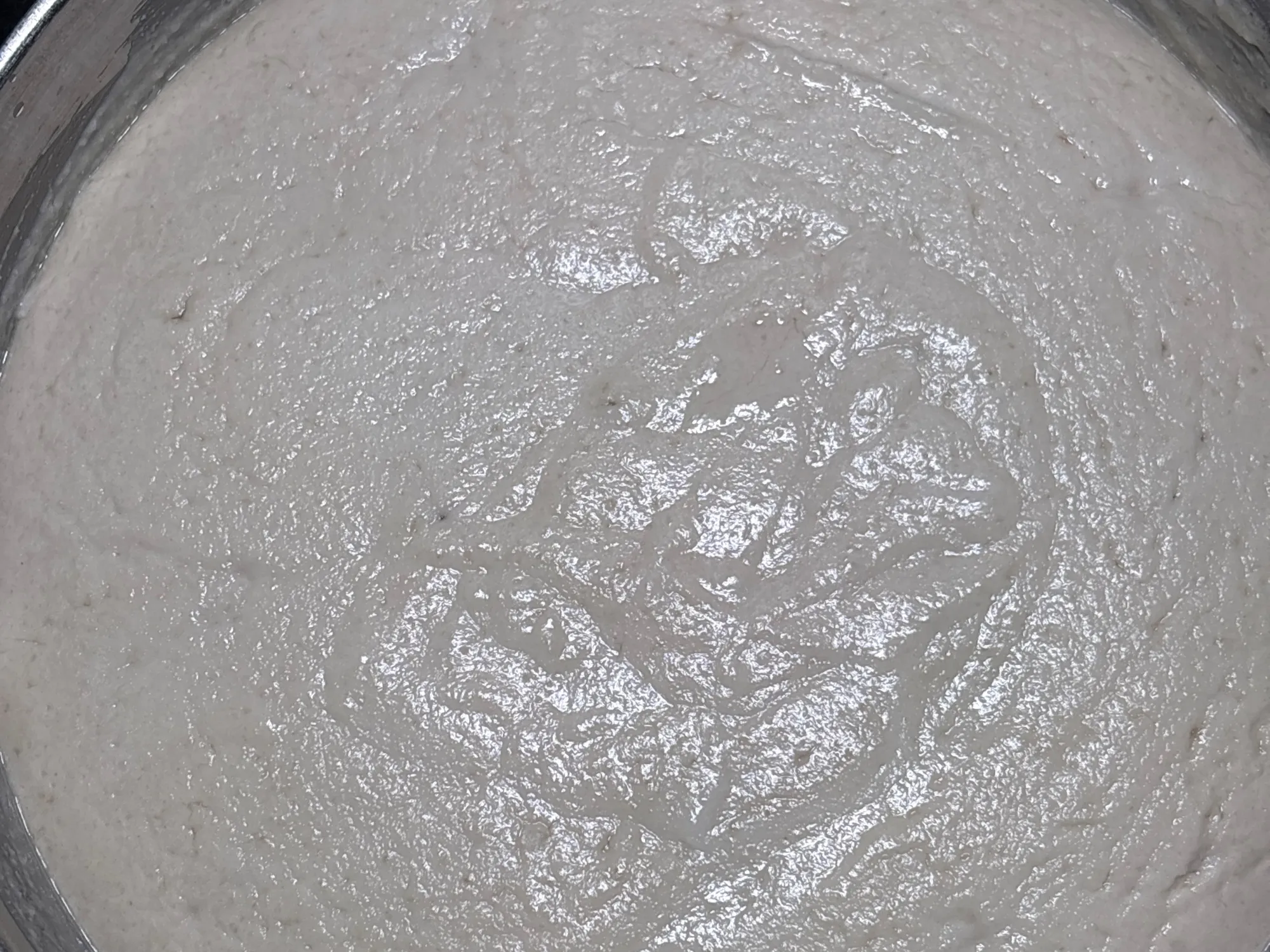
Look for: Thick pouring consistency, one even colour, ribboning off your hand and sinking back in slowly.
2–3 min · bowl
Cover it and leave it somewhere warm to ferment. Don't stir it while it works and don't put it in the fridge.
Look for: Risen by about half again, domed on top, and bubbled right through when you look at the side of the vessel. It should smell sour and pleasant — sharp and acetic means it has gone past, and a warm night gets there hours before a cool one does.
480–720 min · bowl
For idli — one of the two endings, whichever you are making this morning: grease the moulds, stir the batter as little as you can get away with, and pour. Steam it with the lid on but nothing sealing it; if you are using a pressure cooker body as the steamer, the weight comes off. Take the idlis out only after they have sat a couple of minutes off the heat.
Look for: A skewer into the centre comes out clean and the top springs back when pressed. Wet crumb on the skewer means more time; a wrinkled, shrunken top means it has had too much.
10–12 min · medium-high heat · idli steamer
For dosa — the other ending: take out only what you need into a separate bowl and let it down with water there, roughly a quarter of the batter's volume in water to start with. Keep the vessel itself thick: thinned batter cannot be made thick again, and the rest of it is still idli.
Look for: The underside is an even deep gold and the dosa releases from the tawa in one movement with no scraping. Before that, judge the batter itself: it should spread from the centre in two turns of the ladle and stop where you leave it rather than running to the rim on its own.
2–4 min · medium heat · tawa
About this dish
Kitchens that grind separately for each dish will tell you different things about which way the two batters differ, and the quoted proportions genuinely contradict each other. What is not in dispute is that a single vessel has to answer both questions in one morning, and that is what this ratio is chosen for rather than for either dish on its own. The flag on step 1 stays until it has been ground here a few times. Fermentation carries on in the fridge, only much more slowly, so a batter keeps thinning and souring for as long as it is kept. That is the mechanism behind the thinning proportion at the last step being a proportion and not a measured quantity.