Kadale Kalu Husali
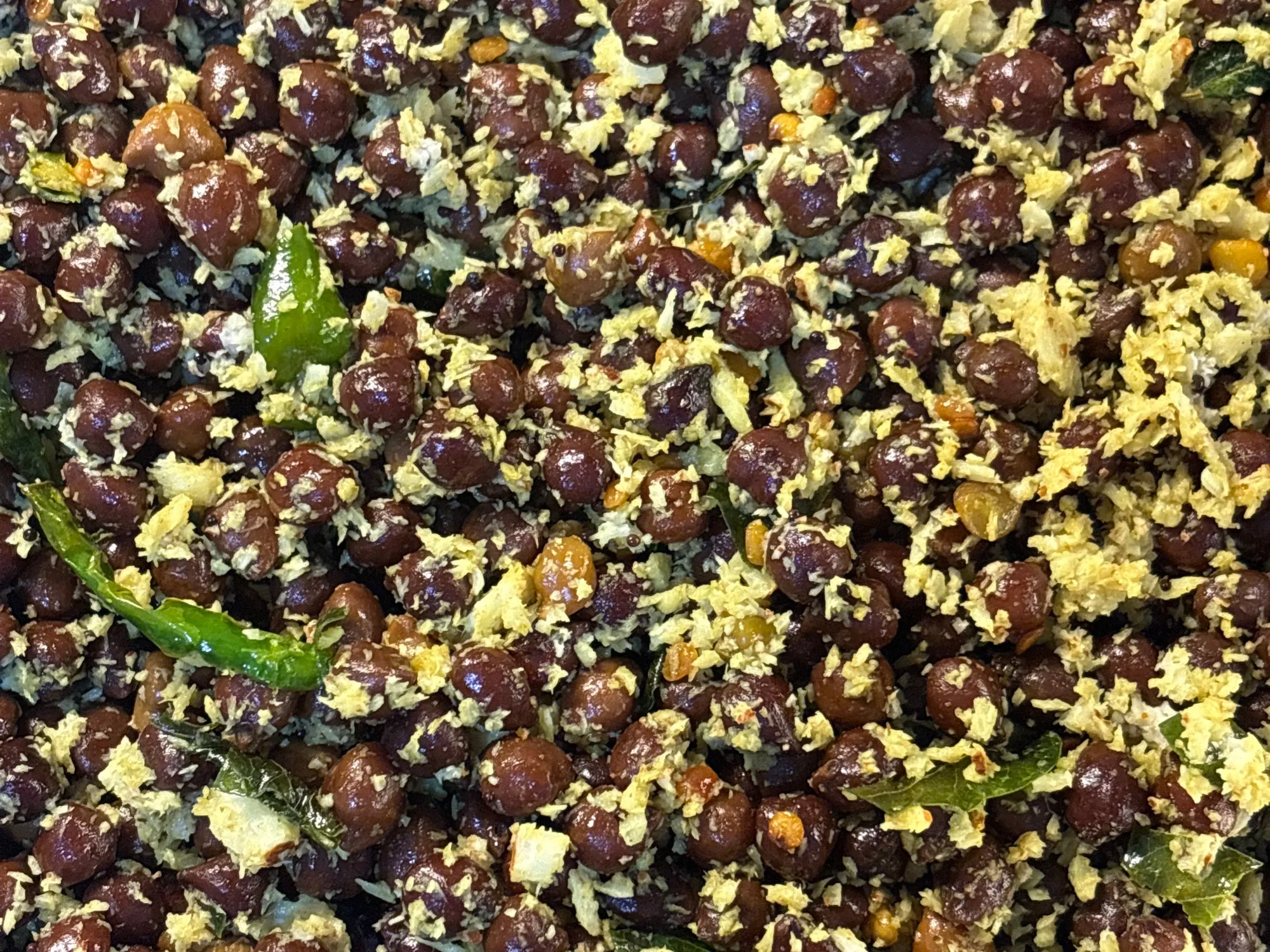
Soaked black chana cooked till it still has bite, then tossed through a mustard-and-urad tempering with coconut and lemon.
Cooked and tested by Kiran · 21 August 2026
- Hands on
- 5 min
- Total
- 8 hr 25 min
- Serves
- 4
- Difficulty
- easy
Black chana is the one pulse that rewards being underdone. Cook it till it collapses and you have made something else entirely; stop while it still pushes back a little, and every spoonful has texture. The tempering does the rest, so get the order of the tempering right and the dish is essentially finished.
Step by step, with timers and flame levels. Your screen stays awake.
Ingredients
Tap what you already have.
Method
Rinse the chana twice and leave it to soak in plenty of water — at least three times its volume, because it swells more than you expect. Overnight is easiest.
Look for: Nearly doubled and the skin taut rather than wrinkled. Split one with a thumbnail — the inside should be evenly pale, with no chalky opaque core.
480–720 min · bowl
Drain the soaking water and put the chana in the cooker with fresh water to cover it by about two fingers, and half the salt. Cook on high till the first whistle, then lower the flame to medium and count the rest.
Look for: A chana should crush between finger and thumb with a little resistance left in it — kala chana stays firm even when fully cooked, so go by taste, not by whether it has gone soft. If it squashes to paste it has gone too far for husali.
12–18 min · medium heat · pressure cooker
Let the pressure fall on its own, then drain the chana in a colander and let it sit while you make the tempering. Keep the cooking water — it goes into rasam or into dough, and throwing it away is a waste.
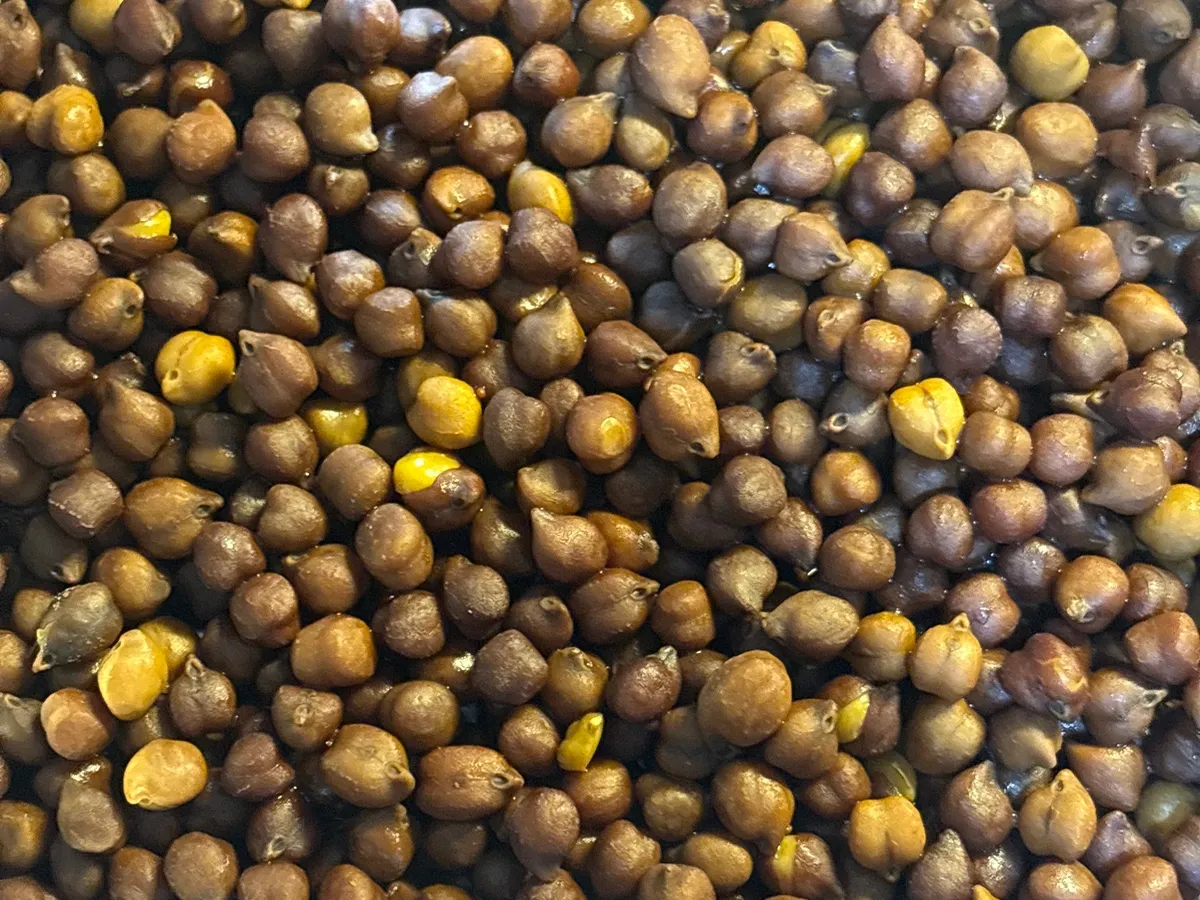
Look for: Steam no longer rises off the chana and the surface looks dry. Wet chana slides off the tempering instead of taking it.
8–12 min
Heat the oil in a kadai on medium. Add the mustard seeds and wait — they must crackle before anything else goes in. Then the urad dal, then the broken red chilli, then the asafoetida, then the curry leaves, in that order, a few seconds apart. The dal needs the longest and the curry leaves the shortest.
Look for: Urad dal turned the colour of a ripe date, curry leaves gone translucent and crisp but still green. If the dal is dark brown it is bitter — start the tempering again, it costs a spoon of oil and saves the dish.
2–3 min · medium heat · kadai
Lower the flame to low. Stir in the green chilli and turmeric and give it about ten seconds — turmeric needs a moment in fat, but it burns fast on a hot pan.
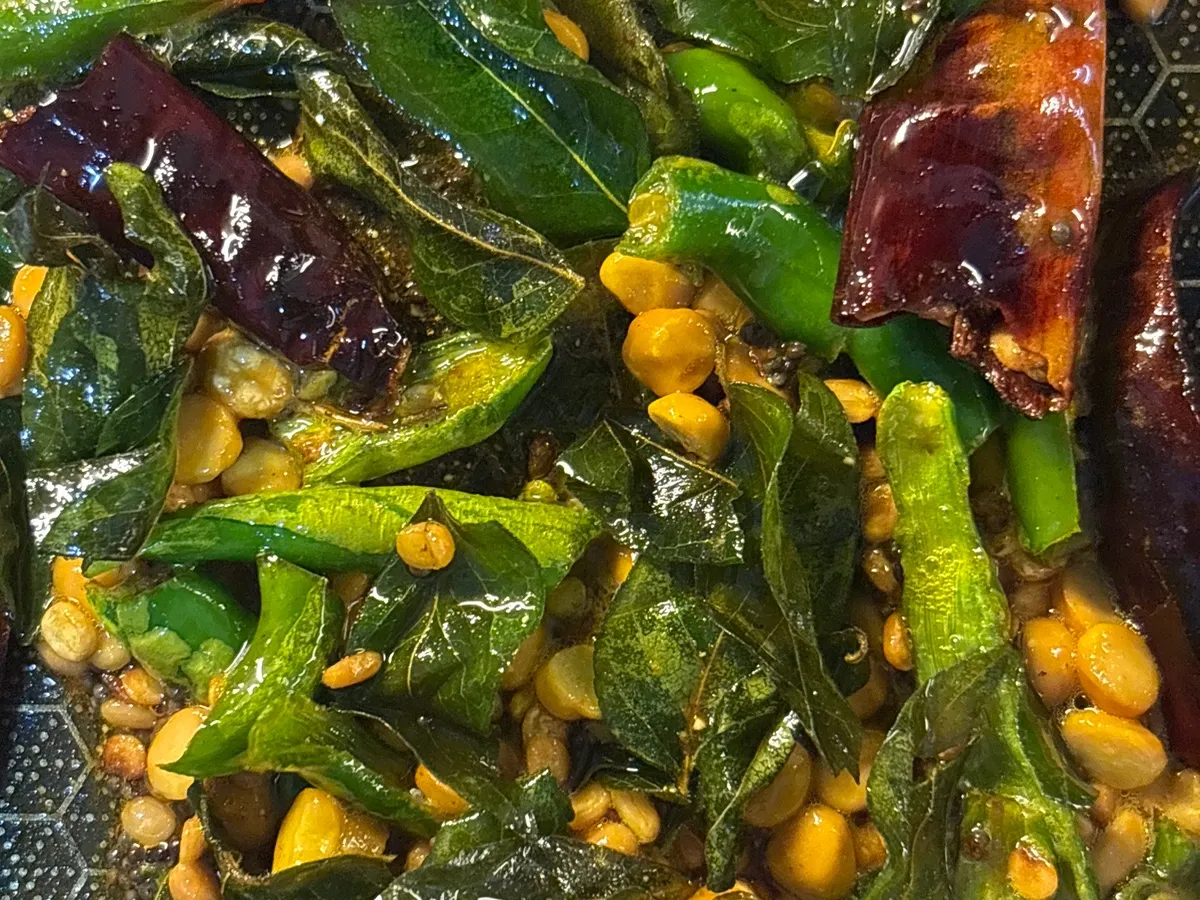
Look for: The oil turns yellow and smells warm rather than raw. The chilli skin blisters slightly.
1–2 min · low heat · kadai
Add the drained chana and the rest of the salt, and the jaggery — a small pinch, enough to round off the chilli without sweetening anything. Leave it out if you want it plain. Toss on low so every chana picks up the oil.
Look for: Every chana glossy, the curry leaves distributed through rather than sitting on top, and nothing sticking to the base. Taste one — the salt should read at the skin, not inside it.
2–4 min · low heat · kadai
Off the heat, and only off the heat, fold in the coconut, the coriander and a squeeze of lemon. Coconut on a live flame goes dull and slightly cooked-tasting, which is the whole difference between husali and a dry curry.
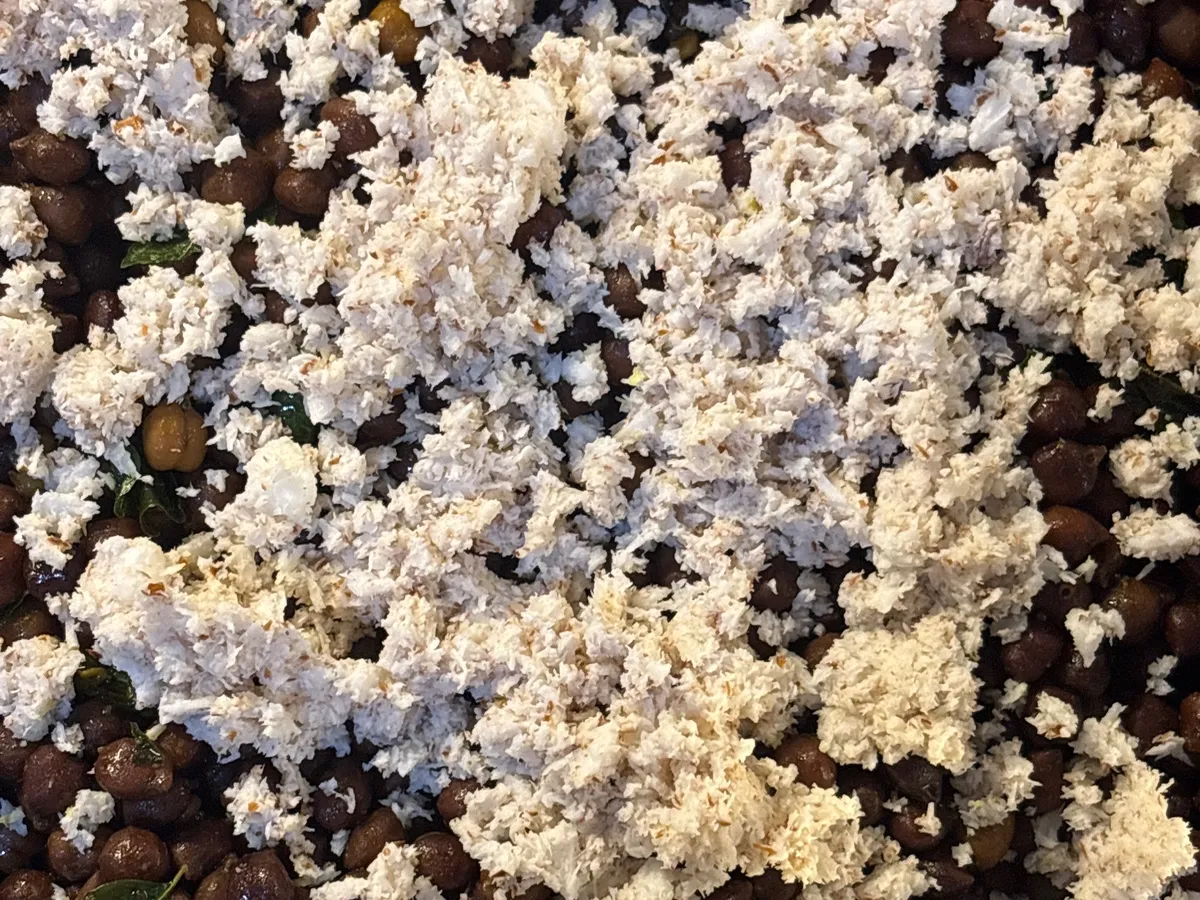
Look for: Coconut still white and loose, not clumped or warmed through. Smell it — lemon and coconut should come up before the chilli does.
· kadai
About this dish
Husali (also written usli) is the Kannada name for a boiled legume finished in a tempering rather than a gravy — the same treatment goes on whole moong, cowpeas and field beans, and kadale kalu is the version that turns up most often at Gowri-Ganesha and through Navaratri. It is built to travel: nothing in it is a gravy, so there is nothing to weep into a box — provided the chana went in properly drained. Reheating is not worth it, because the coconut is the first thing to suffer; eat it at room temperature or cold. Kabuli chana works if that is what is in the house, but it cooks softer and faster, so drop the pressure-cooking time and watch it — the point of this dish is chana you can feel between your teeth.