Kinnathappam
Malabar steamed rice cake — raw rice ground smooth with coconut milk and cumin, steamed in a kinnam and cut into diamonds once cold.
Cooked and tested by Kiran · 16 August 2026
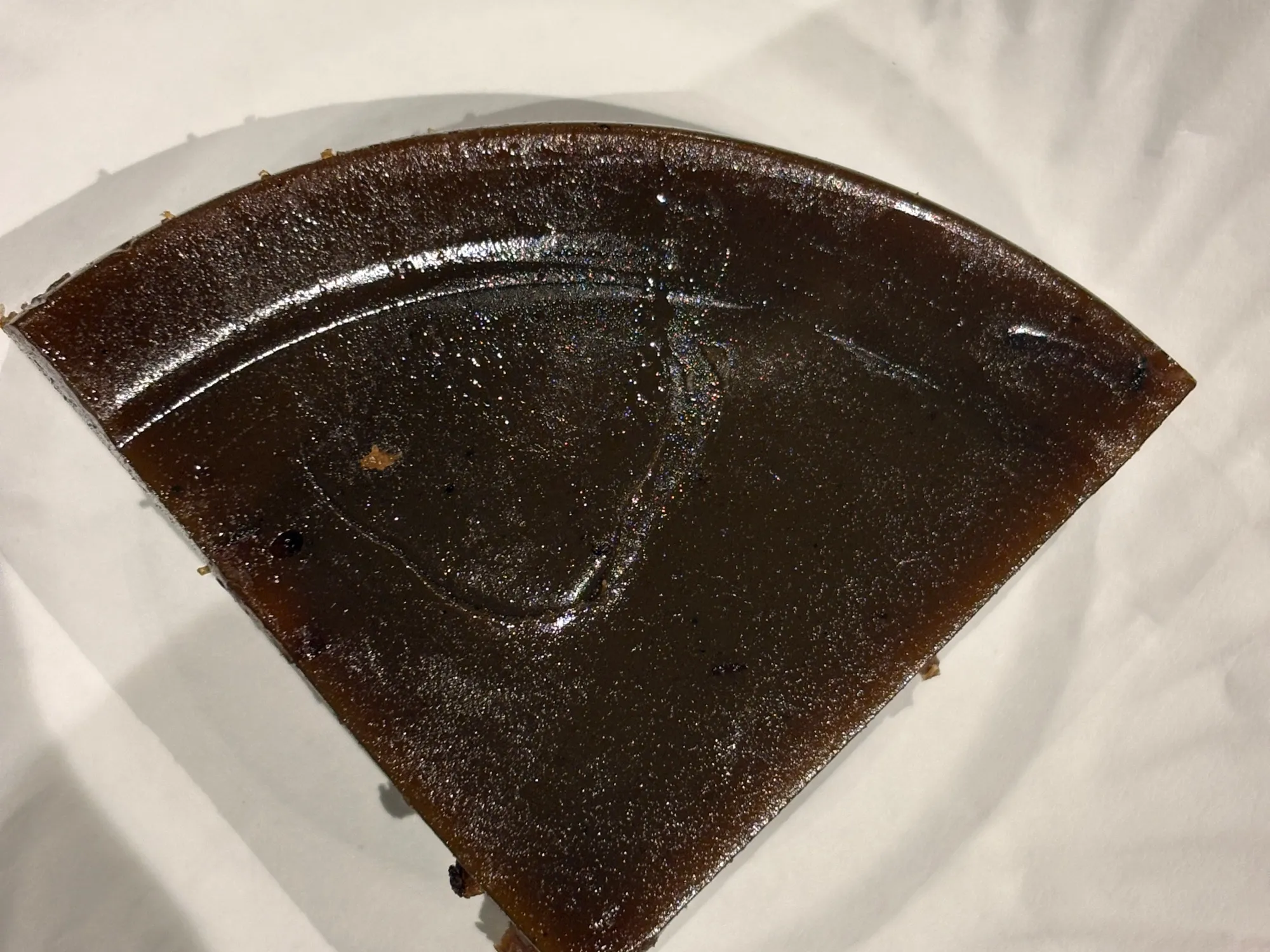
- Hands on
- 10 min
- Total
- 6 hr 5 min
- Serves
- 4
- Difficulty
- medium
Nothing here ferments, so the whole thing takes an afternoon rather than a night — decide at breakfast and eat it at four. That leaves nowhere to hide a rough grind, because the batter keeps every grain you left in it, and no hiding from impatience either: cut the cake before it is completely cold and clean diamonds come away as ragged strings.
Step by step, with timers and flame levels. Your screen stays awake.
Ingredients
Tap what you already have.
Method
Rinse the rice until the water runs almost clear, then cover it with plenty of fresh water and leave it alone.
Look for: A grain crushes to a soft paste between thumbnail and finger with no hard core left in the middle. If it still cracks rather than squashes, give it longer — undersoaked rice will not grind smooth however long you run the mixer.
240–360 min · bowl
Drain the rice completely and grind it with the water, cumin, sugar and salt until it is properly smooth. Only then stir the thick coconut milk through by hand, a little at a time, until the batter pours in a ribbon. Take your time over the grinding.
Look for: Rub a drop between finger and thumb — it should feel like cream, with no grain at all. Grit you can feel now is grit you will feel in the finished cake, and nothing after this step removes it. Once the coconut milk is in, the batter should pour in a thick ribbon, a shade heavier than dosa batter.
8–12 min · mixer-grinder
Warm a tablespoon of the ghee in a small pan and fry the cashews until they colour. Lift them out and keep them. Crush the cardamom seeds and stir them through the batter.
Look for: Pale gold, not brown. Cashews carry on cooking in their own heat after they leave the pan, so pull them a shade before they look done.
2–3 min · medium-low heat · kadai
Grease a steel or brass vessel generously with another tablespoon of ghee and pour the batter in. Cover and steam. Scatter the cashews over about ten minutes in, once the surface has set enough to hold them — put them on at the start and they sink without trace.
Look for: A skewer pushed into the middle comes out clean and dry. Wet batter clinging to it means longer — the centre sets last, and the edges will look finished well before it does. The surface loses its wet shine and firms to a light springiness.
25–35 min · medium heat · idli steamer
Lift the vessel out and leave it on the counter, uncovered, until it is completely cold. Do not rush this.
Look for: Cold to the back of the hand, all the way through — not merely warm. The cake pulls very slightly from the sides of the vessel as it cools.
90–120 min
Run a knife around the edge and cut into diamonds — parallel lines one way, then across at an angle. Lift them out with a palette knife.
Look for: The knife comes away clean and the cut edges stand square. If it drags and the pieces tear into strings, it is still warm inside — put it back and wait.
About this dish
Kinnathappam is named for the vessel, not the batter — a kinnam is the brass or steel bowl it sets in, and any straight-sided vessel that fits the steamer does the same job. It belongs to the Malabar tea table, and unlike most of the appam family it is not fermented at all: no yeast, no toddy, no overnight wait. Soak, grind, steam. Two things decide it, and neither is the steaming time everyone worries about. The first is how smooth the batter is ground — any grain left is texture you cannot remove later, which is why the rice goes into the mixer with water and the thick coconut milk is stirred in afterwards. Grinding in the first extract fights you: the fat cushions the grain and the mixer heat turns it. The second is cooling it completely before it is cut. A warm cake tears; a cold one cuts to clean diamonds and firms up further in the fridge.