Instant Oats Dosa
A thin, lacy dosa from a pourable oats batter — no soaking, no grinding overnight, no fermentation, ready in half an hour.
Cooked and tested by Kiran · 20 August 2026
- Hands on
- 6 min
- Total
- 26 min
- Serves
- 3
- Difficulty
- medium
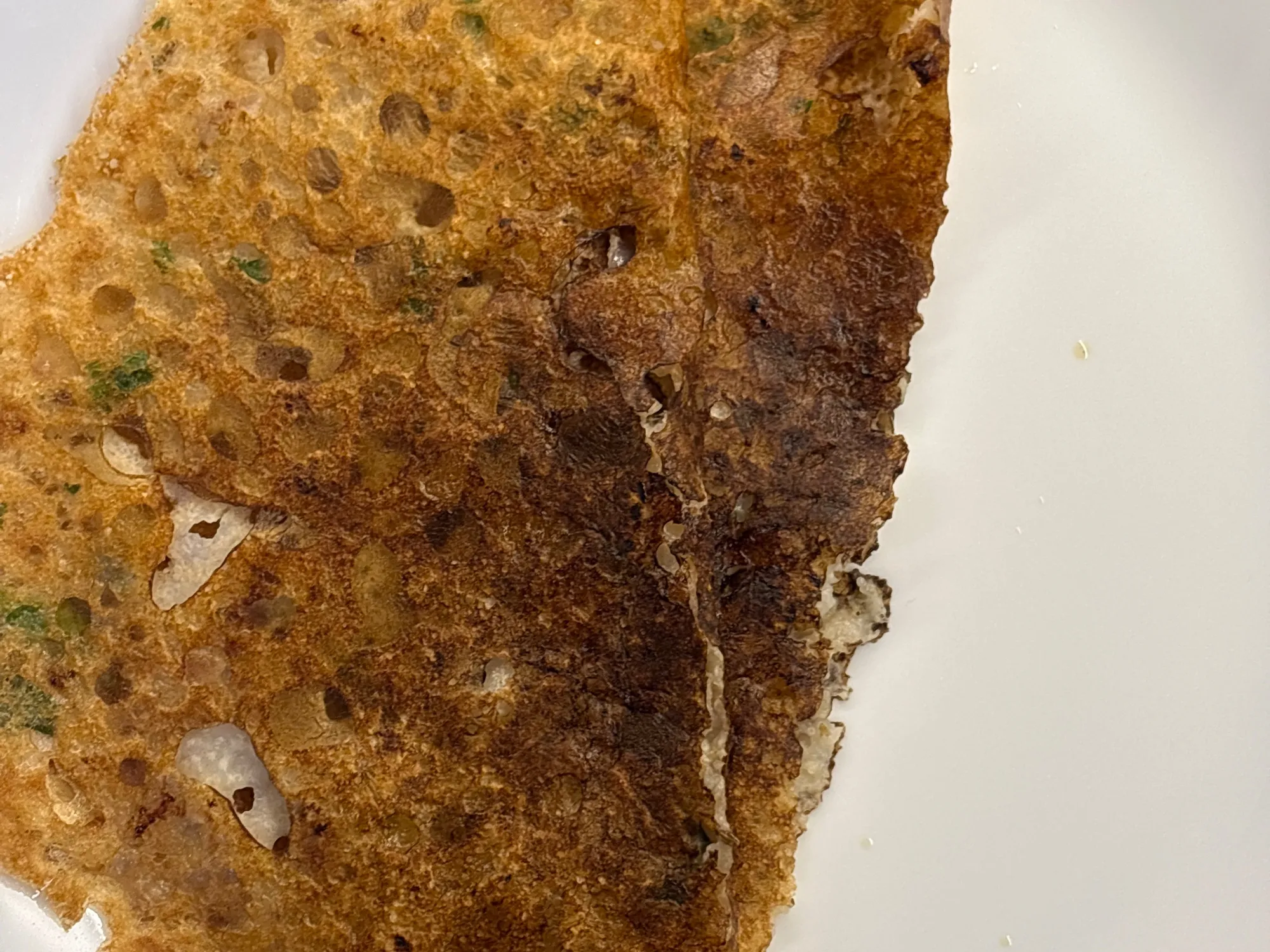
Batter poured from a height and never spread — that is the whole trick with a lacy dosa. Everything else here is about keeping the batter thin enough to fall through its own holes, which is a moving target because the rava keeps drinking.
Step by step, with timers and flame levels. Your screen stays awake.
Ingredients
Tap what you already have.
Method
Grind the oats alone in a dry jar to a powder. It does not have to be as fine as flour — a little grit gives the dosa something to hold on to — but there should be no whole flakes left, because a flake that survives grinding turns into a soft spot in a crisp dosa.
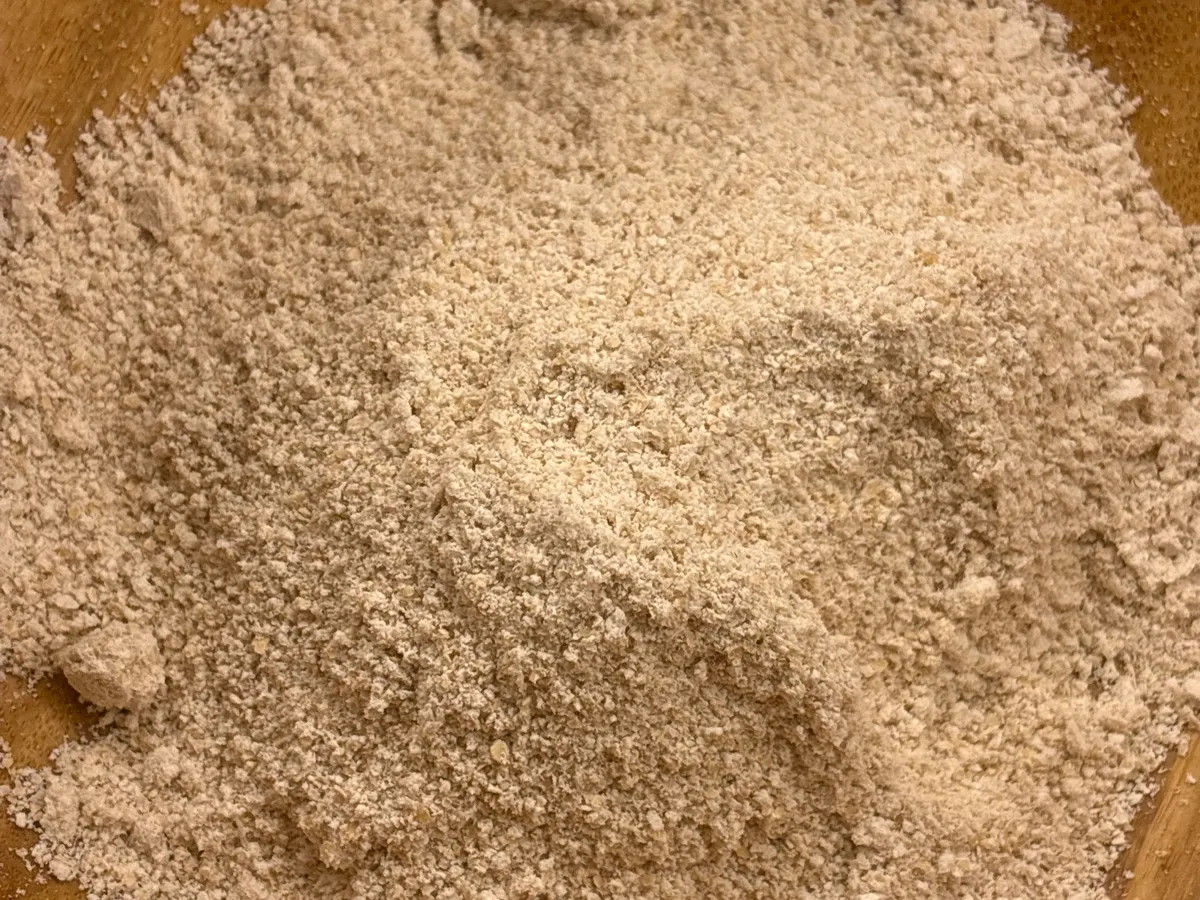
Look for: Rub a pinch between your fingers — it should feel like fine rava, not like flour and not like flakes.
· mixer-grinder
Whisk the ground oats, rava, rice flour, curd and salt together with about half the water until there is not a single lump, then thin it with the rest. Getting the lumps out while the mixture is still thick is far easier than chasing them around a thin batter.
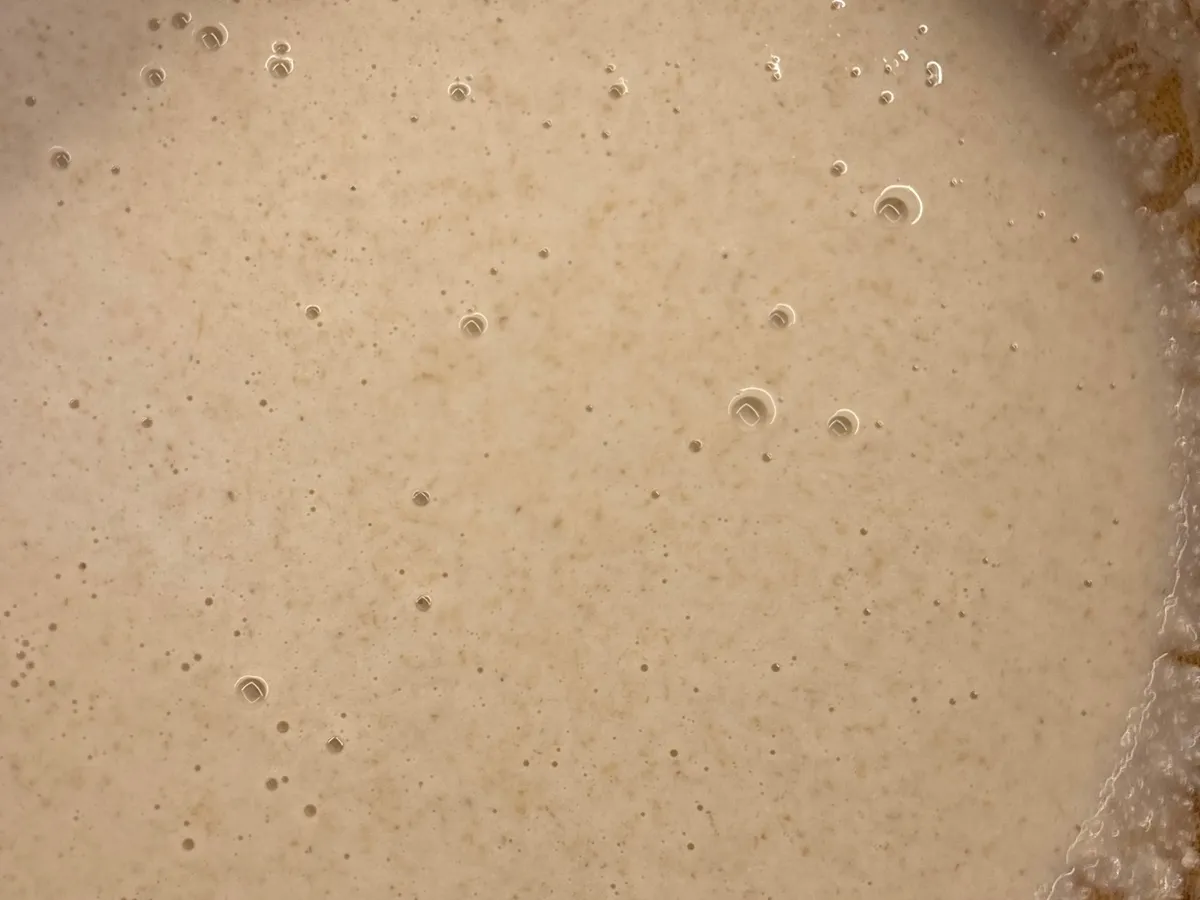
Look for: Thinner than you think is sensible — about the consistency of thin buttermilk. It should run off the ladle in a stream, not a ribbon.
3–4 min · bowl
Leave the batter alone on the counter. This is not fermentation and nothing will rise; it is the rava taking up water, which is why the batter is always thicker at the end of the rest than it was at the start.
Look for: The rava has settled to the bottom and the batter has visibly thickened. Whisk it back together and thin it to running consistency again.
20–30 min · bowl
Stir in the onion, chilli, ginger, cumin, curry leaves and coriander. These go in at the end rather than into the batter to rest — onion left sitting in a wet batter draws water out of itself and shifts the consistency again while your back is turned.
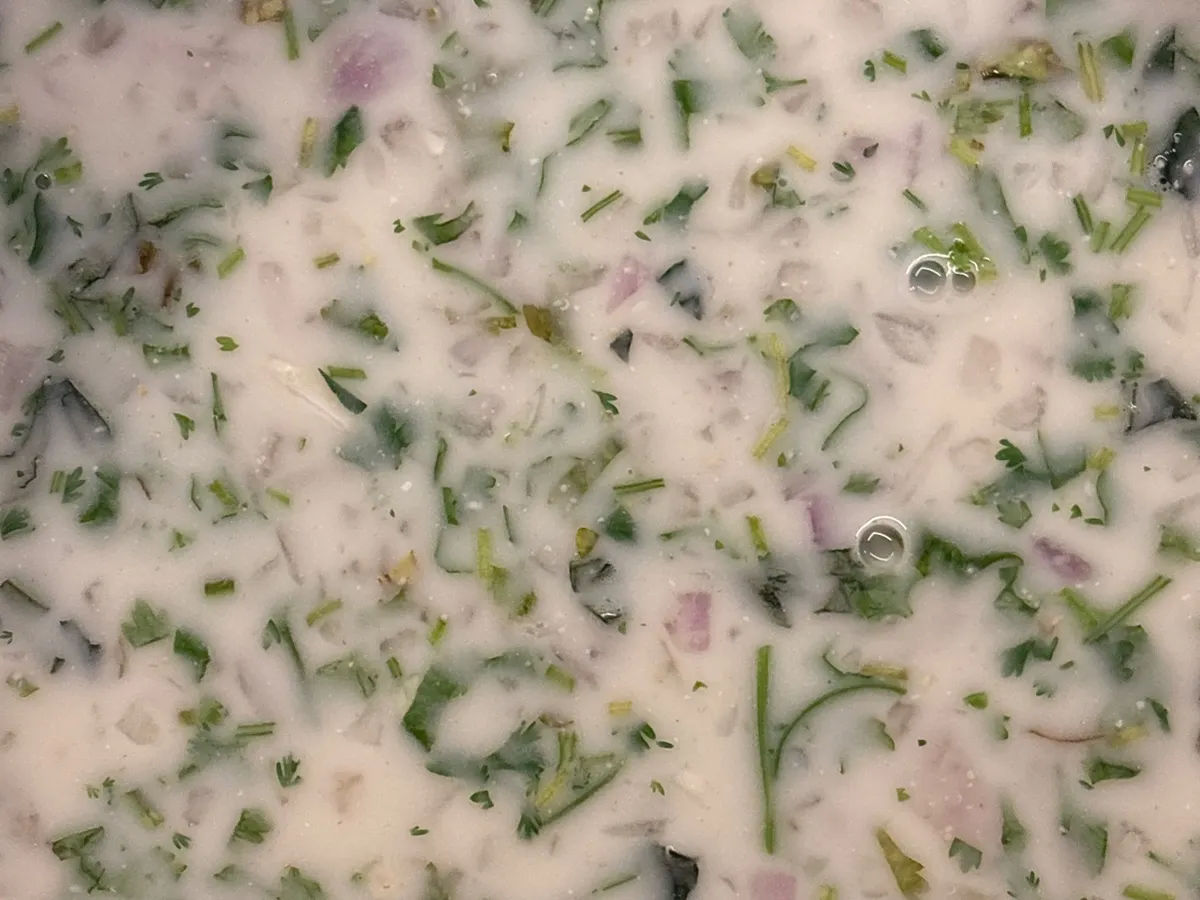
Look for: Everything suspended and moving when you stir, not sunk in a layer at the bottom. If it sinks and stays, the batter is too thin — the fix is a spoon of rice flour, not more rava.
· bowl
Get the tawa properly hot — hotter than for a spread dosa. Stir the batter from the bottom every single time, then pour it from a height of about a foot, starting at the outside and working in, filling the gaps as they appear. Do not spread it with the ladle. The holes are the dosa; a spread batter closes them up.
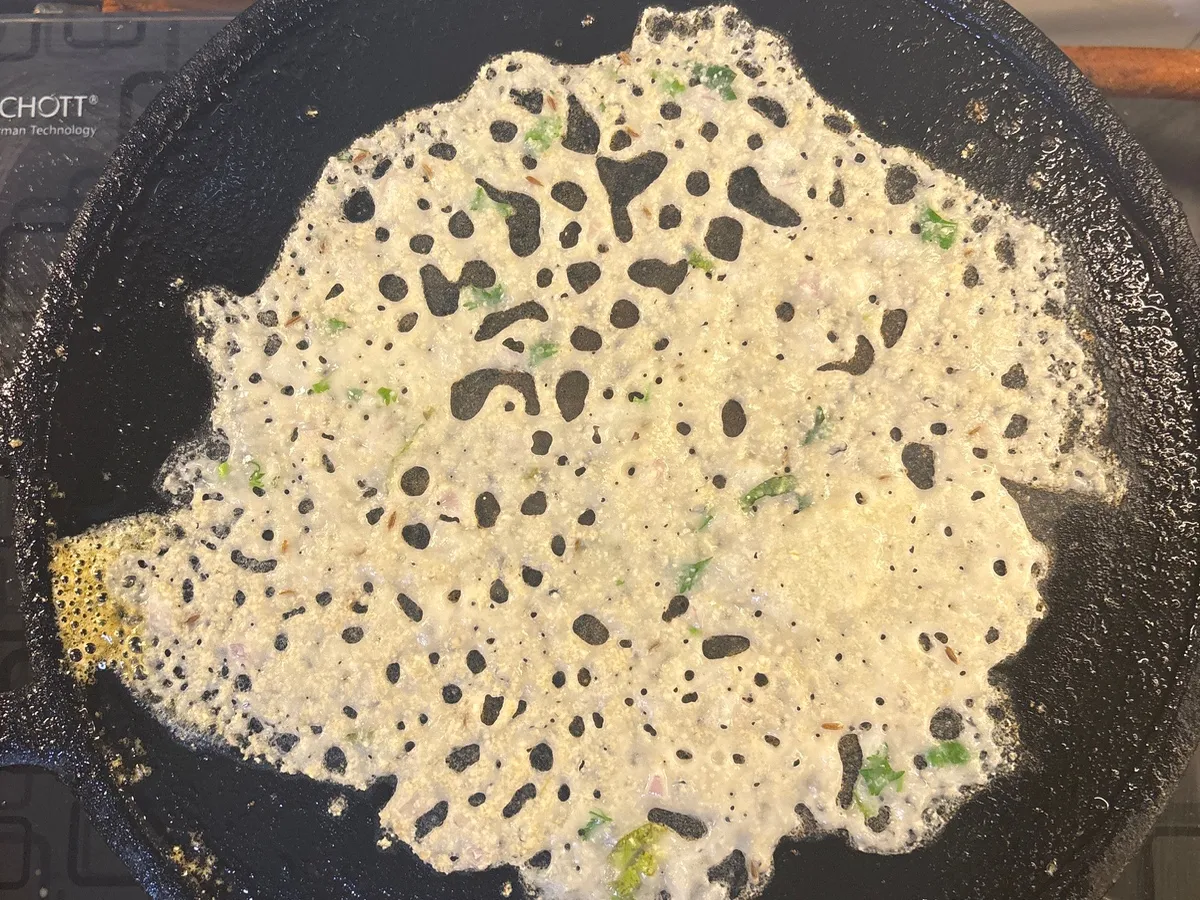
Look for: Poured batter should hiss and set into holes on contact. If it pools and spreads smooth, the tawa is not hot enough — wait, and sprinkle water on it to test: the drops should skitter and vanish.
2–4 min · medium-high heat · tawa
Drizzle oil around the rim and leave it alone until the edges lift away by themselves. Fold it over straight off the tawa. There is no need to flip a dosa this thin — the top cooks through from below.
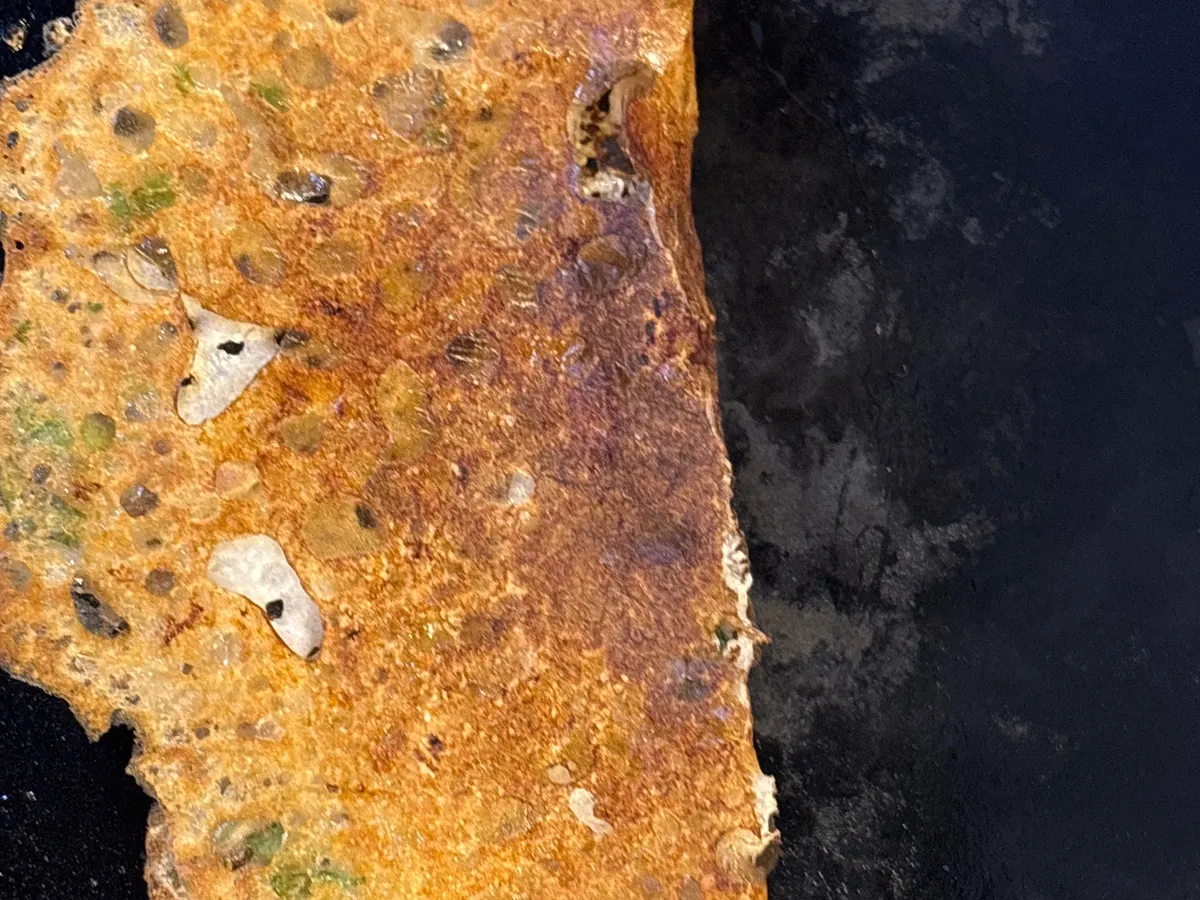
Look for: Golden and lacy underneath, edges curling free of the pan on their own. If you have to prise it, give it another thirty seconds — it releases when it is ready.
1–2 min · medium-high heat · tawa
About this dish
Three flours, three jobs. Ground oats carry the flavour, rava gives the crispness and the holes, and rice flour is what keeps the whole thing from tearing when you lift it. Dropping any one of them changes the dosa substantially, and dropping the rice flour is the one you notice fastest. Wipe the tawa with a cut onion between dosas rather than washing it down. It cleans and seasons in one pass and does not drop the pan temperature.