Pulihora
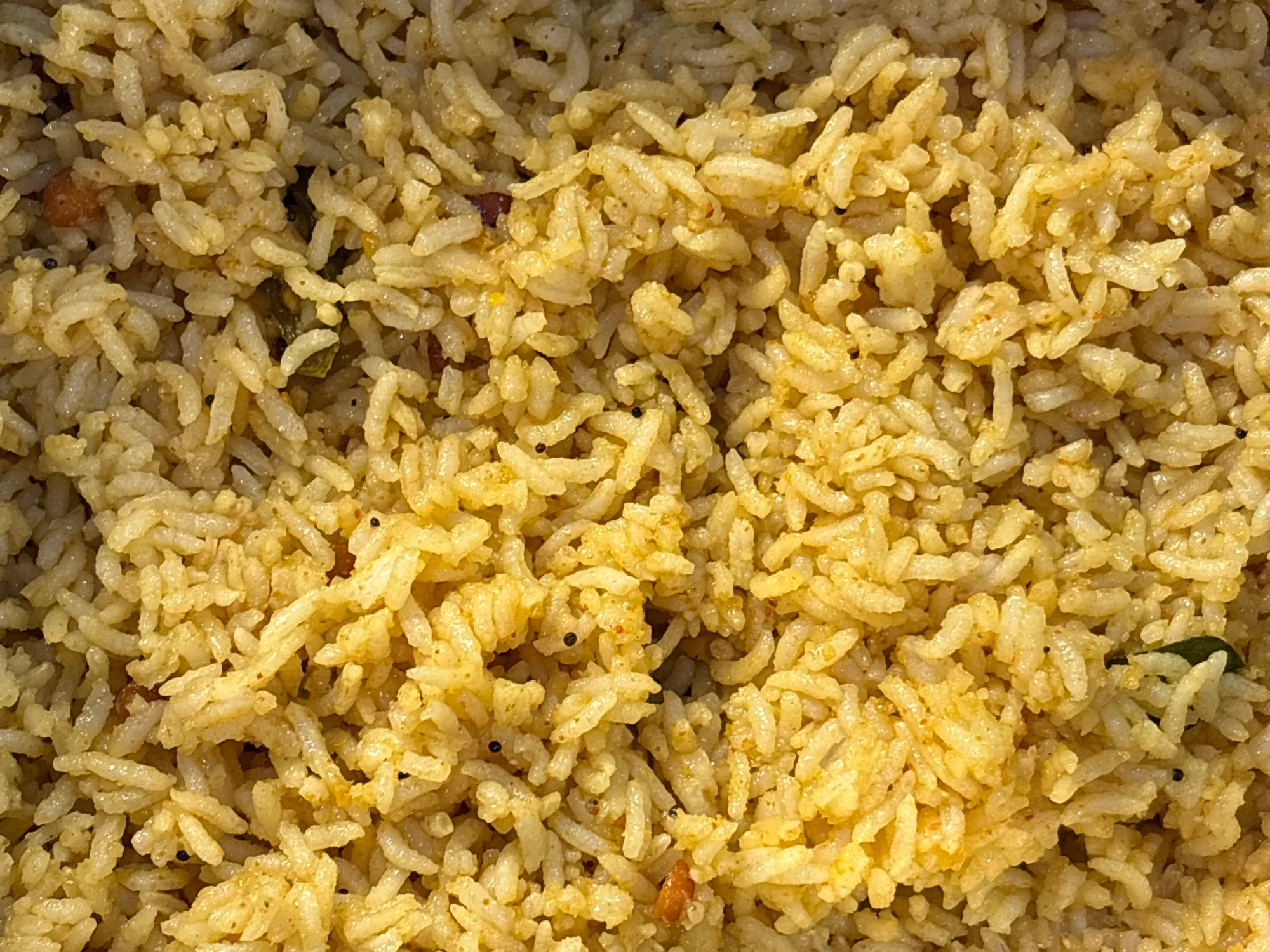
Andhra tamarind rice, where the pulusu is cooked down separately until thick and then folded through cooled rice so every grain stays separate.
Cooked and tested by Kiran · 20 August 2026
- Hands on
- 20 min
- Total
- 1 hr 25 min
- Serves
- 4
- Difficulty
- medium
The pulusu is the dish. Rice is just what carries it, which is why it gets cooked down until the oil separates rather than poured over as a sauce.
Everything here can be done a day early except boiling the rice.
Step by step, with timers and flame levels. Your screen stays awake.
Ingredients
Tap what you already have.
Method
Cook the rice so it stays firm — a little less water than you would use for everyday rice. Spread it out on a wide plate the moment it is done and leave it to cool completely.
Look for: Grains separate and cool to the touch, not steaming. Warm rice tears when you mix it and turns the whole dish pasty.
20–30 min
Soak the tamarind in hot water, then squeeze it out and strain. You want a thick extract, not a weak one — pulihora is built on this and thin extract cannot be rescued later.
Look for: The pulp gives way completely when squeezed and only fibre is left in your hand.
15–20 min · bowl
Dry roast the fenugreek and sesame seeds separately in a small pan, then grind them to a powder. Fenugreek goes bitter fast — take it off while it is still tan, well before it darkens.
Look for: Fenugreek turns tan and smells warm rather than sharp; sesame starts to pop and jump in the pan.
3–5 min · low heat · kadai
Heat the sesame oil in a kadai on medium and start the tempering. Mustard seeds first and let them finish popping, then the chana dal and urad dal, then peanuts. The dals and peanuts need time to colour and the mustard does not — that is why they go in that order.
Look for: Mustard popping has slowed to occasional; both dals are golden and the peanuts have lost their raw white centre.
4–6 min · medium heat · kadai
Lower the heat and add the chillies, curry leaves, turmeric and asafoetida. These burn at the temperature that browned the dal, so the flame comes down before they go in.
Look for: Curry leaves crisp and translucent, still green — not blackened. The asafoetida should smell savoury the moment it hits the oil.
1–2 min · low heat · kadai
Pour in the tamarind extract with the jaggery and salt, and let it cook down on medium-low. This is the pulusu, and it has to reduce properly — poured on thin, it makes the rice soggy instead of coating it.
Look for: The oil separates and pools at the edges, and the mixture holds together as a thick mass rather than running when you tilt the pan.
8–14 min · medium-low heat · kadai
Take the pulusu off the heat and stir in the roasted powder. Add it to the cooled rice a little at a time, folding rather than stirring, and stop when the colour is even. You may not need all of it.
Look for: Every grain evenly pale yellow and coated, still separate. No wet patches sitting at the bottom of the bowl.
4–6 min · bowl
Leave it covered for at least half an hour before serving. Pulihora eaten straight after mixing tastes raw and disjointed; the resting is what pulls it together.
Look for: The sourness reads as one flavour rather than sitting on top of the rice.
30–120 min
About this dish
Pulihora is the savoury anchor of a Varamahalakshmi plate in Andhra and Telangana, and it is the item most worth making ahead — it is one of the few festival dishes that is genuinely better several hours after it is made. Timing, in a full spread: make the pulusu the night before. It keeps in the fridge for a week and reheats in a minute, so on the day you are only cooking rice and folding. That single step is what takes pulihora from a forty-minute job to a ten-minute one, and it is how it is done in most households cooking for a festival rather than for one meal. Sesame oil is not interchangeable here. Its flavour is a large part of what the dish tastes like, and a neutral oil gives a noticeably flatter result. For the same reason the rice is cooled rather than used hot: hot grains absorb the pulusu instead of being coated by it.