Rava Paniyaram
Little browned semolina balls cooked in an appe pan — round, soft and exactly the size a three-year-old can pick up without help.
Cooked and tested by Kiran · 27 August 2026
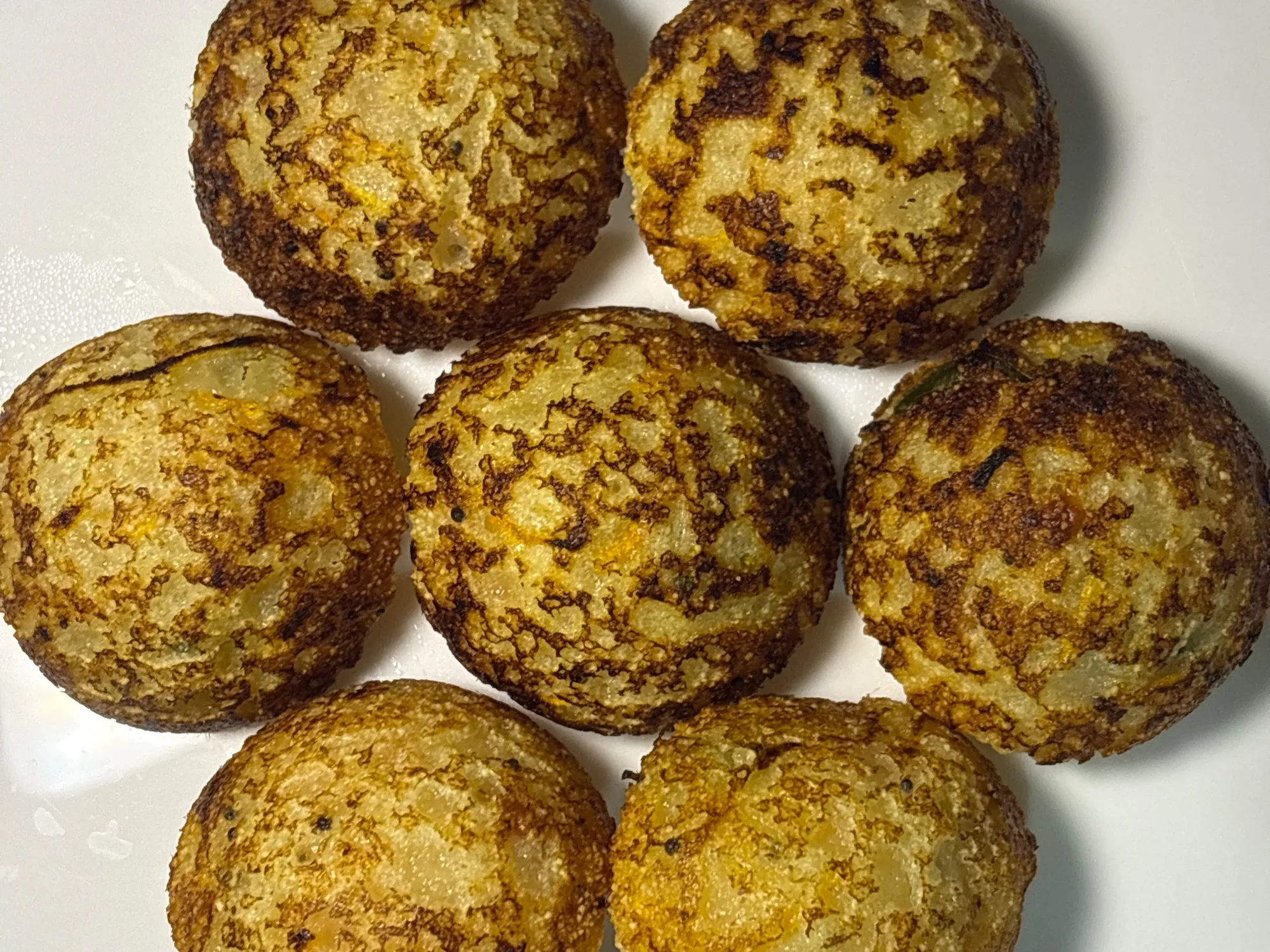
- Hands on
- 21 min
- Total
- 46 min
- Serves
- 4
- Difficulty
- easy
The appe pan turns any thick batter into something round and browned on every side, which is a better shape for a lunch box than anything flat. Semolina and curd get you there without fermenting, so this is a morning recipe rather than a plan-ahead one.
Step by step, with timers and flame levels. Your screen stays awake.
Ingredients
Tap what you already have.
Method
Whisk the rava, the curd and the salt with enough water to make a thick batter. Whisk it out properly now — rava lumps set once the grain drinks the liquid and will not come out later.
Look for: Thick, smooth and dropping off the whisk in a heavy blob. No dry rava clinging to the side of the bowl.
3–4 min · bowl
Cover and leave it while you do the tempering and grate the carrot.
Look for: Noticeably stiffer than when you left it — a spoon should stand up in it for a second before falling over.
15–20 min · bowl
Warm a teaspoon of the oil in a kadai on medium, add the mustard seeds and part-cover the pan. When they stop popping add both dals, and when those turn colour add the curry leaves and the asafoetida. Tip the whole lot into the batter.
Look for: The dals should go the colour of straw and smell nutty. Pull the pan off before they go past that — a browned dal is bitter and there is nowhere for it to hide in a batter this plain.
3–5 min · medium heat · kadai
Stir the grated carrot into the batter and loosen it with a splash of water if it has gone too stiff to spoon. Chop the curry leaves fine or leave them out — a whole leaf is the thing a small child fishes out and abandons.
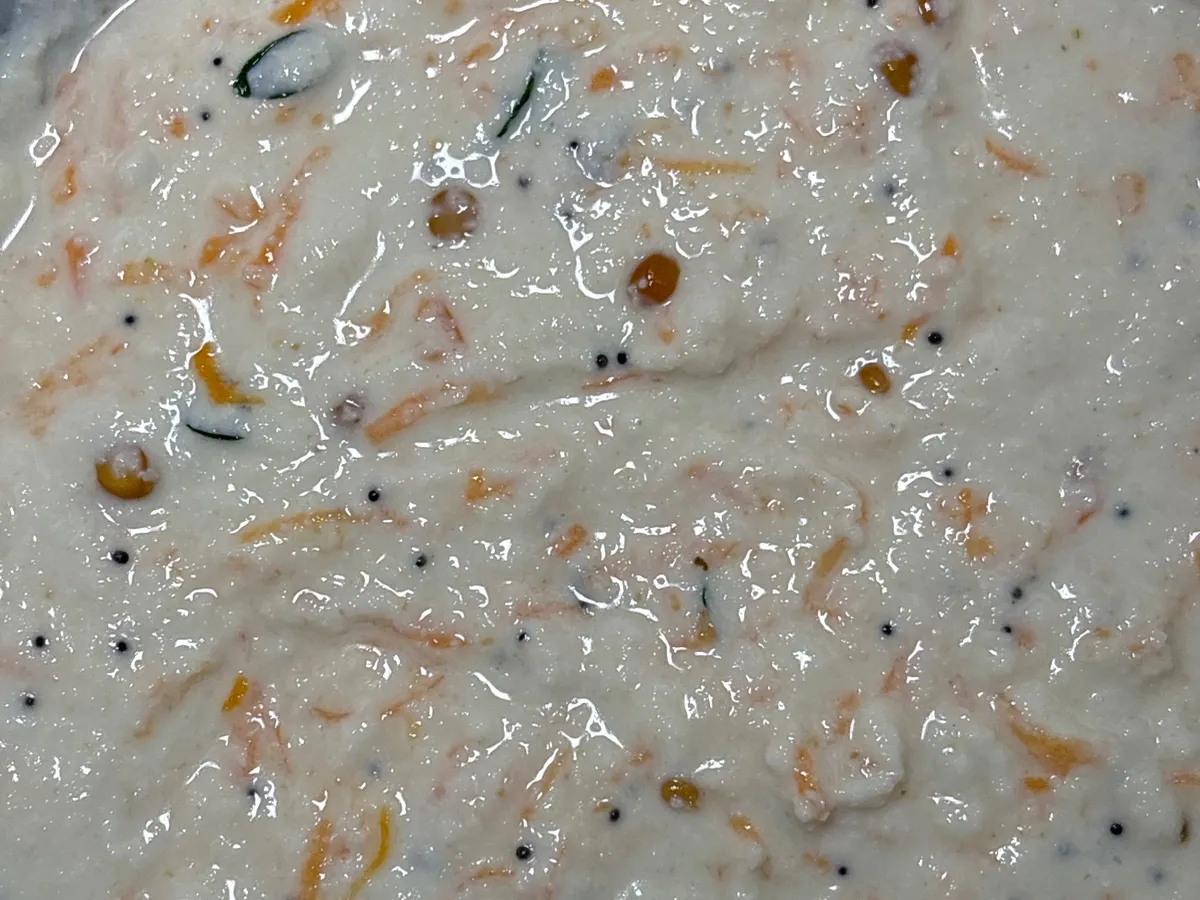
Look for: Thick enough to hold its shape on the spoon but soft enough to slide off into the pan without being pushed.
3–4 min · bowl
Heat the appe pan on medium-low and put a few drops of oil in each dimple. Fill each one about three-quarters full and cover the pan. When the tops are set, turn each ball over with a spoon handle or a skewer.
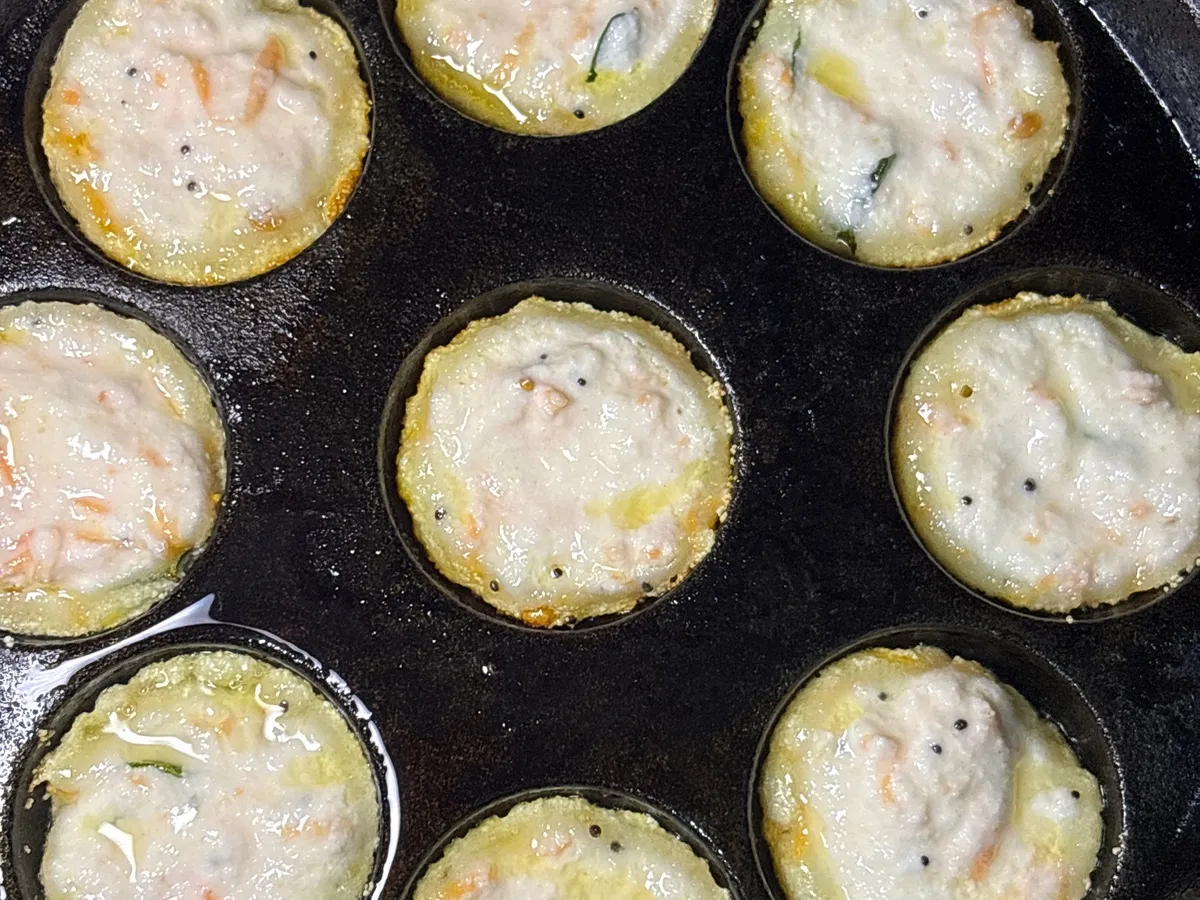
Look for: The top goes from wet to dull and set, and the edge pulls in from the side of the dimple — that is when it will turn without tearing. The underside should be evenly browned in a ring. The second side takes about half as long.
12–16 min · medium-low heat · appe pan (paniyaram / gunta ponganalu)
Cool them in a single layer before packing. Piled up warm, the browned crust softens against the ball above it and the whole point of the shape is lost.
Look for: Cool to the touch, and the crust still firm enough that a ball does not squash when you pick it up.
10–15 min
About this dish
Packing notes for a pre-KG box. The shape is the reason this one is here — round, dry on the outside and about the size of a walnut, which is the easiest thing on this list for small fingers to manage without a spoon and without making a mess of a uniform. There is curd in the batter, so send it with a cold pack on a hot day. If your child is too small for whole mustard seeds and dal, temper only the asafoetida in the oil and skip the rest; the paniyaram is no worse for it.